
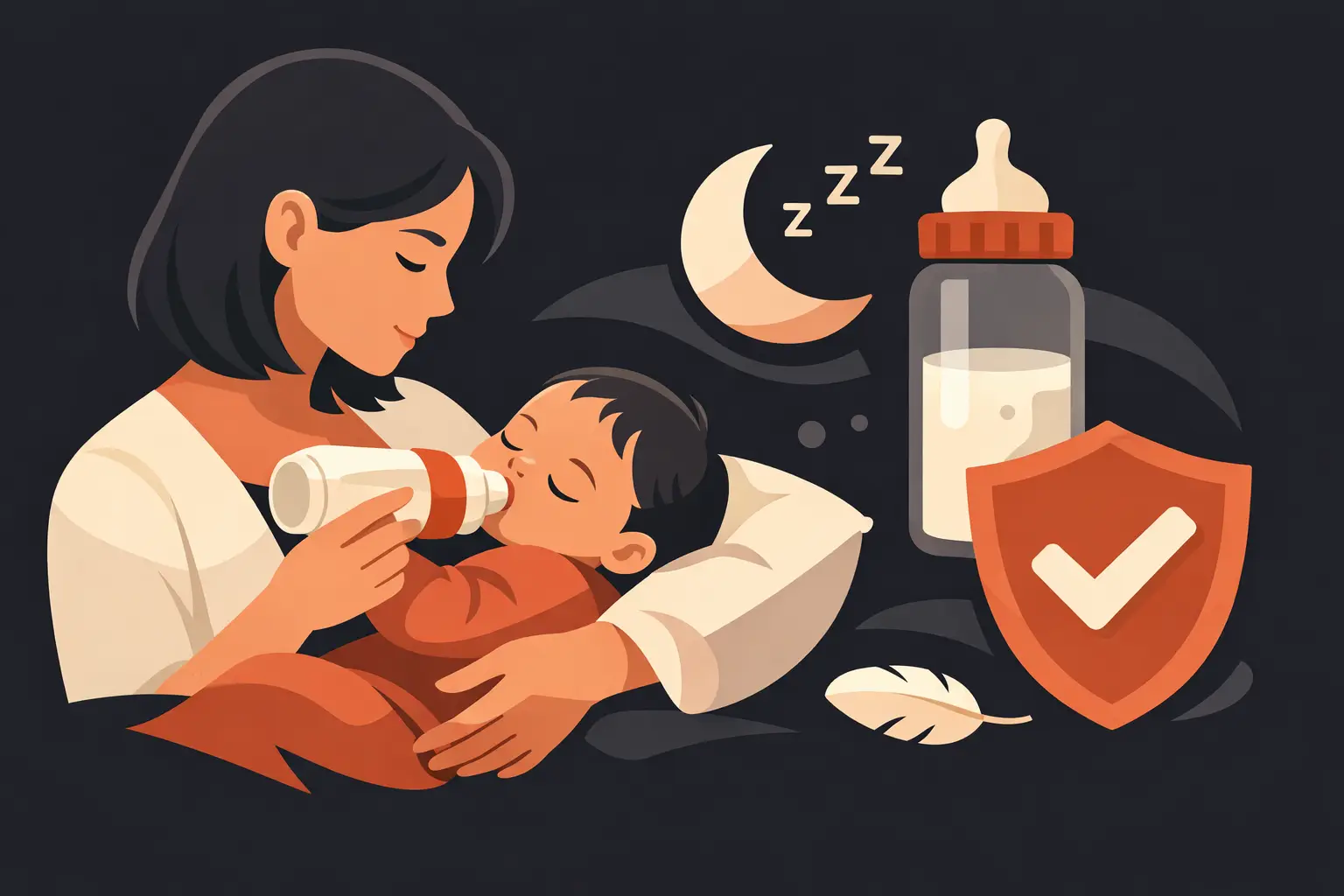
Most parents know this moment well. Your baby is fast asleep, the clock says it has been a while since the last feed, and now you are stuck between two strong instincts: do not wake the baby, and do not miss a feeding. If you are wondering how to make a sleeping baby feed, the honest answer is that sometimes you should, sometimes you should not, and the safest approach depends on your baby’s age, weight gain and your pediatrician’s guidance.
For many newborn families, especially in the first days and weeks, feeding on time matters more than protecting every stretch of sleep. Once a baby is gaining well, many parents can ease up and let sleep happen. That is why this question rarely has a one-size-fits-all answer.
Quick answer: In the early weeks, or if your baby has not regained birth weight, has jaundice or was born early, your pediatrician may want you to wake them for feeds. Wake gently: unswaddle, change the diaper, try skin-to-skin, then offer the breast or bottle while they are drowsy but responsive. Once your doctor says growth is on track, you can usually let a healthy baby sleep.
This guide is general information, not medical advice. Every baby is different, so ask your pediatrician or health visitor about your own baby.
When should you wake a sleeping baby to feed?
In the newborn stage, babies often eat every 2 to 3 hours, sometimes a bit longer depending on feeding method, age and medical advice. The American Academy of Pediatrics explains how often and how much babies typically eat, and our guide on how often newborns should feed covers the early weeks in more detail.
A very sleepy newborn may not wake on their own often enough, especially in the first few days after birth. If your baby has not yet regained birth weight, has jaundice, was born early, has latch or milk transfer issues, or your pediatrician has asked for scheduled feeds, waking for feeds is usually the right move.
This matters because young babies have tiny stomachs and limited energy reserves. Some babies get sleepier when they actually need calories most, which can turn into a frustrating cycle: too sleepy to feed well, then too underfed to wake strongly for the next one.
If your baby is older, gaining weight steadily, having enough wet and dirty diapers, and your doctor has said you no longer need to wake for overnight feeds, it may be fine to let them sleep longer. That decision should be based on your baby and your pediatrician’s advice, not internet averages.
Here is how those situations usually play out, always within your pediatrician’s plan.
| Situation | Usual approach |
|---|---|
| Early weeks, not yet back to birth weight | Usually wake for feeds |
| Jaundice or born early | Usually wake for feeds |
| Latch or milk transfer issues | Usually wake for feeds |
| Pediatrician asked for scheduled feeds | Follow that feeding plan |
| Older, gaining steadily, enough wet and dirty diapers, doctor says no need to wake | Often fine to let them sleep longer |
How do you wake a sleeping baby to feed without startling them?
If you do need to wake your baby, gentle works better than dramatic. A baby who goes from deep sleep to full crying may have a harder time latching and feeding calmly. Try these steps in order and stop as soon as your baby is drowsy but responsive:
- Loosen or remove the swaddle. Warm, snug babies tend to stay asleep.
- Change their diaper. A little cool air and movement often helps without being abrupt.
- Undress them down to a diaper or a light layer and hold them skin-to-skin. That can wake a baby just enough and cue feeding instincts.
- Rub their back, stroke their feet or talk softly.
- Lift them upright against your chest for a minute. A change in position often brings a baby into a feed-ready state.
You are not necessarily aiming for bright-eyed and fully awake. For many newborns, the sweet spot is sleepy but responsive.
Should you try the feed during light sleep?
If you are offering a feed based on time, it helps to catch your baby during lighter sleep. Watch for fluttering eyelids, small mouth movements, stirring, little hand motions or soft grunts. These are easier moments to start a feed than when your baby is limp and deeply asleep.
This is one reason some parents find dream feeds useful. A dream feed usually means feeding a baby while they are still mostly asleep, often before the parents go to bed. It does not work for every family, and it is more often used with somewhat older babies than in the newborn stage. For more on handling the overnight shift, see how to manage night feeds.
How do you breastfeed a sleepy baby?
If you are breastfeeding, getting a sleepy baby to latch and stay active can take patience. Bring your baby close and make sure their body is well supported. A shallow latch plus a sleepy baby usually leads to short, inefficient sucking and then more sleep.
You can hand express a few drops of milk onto your nipple to spark interest. Once latched, use breast compression if sucking slows down. That gives your baby more milk flow for less effort, which can keep them engaged.
Switch nursing can also help. When your baby starts drifting off on one side, burp them, change sides and restart. Some babies wake enough with the movement to take a fuller feed.
If your newborn keeps falling asleep within a minute or two of latching and this happens often, pay attention. Sometimes it is normal newborn sleepiness. Sometimes it points to milk transfer issues, jaundice or a baby who is not getting enough. A lactation consultant or your pediatrician can help, and the AAP has more on breastfeeding basics.
How do you bottle-feed a sleepy baby?
Bottle-fed babies can be sleepy feeders too. The goal is similar: wake gently, then keep them actively sucking without overwhelming them.
Hold your baby in a semi-upright position and touch the nipple to their lips to trigger the rooting reflex. If they latch but only flutter suck, try a brief pause, a burp break or a diaper change before trying again.
Paced bottle feeding can help some sleepy babies because it keeps the flow manageable and encourages more deliberate sucking. But if your baby is very drowsy, too many pauses may put them back to sleep. Some babies need a steady, simple feed. Others do better with brief breaks to reset.
If your baby regularly sleeps through bottles and is not finishing enough across the day, tracking intake for a few days makes patterns easier to spot. Sometimes the issue is not one missed feed. It is several half-feeds adding up.
What are the signs a baby is too sleepy to feed well?
A baby does not need to look fully awake to feed effectively. But there is a difference between drowsy feeding and not really feeding.
A baby who is feeding well, even while sleepy, usually shows rhythmic sucking and swallowing for stretches of time. Their jaw moves with purpose, and their hands may relax as the feed goes on.
A baby who is too sleepy to feed may latch briefly, nibble without swallowing much, slip off repeatedly, or fall back into deep sleep almost immediately. If that keeps happening, especially in the first weeks, take it seriously.
Watch the full picture: weight gain, diaper count, time between feeds, and how your baby acts when awake. One sleepy feed is normal. A pattern of poor intake is different.
How do you keep sleepy feeds safe?
Night feeds happen when you are tired too, so it helps to plan for safe sleep. When the feed is over, put your baby back down on their back in their own crib or bassinet, on a firm, flat surface with no pillows or loose bedding. The AAP warns against falling asleep with your baby on a sofa or armchair, so if you feel yourself dozing off, move to a safer spot or hand the baby to another adult. Its parent’s guide to safe sleep covers the details.
When should you not force a sleeping baby to feed?
Once your pediatrician says your baby is growing well and no longer needs scheduled overnight feeds, forcing a sleeping baby to eat may create more stress than benefit. Some babies are simply consolidating sleep and taking bigger daytime feeds, which can be a healthy shift.
Trying too hard can also backfire. A fully upset baby may cry, gulp air, refuse the breast or bottle, and end up taking less. If your baby is thriving overall, the better call may be to let the nap happen and offer a full feed when they wake naturally.
This is where simple feeding tracking helps. Parents often remember the rough shape of the day but not the exact timing, duration or diaper count. Having that in one place makes it easier to tell whether your baby is truly falling behind or just having one sleepy stretch.
When should you call your pediatrician?
Reach out sooner rather than later if your baby is very hard to wake, consistently missing feeds, producing fewer wet diapers, losing weight or not gaining as expected, or showing signs like worsening jaundice, weak sucking, fever or unusual floppiness. Sleepy babies are often normal, but normal sleepiness and concerning lethargy are not the same thing.
Trust your read of your baby. If something feels off, call.
How FeedRight helps
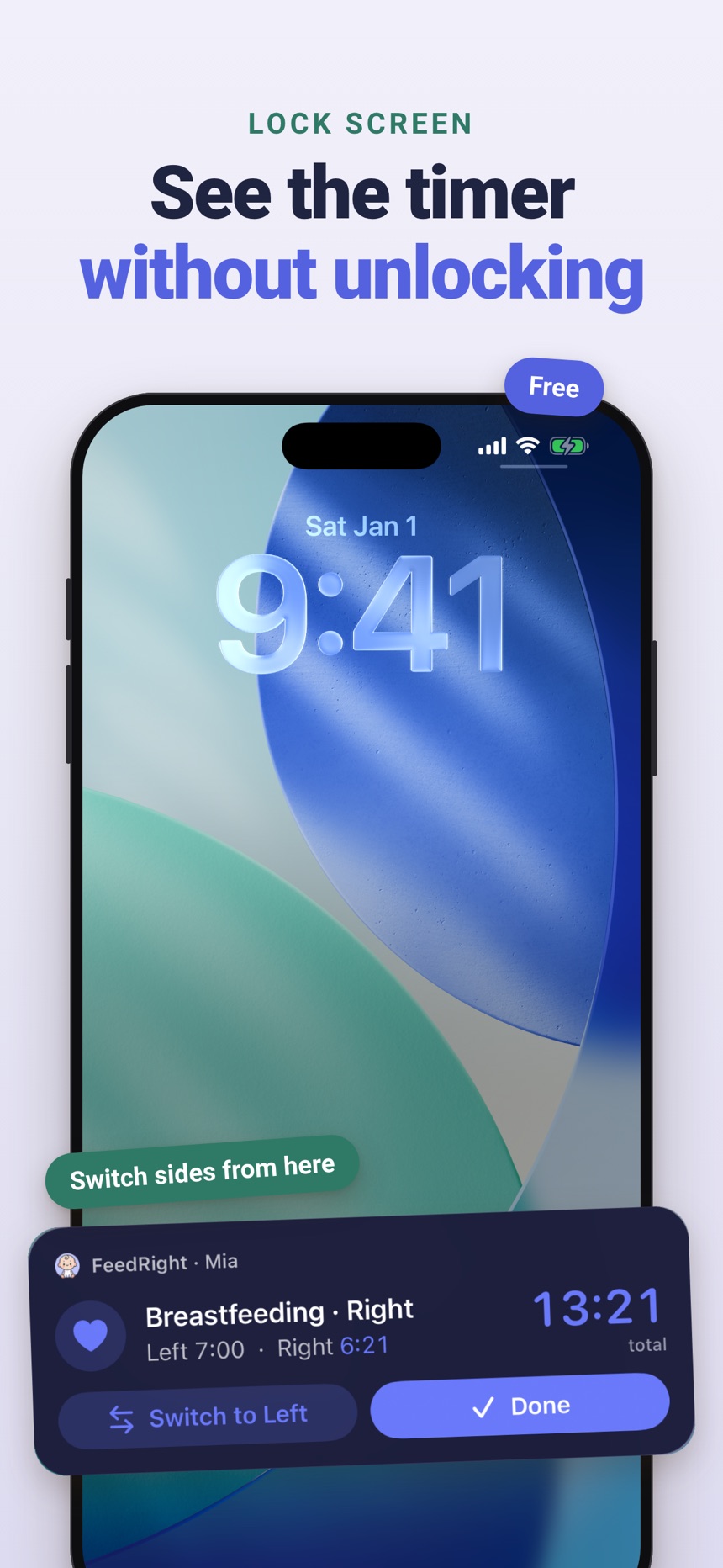
For middle-of-the-night decisions, a clear log of the last feed beats a sleepy guess. FeedRight Baby Tracker shows how long it has been since the last feed and can send a reminder a few hours after it, so a long nap does not quietly run past a planned feed. Core logging is free and needs no account. It is a memory aid, not medical advice, so follow your pediatrician’s feeding plan. Install it from the App Store or Google Play.
If you are trying to figure out how to make a sleeping baby feed, think in this order: do I need to wake my baby at all, what is the gentlest way to bring them to a drowsy alert state, and are they actually feeding well once they start. Some nights the answer is a diaper change, skin-to-skin and a solid feed. Some nights it is letting a healthy baby sleep another hour.
Frequently asked questions
Should I wake my newborn to feed at night?
Often yes in the first weeks, especially before your baby regains birth weight or if they have jaundice or were born early. Your pediatrician will tell you when it is fine to let your baby sleep longer.
How long can a newborn go without feeding?
Many newborns feed about every 2 to 3 hours, or 8 to 12 times in 24 hours. How long your baby can safely go between feeds depends on age and weight gain, so ask your pediatrician.
What is the gentlest way to wake a baby for a feed?
Unswaddle, change the diaper, then try skin-to-skin or holding them upright. Offer the breast or bottle when they are drowsy but responsive rather than fully crying.
Is it okay to feed a baby while they are asleep?
A dream feed, where a mostly asleep baby feeds before you go to bed, works for some families with older babies. Afterward, place your baby on their back in their own sleep space.
Does a dream feed help a baby sleep longer?
A dream feed, given while the baby is still mostly asleep before the parents go to bed, helps some families get a longer first stretch, but it does not work for every baby. It is more often used with older babies than in the newborn weeks, so ask your pediatrician if your baby is still very young.
When can I stop waking my baby to feed?
Most parents stop waking their baby for feeds once the pediatrician confirms that the baby has regained birth weight and is growing well. Until then, follow the feeding plan your pediatrician gave you.