
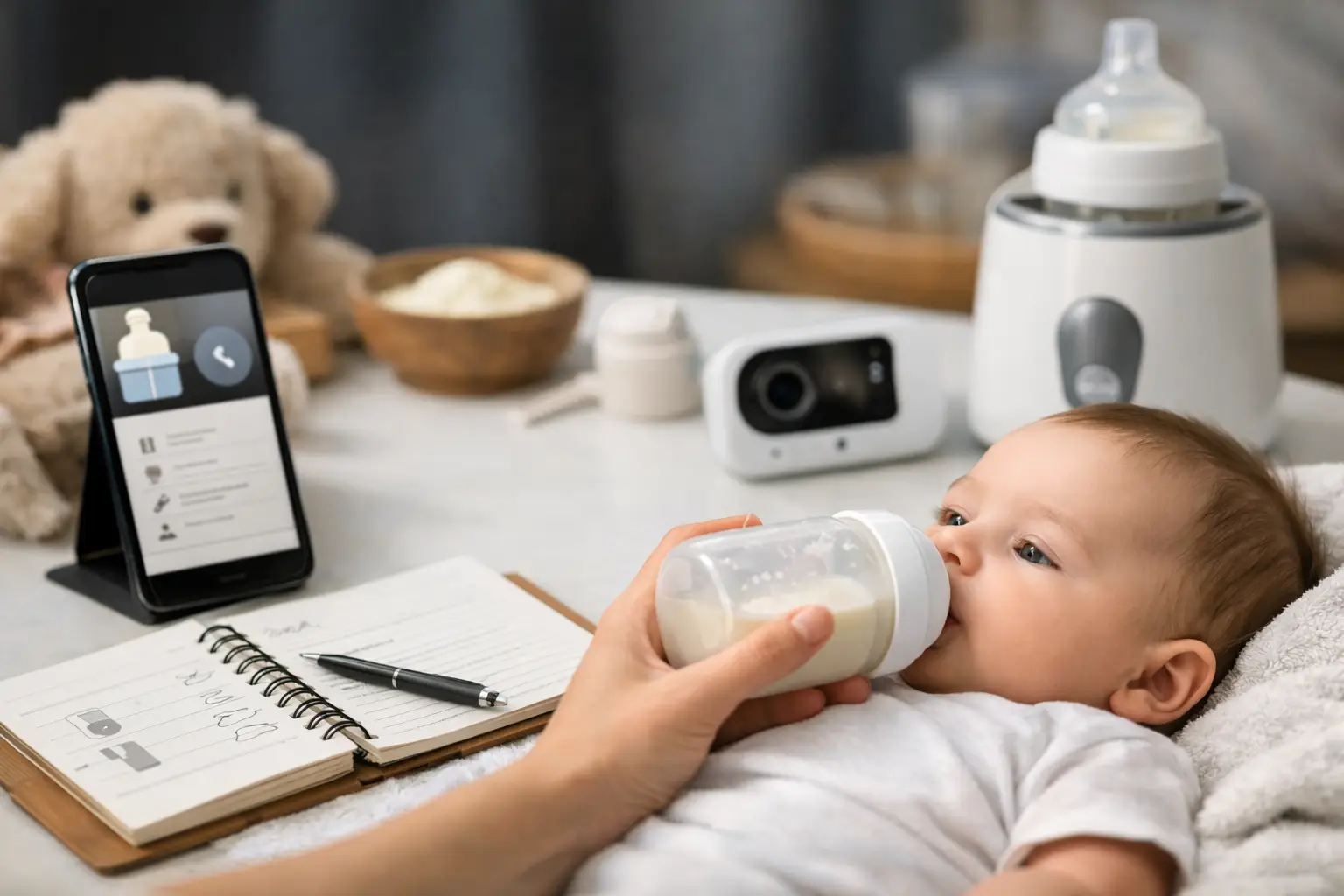
By lunchtime, the morning bottles can already feel like a blur. That is exactly why learning how to log bottle feedings works best when the system is quick enough to use while you are tired, holding your baby, and trying not to turn on every light in the house.
You do not need a detailed spreadsheet or a perfect memory. You need a small set of useful details that answers everyday questions: When did baby last eat? How much did they take? Are feeds changing? A good log gives you that clarity without creating another parenting job.
Quick answer: To log bottle feedings, record three things after each feed: the time, the amount your baby actually drank (not what you poured), and the milk type if you use more than one. Keep everything in one place every caregiver can see, use the same units each time, and add a note only when something unusual happens.
This guide is general information, not medical advice. Every baby is different, so ask your pediatrician or health visitor about your own baby.
What should you record after each bottle?
For most families, the core of a bottle-feeding log is simple: the time, the amount offered, and the amount your baby actually drank. If you prepare a 4-ounce bottle and your baby leaves an ounce behind, record 3 ounces consumed. That number is usually more helpful when you look for patterns later.
It also helps to note whether the bottle contained formula, expressed breast milk, donor milk, or a combination. This matters most when you are managing a feeding plan, moving between feeding methods, or keeping prepared milk organized safely. Our bottle feeding guide covers the routine around the bottle itself.
A few optional notes are useful when there is a reason to track them: spit-up, a difficult feed, a new nipple size, medicine given with a feed, or an unusual refusal. Keep these for the moments that stand out. Writing “normal” after every bottle creates busywork, not insight.
If you are tracking a newborn, diapers and sleep are often worth logging alongside feeds. Together they give a clearer picture of how the day is going, especially in the early weeks when your pediatrician may ask about feeding frequency and wet diapers.
Here is what to log, and what to skip.
| Detail | When to log it | Example |
|---|---|---|
| Time | Every feed | 2:10 a.m. |
| Amount your baby drank | Every feed | Prepared 4 oz, 1 oz left: log 3 oz |
| Milk type | If you use more than one | Formula, expressed breast milk, donor milk or a mix |
| Short note | Only when something stands out | Spit-up, refusal, a new nipple size, medicine with a feed |
| “Normal” after every bottle | Skip it | It creates busywork, not insight |
How do you log bottle feedings in the moment?
The best method is the one you will still use after a short night. That usually means logging the feed right when it ends, not reconstructing the day later.
Start the timer or add the feeding when you begin, if your tool makes that easy, then update the amount when baby finishes. If you are juggling a diaper change, a burp cloth, and a hungry baby, it is fine to add the entry a few minutes afterward. The goal is a reliable routine, not timestamp-level precision.
For overnight feeds, avoid extra steps. Record the start time and amount, then go back to sleep. Skip notes unless something unusual happened. A log should make the next feed easier to remember, not keep you awake longer.
Pick one place for the record
Paper notes, a phone note, a shared message thread, and a baby-tracking app can all work. The trade-off is convenience versus detail. A notebook is simple and distraction-free, but another caregiver cannot check it from another room. A phone-based log is easier to update and share, but only if it opens quickly enough that you will actually use it.
Whatever you choose, use one home for the information. Scattering feeding details across texts, scraps of paper, and memory is where the system starts to fall apart. If you are comparing apps, see our list of the best apps for bottle feeding.
Use the same shorthand every time
Consistency makes a basic log more useful. If you write “oz” one time, “ounces” the next, and “almost four” later, it becomes harder to scan. A quick entry such as “2:10 a.m., 3 oz formula” is enough.
If more than one person feeds your baby, agree on what “amount” means. Most families should record what was consumed rather than what was poured into the bottle. Caregiver initials can help with handoffs, especially during the first weeks home or when grandparents pitch in.
How can a bottle log help you spot patterns?
A feeding log becomes helpful when you look at it over a day or two. It can show whether baby tends to take larger bottles in the morning, cluster feeds in the evening, or goes longer between feeds than usual. Those patterns make planning easier and give you useful context if you need to call your pediatrician.
It cannot tell you everything. Babies have growth spurts, off days, sleepy days, and feeds interrupted by a noisy room or an exciting new skill. One smaller bottle is usually just one smaller bottle. Try not to treat every entry as a scorecard, and remember that amounts vary a lot by age and baby. The American Academy of Pediatrics explains how often and how much babies typically eat; check with your pediatrician about what is right for yours.
Look for bigger changes instead. Is your baby consistently taking much less than usual? Are feeds suddenly taking much longer? Are they refusing several bottles in a row? Are wet diapers noticeably down? A record helps you describe what is happening clearly, but it does not replace medical advice. If you are worried about intake, dehydration, weight gain, vomiting, or a change in behavior, contact your pediatrician.
How do bottle logs make caregiver handoffs easier?
Bottle logs are especially valuable when care is shared. One parent can leave the house for an hour without wondering whether baby ate 20 minutes ago. A caregiver can see the last bottle instead of guessing. At daycare pickup, you can add the last feeding to the same record and have a fuller view of the day.
Decide what everyone needs to know at a glance. Usually that is the last feeding time, amount consumed, and any notable issue. A simple handoff might sound like: “Last bottle was 3 ounces at 11:30. She was a little distracted but finished it.” That is clear, human, and enough to guide the next caregiver. For more on this, read can parents share feeding logs between caregivers.
When can you keep the log lighter?
In the early newborn stage, more frequent tracking can be reassuring and sometimes medically useful. If your baby was born early, has weight-gain concerns, is transitioning feeding plans, or has specific guidance from a clinician, follow the level of detail they recommend.
For many thriving older babies, the log can become lighter over time. You may only need to track bottles during a schedule change, an illness, a growth spurt, or a return to work.
Let the record earn its place in your routine. If it helps you answer questions and share care, keep it. If it creates stress without giving you useful information, reduce what you track. Parenting already comes with enough invisible work.
A simple bottle-logging routine to start tonight
- At the next feeding, record the time and the amount your baby drinks.
- Add the milk type if that matters for your routine.
- If anything feels unusual, write one short note.
- Close the app or notebook and move on with your evening.
- Tomorrow, glance back before you start wondering when the last bottle was.
That small pause is where the benefit shows up: less guessing, smoother handoffs, and one fewer detail for an exhausted brain to carry. One feed at a time is enough.
How FeedRight helps
For parents who want one clear place for bottles, sleep, and diapers, FeedRight Baby Tracker reduces the mental load of piecing together separate notes. Logging is free, needs no account, and works offline.
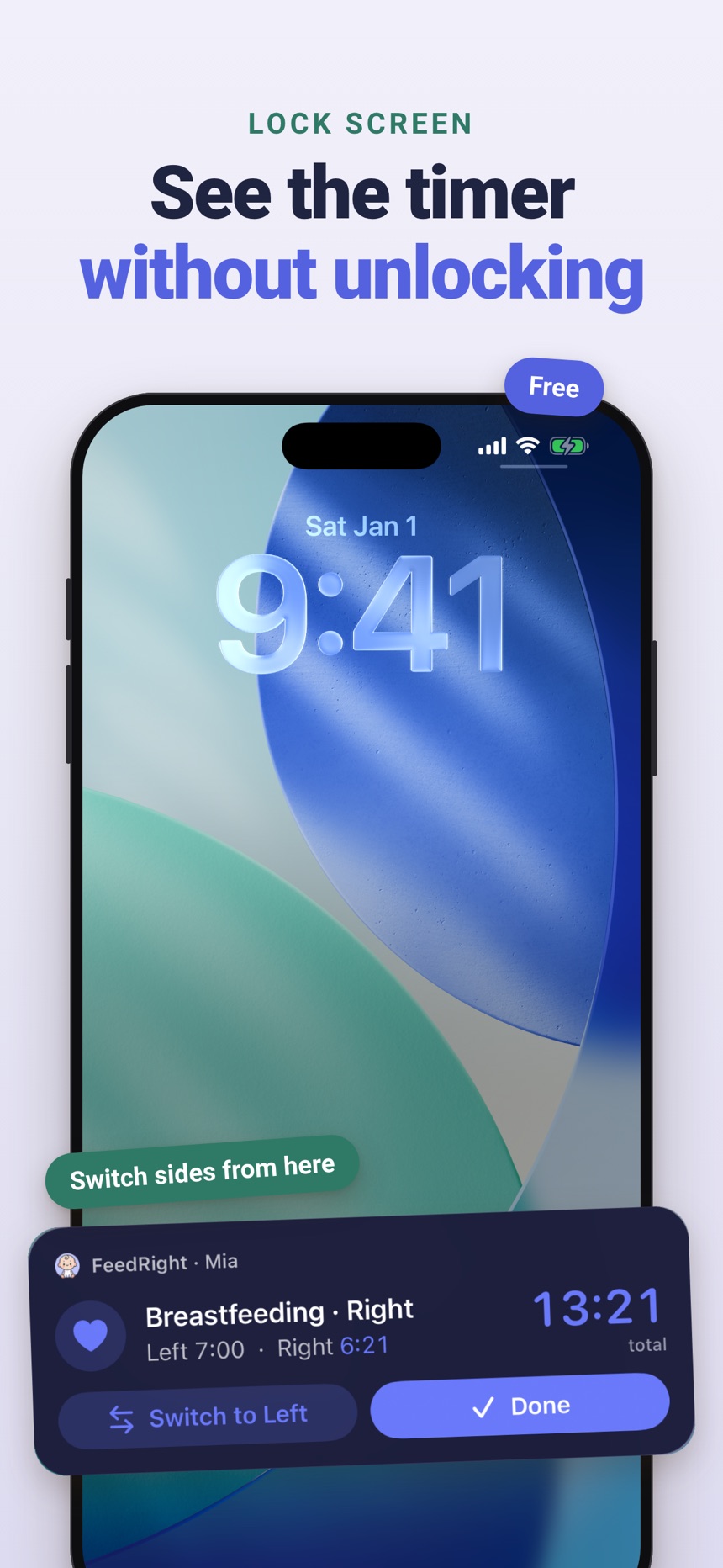
- Log a bottle in ml or fl oz in a couple of taps, next to breastfeeding, pumping, and solids.
- See how long ago baby last ate on the home screen, and set a reminder a few hours after the last feed.
- A partner, grandparent or nanny can join your family by invite code; FeedRight Premium, an optional subscription, keeps both phones in sync and adds “Log a bottle in FeedRight” with Siri.
Get FeedRight on the App Store or Google Play.
Frequently asked questions
Should I log the amount in the bottle or the amount my baby drank?
Log the amount your baby actually drank. If you prepared 4 ounces and 1 ounce is left, record 3 ounces, so patterns over the day stay accurate.
What should a bottle feeding log include?
The time, the amount consumed, and the milk type if you use more than one, such as formula and expressed breast milk. Add a short note only for things like spit-up, refusal, or a new nipple size.
How long should I keep logging bottle feeds?
Many parents log closely in the newborn weeks and then lighten up once feeding is going well. Keep logging if your pediatrician asks you to, or during illness, growth spurts, or schedule changes.
When should I worry about how much my baby drinks?
Call your pediatrician if your baby consistently takes much less than usual, refuses several bottles in a row, has fewer wet diapers, or seems unwell. One small bottle on its own is usually not a concern.
Should I log formula and breast milk separately?
Yes, if your baby gets both. Noting whether each bottle held formula, expressed breast milk or a mix helps when you follow a feeding plan or keep prepared milk organized.
How do I log bottle feeds at night without waking up fully?
At night, record only the time and the amount, then go back to sleep and skip notes unless something unusual happened. A log that opens quickly in low light keeps each entry to a few seconds.