
The first weeks with a newborn are a blur. You are running on two hours of sleep, the days fold into nights, and somewhere in there you are supposed to remember when the baby last ate, how long they slept, and whether that diaper was the third or fourth today.
It is not a memory problem. It is a volume problem. There is simply too much happening in too short a window.
Quick answer: The most reliable way to track newborn feeding, sleep and diapers is to log each event as it happens, not from memory later. Record the start time and side or amount for feeds, start and wake times for sleep, and wet or dirty for diapers. Use one tool that every caregiver shares, and review the full day once instead of after every entry.
This guide is general information, not medical advice. Every baby is different, so ask your pediatrician or health visitor about your own baby.
The challenge is not caring. Every new parent cares deeply. The challenge is having a system that works when you are exhausted, holding a baby, and operating on instinct.
Why does tracking newborn feeding, sleep and diapers matter?
What does it mean to track newborn feeding, sleep and diapers?
It means logging the time, duration and type of each feed, sleep and diaper change as it happens, so you have an accurate record instead of a sleep-deprived guess.
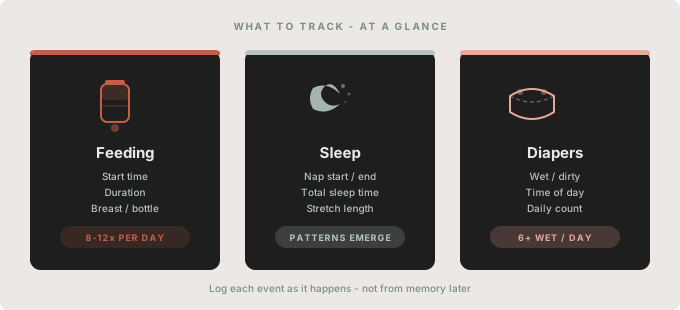
Pediatricians routinely ask new parents the same questions: How often is the baby feeding? How many wet diapers a day? How long are the sleep stretches? These are not casual questions. Together they help show whether feeding is going well. Having real data means you can answer confidently instead of estimating.
Beyond the doctor’s office, tracking builds a picture of your baby’s rhythm. Many newborns develop loose patterns within the first few weeks. Once you can see them, you can start to anticipate them, which means more rest for you and less scrambling. It also stops the “wait, when did I feed them last?” loop, which is exhausting when it repeats a dozen times a day.
Why doesn’t remembering work?
Memory is unreliable when you are sleep-deprived. Broken sleep makes it harder to recall times and keep track of what happened in what order. Expecting yourself to remember the exact time of a 3 a.m. feed two hours later is setting yourself up to fail.
Notebooks get misplaced. Mental tallies reset. “I’ll write it down in a minute” never survives contact with a crying baby.
What gets missed without a system?
Without a consistent way to track, small things fall through the gaps. A feed gets logged late and the time is off by 40 minutes. You lose count of diapers by mid-afternoon. You cannot remember if the last nap was 20 minutes or an hour.
None of these are failures. They are just what happens without a system. The fix is not trying harder. It is making logging so easy that it happens almost automatically.
How do you track newborn feeding, sleep and diapers simply?
Keep each entry to the few details that actually help:
| Event | Log every time | Optional |
|---|---|---|
| Feeding | Start time; side (breast) or amount drunk (bottle) | Duration, breast milk or formula |
| Sleep | Time asleep, time awake | Where they slept |
| Diaper | Time; wet, dirty or both | Color or anything unusual to mention to your pediatrician |
Log in the moment, not from memory
The single most effective habit: log the event when it starts, not when it ends or when you remember. Tap to start the feeding timer when you latch or offer the bottle. Tap when you lay the baby down to sleep. Mark the diaper change as you do it.
This requires a tool that is fast enough to use one-handed while holding a newborn. A paper log in another room does not work. A complicated app with too many fields does not work either. For feeds in particular, our guide on how to track newborn feedings simply keeps it light.
Use timers, not just notes
There is a difference between “fed at 2 p.m.” and a feed that started at 2:04 and ended at 2:26. Duration is useful context, especially for breastfeeding, though it does not tell you exactly how much your baby drank. A timer-based tracker records start time and duration without extra effort. The same goes for sleep: our post on how to track a baby’s sleep schedule shows the start-and-stop habit.
Review patterns once a day, not after every event
One common mistake is interpreting data in real time. A single short nap does not mean something is wrong. A single skipped feed is not a pattern. The useful signal comes from looking at a full day together.
Review yesterday’s log once each morning, when things are slightly calmer. You start to notice that the baby tends to cluster feed in the evenings, or that the longest sleep stretch usually comes first after midnight. That kind of pattern is invisible without a log. Diapers deserve the same light touch; see how a diaper tracking app eases newborn days.
What should you bring to the pediatrician?
Bring your log. Most newborn appointments include questions about feeding frequency, diaper output and sleep. Instead of estimating, you can pull up the last 24 to 48 hours directly.
Actual data speeds up appointments and helps your pediatrician spot concerns early. According to the American Academy of Pediatrics, many newborns feed about 8 to 12 times in 24 hours; its guide on how often and how much babies eat explains the early weeks. Wet diapers increase over the first days, and the NHS guide to the first few days of breastfeeding describes what to expect. Your pediatrician will tell you which numbers matter for your baby.
How do you make tracking a shared habit?
If there are two caregivers, tracking only works if both are logging. With a shared log, a partner doing the 4 a.m. feed can log it right away, and you wake up to accurate data instead of a gap.
This also removes the “did you log that?” conversation, which nobody wants at 4 a.m. Our guide to a shared baby tracker for couples covers the setup, and the newborn care log guide covers what is worth noting each day.
How FeedRight helps
FeedRight Baby Tracker is our baby tracker app for iPhone, Apple Watch and Android, built to track newborn feeding, sleep and diapers with as little friction as possible. One tap starts a timer, one tap stops it, and feeds, naps and diapers live in the same timeline.
- Free core logging with no account needed; it works offline and keeps data on your phone.
- A daily summary and history, plus reminders such as a nudge a few hours after the last feed or a diaper check.
- Optional FeedRight Premium adds cloud backup and family sync, so both caregivers log into one shared record.
FeedRight is a memory aid, not a medical device. Download it from the App Store or Google Play.
All guides in this topic
- Caregiver Schedule Templates That Reduce Handoffs
- How to Share Baby Logs Without the Group Chat
- 6 Best Sleep Log Tools for Simpler Routines
- What Night Feed Results Can Tell You Over Time
- Do Parents Need Routine Logs for Baby Care?
- Parenting Apps Versus Planners for Busy Days
- A Real Baby Routine Example That Stays Flexible
- How to Build Bedtime Routines That Actually Stick
- Bottle Feeding Guide for Calm, Trackable Days
- Newborn Care Log Guide for Tired New Parents
- What Is Cluster Feeding? A Parent’s Clear Guide
- Best Apps for Bottle Feeding: What Parents Need
- Feeding Timer Versus Notebook: What Works?
- Baby Nap Patterns Guide for the First Year
- A Shared Baby Tracker for Couples That Works
- Best Lightweight Parenting Tools for Busy Days
- New Parent Tools That Earn Their Place Daily
- Baby Log App for Grandparents Made Simple
- How to Create Baby Routines That Actually Help
- When Do Babies Sleep Longer? A Realistic Timeline
- How to Manage Night Feeds Without Losing Track
- When to Start Tummy Time: A Simple Guide
- How to Record Baby Naps Without Making It a Chore
- Parenting Apps That Make Early Days Easier
- New Parent Tracking Guide for the First Months
- Track Pumping Sessions Easily Without Extra Stress
- Baby Sleep Schedule Guide for the First Year
- Newborn Diaper Output Chart for First Weeks
- A Feeding Timer for Newborns That Keeps Up
- Baby Tracker Comparison for Tired Parents
- How to Log Bottle Feedings Without Overthinking
- How Often Should Newborns Feed? A Simple Guide
- How Many Wet Diapers Daily? Simple Guide
- How a Newborn Routine App Helps at 3 A.M.
- How a Diaper Tracking App Eases Newborn Days
- How a Baby Sleep Tracker App Eases Your Routine
- A Baby Feeding Tracker App for Calmer Days
- How to Pick the Best Baby Tracker App
- Is It Safe to Use Diapers for Babies at Night?
- How to Prevent Diaper Rash Overnight
- How to Make a Sleeping Baby Feed Safely
- Why Is My Baby Soaking Through Diapers at Night?
- Should I Change Wet Diaper if Baby Is Sleeping?
- Newborn Feeding and Diaper Schedule Basics
- How to Track Newborn Feedings Simply
- How to Track Baby Sleep Schedule (Without Going Crazy on No Sleep)
- Baby Tracker App vs. Notebook: Which Is Best for New Parents?
- Forgot When Baby Last Fed? The Simple Fix New Parents Actually Use
Frequently asked questions
What should I track for a newborn?
Feeds (time, plus side or amount), sleep (time asleep and time awake) and diapers (wet, dirty or both). Those three cover most questions pediatricians ask in the early weeks.
How long should I track my newborn’s feeding, sleep and diapers?
Many parents track closely for the first weeks, then scale back once feeding and weight gain are on track. Keep tracking longer if your pediatrician asks you to.
Is it better to use an app or paper to track a newborn?
Either works if you keep using it. An app is faster one-handed, does the time math and is easier to share, while paper is screen-free and easy to read at a glance.
How often should I review my newborn’s log?
Once a day is usually enough. Looking at a full day shows real patterns, while checking after every entry tends to add worry without adding information.
How do you use a baby tracker app for feeding, sleep and diapers?
To use a baby tracker app, tap to start a feed or sleep timer when it begins, tap again when it ends, and mark each diaper as wet, dirty or both as you change it. Then look over the daily summary once a day instead of after every entry.
How many times a day does a newborn feed?
Many newborns feed about 8 to 12 times in 24 hours, according to the American Academy of Pediatrics. Your pediatrician can tell you what to expect for your own baby.