
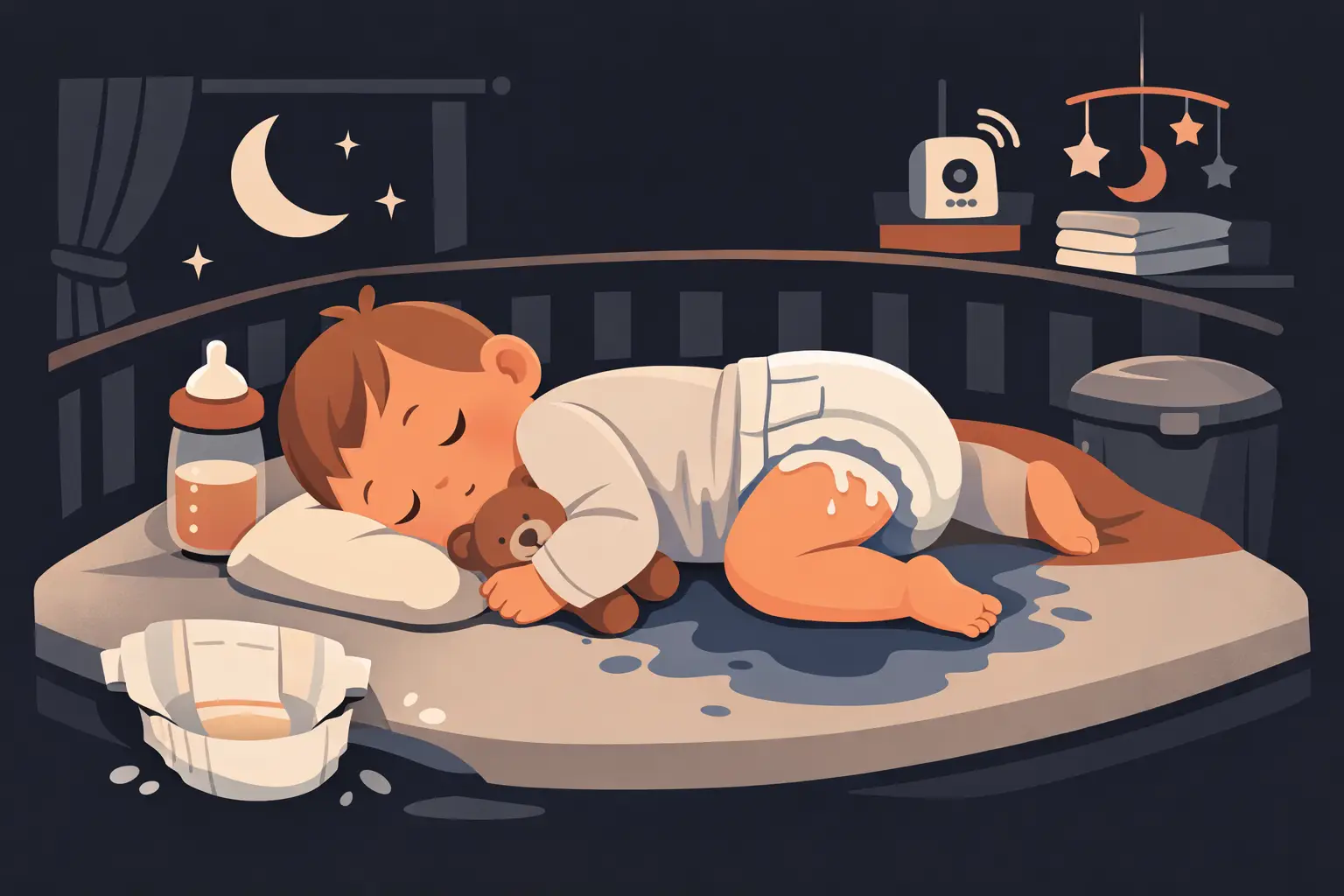
A baby who wakes up cold, damp and fully over the whole sleep thing can make the night feel much longer than it already is. If you are asking why your baby is soaking through diapers at night, the usual reason is that the diaper setup is not quite matching their overnight pee output. This is common, it often has a simple fix, and it does not automatically mean anything is wrong.
Quick answer: Most babies soak through diapers at night because the diaper has reached its capacity, does not fit quite right, went on too early, or is squeezed by tight pajamas. Try one fix at a time: an overnight diaper, a size up at night, careful fastening with the leg cuffs pulled out, and a fresh diaper as the very last bedtime step.
This guide is general information, not medical advice. Every baby is different, so ask your pediatrician or health visitor about your own baby.
Why is my baby soaking through diapers at night?
Most overnight leaks come down to capacity, fit, timing or sleep changes. Babies often pee more at night during growth spurts, when they take more milk or formula, or when they start sleeping longer stretches without a diaper change. Sometimes the diaper is the right size but not the right shape for your baby’s body. Sometimes it is the right diaper, just not enough for a 10 to 12 hour stretch.
There is also a difference between a diaper that is full and a diaper that leaks before it should. A completely saturated diaper by morning points to absorbency limits. A leak from the leg or waistband often points to fit, position or clothing pressure. That distinction helps because the fix is different.
What are the most common reasons for overnight leaks?
The diaper is at its limit
Nighttime is a long stretch, and even a good diaper can only hold so much. If your baby sleeps 10 to 12 hours, drinks close to bedtime, or has changed how much they drink, they may simply produce more urine than the diaper can absorb.
This is especially common when newborns begin sleeping a little longer, when older babies cluster feed in the evening, and when toddlers drink a lot right before bed. If the diaper feels very heavy in the morning and leaks mostly happen near wake-up time, capacity is the first thing to suspect.
The diaper fit is slightly off
A diaper can look fine and still leak. If the leg cuffs are tucked in, the waistband sits too low, or the diaper is not pulled up snugly enough, pee can escape before the absorbent core does its job.
For baby boys, pointing the penis downward before fastening can make a real difference; otherwise urine may head toward the waistband. For any baby, check for gaps around the thighs. Red marks matter too, because a diaper that is too tight can also leak when the absorbent material gets compressed.
It is time to size up
Diaper sizing by weight is not exact. If your baby is near the top of a size range, soaking through at night can be your clue that it is time to move up. A larger diaper usually gives more absorbent material and better coverage. If you size up too early, though, you may create leg gaps, so this fix works best when the current size feels short, snug or consistently maxed out by morning.
Pajamas or sleep position are working against you
This one gets missed a lot. Tight pajamas or a snug sleep sack can press on the diaper and push liquid out. Position plays a part too: always place your baby on their back to sleep, as the American Academy of Pediatrics recommends in its safe sleep guide, but older babies who roll onto their tummy on their own often leak at the front. Looser pajamas sometimes solve what looks like a diaper problem.
Your baby is drinking a lot before bed
This is not necessarily a problem to fix, especially for younger babies who need those calories. A bigger feed close to bedtime often means more urine in the first half of the night. If your baby is healthy and growing, the goal is usually not to reduce intake. It is to adjust the diaper strategy instead. For older babies and toddlers, being aware of bedtime drinks can help, but do not restrict fluids without talking to your pediatrician.
How can you tell what is causing the leak?
Notice when and where the leak happens. A few nights of observation often point straight to the answer.
| What you notice | Likely cause | First fix to try |
|---|---|---|
| Leak early in the night | Fit, or a big bedtime feed | Refasten carefully, change right before sleep |
| Soaked diaper near morning | Capacity | Overnight diaper or booster pad |
| Leak at the waist | Positioning or sleep posture | Pull the diaper up higher, point boys down |
| Leak at the legs | Fit or size | Pull out leg cuffs, check the size |
| Leaks with fitted pajamas | Compression | Looser pajamas or sleep sack |
Which simple fixes usually help?
Start with one change at a time so you can tell what actually worked. If you switch sizes, brands, pajamas and bedtime routine all at once, you will not know which one solved the problem.
Try an overnight diaper
If you use a regular daytime diaper, this is often the easiest upgrade. Overnight diapers are made for longer wear and usually hold more without looking much bigger. For many families, this is the whole fix. They tend to work best once babies sleep in longer stretches; if your child still wakes often for feeds and diaper changes, you may not need them yet.
Size up for nighttime only
Some babies wear one size during the day and a bigger size overnight. That is normal. Watch for leg gaps: a good overnight fit is snug but not tight, with the ruffles flared out.
Add a booster pad if needed
A diaper booster pad adds absorbency for heavy wetters who are already in an overnight diaper and still soaking through. It does not fix a poor fit, though. Booster pads help diapers that are fully saturated, not diapers that are misaligned.
Put the bedtime diaper on last
A fresh diaper right before sleep matters more than many parents expect. If the bedtime diaper goes on too early, your baby may already be partway through its capacity before the longest sleep stretch begins. If your routine includes feeding, books, rocking and then bed, make the diaper the very last step.
Recheck how the diaper is fastened
Pull the diaper up high enough in front and back. Make sure the tabs are even. Run your fingers around the leg cuffs to pull the ruffles out. For boys, make sure everything is pointing down. These small adjustments often solve leaks that seem mysterious at 2 a.m. and obvious in daylight.
Whatever you try, keep the crib clear. Skip towels, extra blankets or loose pads to catch leaks; a fitted sheet on a firm, flat mattress is the safe setup.
When may it be more than a diaper issue?
Most of the time, overnight soaking is just an absorbency problem. But check in with your pediatrician if your baby suddenly pees much more than usual, seems unusually thirsty, has a fever, cries when urinating, has very strong-smelling urine, or is not acting like themselves. The same goes for a diaper rash that keeps getting worse from overnight wetness; the AAP explains diaper rash care, and our guide on preventing diaper rash overnight covers a bedtime routine.
If you are changing clothes and sheets every night for more than a week despite a better fit and higher absorbency, it is reasonable to ask for guidance. Usually it is still a product issue, but a quick check gives peace of mind.
What usually works best?
For most families, the fix is not dramatic. It is usually one of these: switch to an overnight diaper, size up at night, fasten it more carefully, or stop putting the bedtime diaper on too early. Sometimes looser pajamas help. Sometimes a booster pad is the missing piece.
And sometimes your baby is in a short phase of eating more, peeing more and outgrowing what worked two weeks ago. If you are unsure whether you should even be changing at night, read whether overnight diapers are safe.
How FeedRight helps
A few nights of notes on bedtime feed size, diaper type and leak timing can point to the answer fast. FeedRight Baby Tracker logs feeds, sleep and diapers (wet, dirty or both) in one tap on iPhone and Android, with free core logging and no account needed. It also makes it easier to see a real change in how many wet diapers your baby has each day, which is useful to mention to your pediatrician. The app is on the App Store or Google Play.

If tonight was another sheet-changing night, you are not doing anything wrong. Babies change fast, and diaper routines need to change with them.
Frequently asked questions
Why does my baby’s diaper leak only at night?
Night is the longest stretch without a change, so the diaper is more likely to reach its limit. Fit problems, tight pajamas and a big bedtime feed also show up more at night.
Should I size up diapers if my baby leaks at night?
Often, yes, if your baby is near the top of the size range or the diaper is fully soaked by morning. Check that the larger size does not leave gaps at the legs.
Do overnight diapers really work?
For many babies they solve the problem, because they hold more for longer wear. If leaks come from the legs or waist instead, fit is the issue and an overnight diaper alone may not help.
When should I worry about my baby peeing a lot at night?
Call your pediatrician if your baby suddenly pees much more than usual, seems very thirsty, has a fever, cries when peeing or has strong-smelling urine.
Why does my baby’s diaper leak at the legs or the waist?
A leak at the legs usually points to fit or size, so pull out the leg cuffs and check that the diaper is snug without gaps. A leak at the waist often comes from how the diaper sits, so pull it up higher and, for boys, point the penis down before fastening.
Do booster pads help with overnight diaper leaks?
A diaper booster pad adds absorbency for heavy wetters who already wear an overnight diaper and still soak through by morning. It does not fix a poor fit, so check the size and the leg cuffs first.