

A diaper change can feel like one more thing in a very long day. But if you are wondering how many wet diapers daily your baby should have, you are looking at one of the simplest clues about whether they are getting enough milk or fluids.
There is no need to inspect every diaper like a science experiment. What matters most is the pattern across a full 24 hours, your baby’s age, and whether they otherwise seem well. Here is a practical baseline to keep in your back pocket.
Quick answer: After the first week, most babies have six or more wet diapers in 24 hours, which is a common sign that feeding and hydration are on track. In the first days, a simple guide is about one wet diaper per day of life (one on day 1, two on day 2, and so on). Look at the full-day pattern and check with your pediatrician if output drops.
This guide is general information, not medical advice. Every baby is different, so ask your pediatrician or health visitor about your own baby.
How many wet diapers daily is normal?
For most babies after the first week, six or more wet diapers in 24 hours is a common sign that feeding and hydration are on track. That is a useful starting point, not a scorecard. A very heavy disposable diaper, an overnight stretch, warm weather, illness, and the move to solid foods can all change what you see.
The first few days are different. Newborn intake is still building, especially for breastfed babies as milk comes in. During those early days, many clinicians use a simple day-of-life guide, similar to the one in the NHS overview of the first few days of breastfeeding:
- Day 1: at least 1 wet diaper
- Day 2: at least 2 wet diapers
- Day 3: at least 3 wet diapers
- Day 4: at least 4 wet diapers
- Day 5 and beyond: about 6 or more wet diapers each day
This does not replace the feeding and weight checks your care team recommends, and your pediatrician may give you numbers specific to your baby. It is a quick, everyday way to notice whether output is moving in the right direction. For dirty diapers and poop colors too, see our newborn diaper output chart.
What are wet diaper expectations by age?
Here is the pattern by age at a glance. The first rows follow the NHS day-of-life guide above, and the sections below explain each stage.
| Baby’s age | Wet diapers in 24 hours |
|---|---|
| Day 1 | At least 1 |
| Day 2 | At least 2 |
| Day 3 | At least 3 |
| Day 4 | At least 4 |
| Day 5 to the end of the first week | About 6 or more |
| 1 week to about 6 months (milk only) | 6 or more |
| Starting solids | Often 6 or more; some babies have fewer, larger pees |
| Toddlers | Varies; watch for a clear drop from your child’s usual pattern |
Newborns: birth through the first week
In the first 24 hours, one wet diaper can be normal. Then output should generally increase each day. By around day five or six, a baby who is feeding effectively will often have at least six wet diapers over 24 hours.
You may notice a rusty orange or pinkish stain in a diaper during the first few days. These are often urate crystals, which can appear while a newborn is taking in small early feeds. They should fade as milk intake increases. If they continue, or your baby has fewer wet diapers than expected, call your pediatrician or newborn care team.
Babies from 1 week to about 6 months
For babies who drink only breast milk or formula, six or more wet diapers a day remains a helpful rule of thumb. Some babies pee a little at nearly every feed. Others make fewer but much heavier diapers. Both can be fine when the overall pattern, feeding, alertness, and growth are reassuring.
Young babies generally do not need extra water. Breast milk or correctly mixed formula provides the fluid they need, unless their clinician specifically tells you otherwise.
Babies starting solids
Once solids enter the picture, diaper patterns become less predictable. Your baby may still have six or more wet diapers, but some older babies have fewer, larger pees. The bigger question is whether there has been a clear drop from what is normal for your child.
Continue offering breast milk or formula as the main drink through the first year, with small amounts of water introduced as your pediatrician advises. Hot days, teething, travel, and a busy day of crawling can all make hydration worth a closer look.
Toddlers
After age one, diaper counts are less exact. Fluid intake, activity level, and potty-training stage all affect how often a toddler pees, so learn your own child’s usual pattern. A child who is suddenly peeing much less than usual deserves attention, especially during a fever, stomach bug, or hot weather.
What counts as a wet diaper?
Modern disposable diapers are very good at hiding urine. A diaper may feel only slightly fuller, yet still be wet. If you are unsure, pour a few tablespoons of water into a clean diaper and feel its weight. That gives you a useful comparison.
Many newborn diapers also have a wetness indicator strip that changes color. It is handy in the early weeks, although it is not perfect. If the strip is unclear, go by the diaper’s weight and feel.
Cloth diapers can make wetness easier to notice, but they vary by material and thickness. The goal is not to compare cloth and disposable counts perfectly. Track your own baby’s usual output in the type of diaper you use. And if the opposite is happening, read why a baby soaks through diapers at night.
Why does the 24-hour pattern matter more than one diaper?
One dry diaper is rarely the whole story. Maybe your baby just had a long nap, was more active than usual, or is about to make a very wet diaper at the next change. Looking at a full day keeps a normal variation from becoming an unnecessary worry.
A simple log is especially useful in the newborn weeks, when feeding schedules blur together and parents or caregivers take shifts. Write down wet diapers, poops, and feeds in one place. You do not need to track forever. Often, a few days of clear information is enough to spot a pattern and have a more useful conversation with your pediatrician. Here is how a diaper tracking app eases newborn days.
When can fewer wet diapers mean your baby needs help?
A noticeable drop in urine output can be an early sign of dehydration, but diaper count is only one clue. Call your baby’s pediatrician promptly if your newborn has fewer wet diapers than expected for their day of life, or if a baby older than five days is consistently having fewer than about six wet diapers in 24 hours.
Call sooner if low output comes with other signs that your baby may not be getting enough fluids:
- A dry mouth or lips, no tears when crying, or a sunken soft spot
- Unusual sleepiness, weakness, or difficulty waking for feeds
- Repeated vomiting, frequent watery diarrhea, or a fever
- Poor feeding, a weak suck, or refusing several feeds in a row
Trust the change you are seeing. If your baby is usually a frequent wetter and suddenly has much less output, you do not have to wait for a perfect number before asking for advice. For a very young baby, or any baby who seems seriously ill, is hard to wake, has trouble breathing, or shows signs of severe dehydration, seek urgent medical care. The American Academy of Pediatrics also explains how feeding and diapers fit together.
What is a calmer way to keep track?
Diaper tracking is most helpful when it reduces guesswork, not when it adds another impossible task. Count a diaper when you change it, glance at the total before bed, and look for trends rather than chasing an exact hourly schedule.
If feeding is going well, your baby is alert during awake periods, and wet diapers are arriving steadily, that is reassuring. If something feels off, a short record of feeds and diapers gives you a clear starting point when you call.
How FeedRight helps
FeedRight Baby Tracker keeps diaper counts and feeds in one place, so the 24-hour pattern is easy to see. You can start without an account, and it works offline.
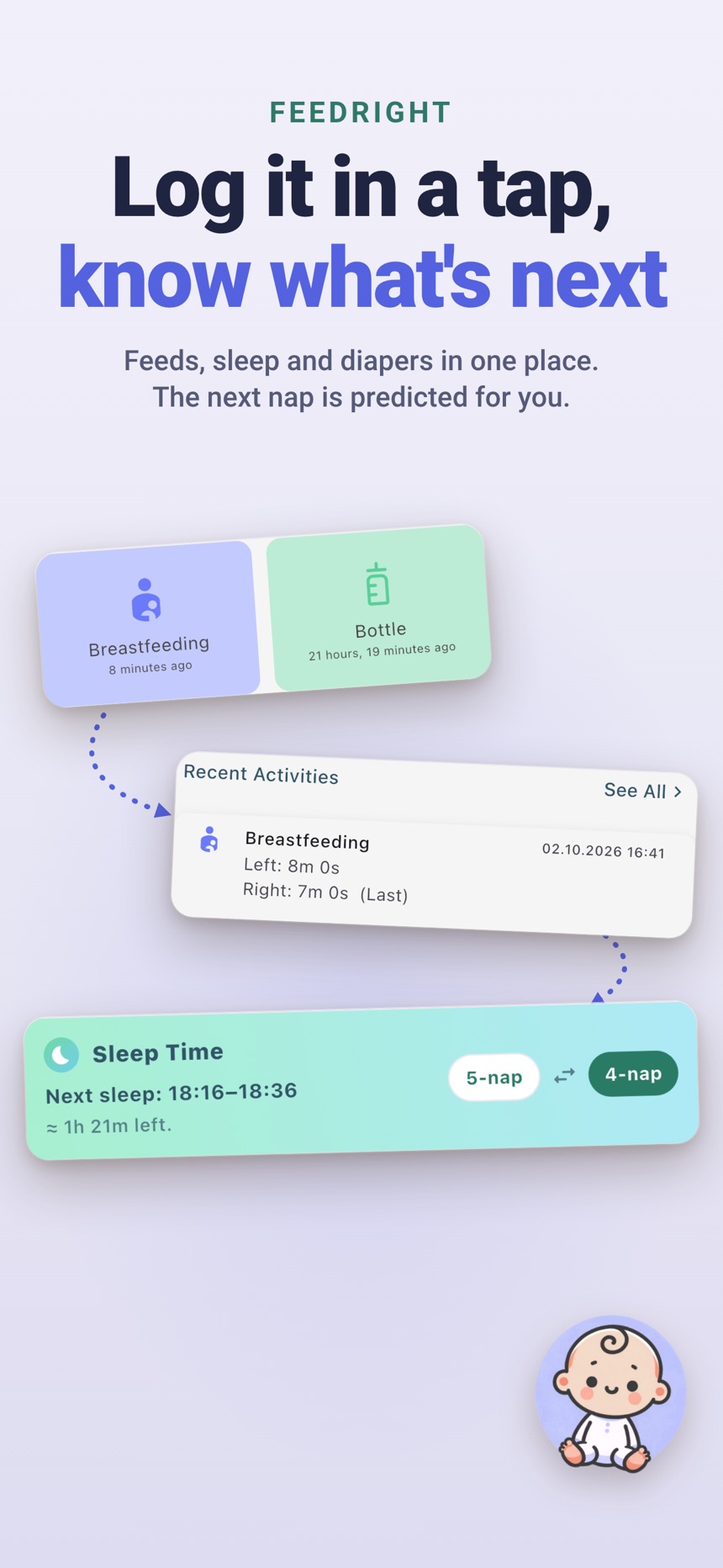
- Log a diaper as wet, dirty, or both in one tap.
- Check the daily summary before bed to see today’s total next to feeds.
- Set a diaper check reminder, and let a partner or other caregivers join your family by invite code.
Download FeedRight on the App Store or Google Play. It is not a medical device, so bring any concerns to your pediatrician.
Frequently asked questions
How many wet diapers should a baby have in 24 hours?
After the first week, most babies have six or more wet diapers in 24 hours. In the first days, expect about one wet diaper per day of life. Check with your pediatrician about what is right for your baby.
Is it normal for a newborn to have only one wet diaper on day one?
Yes. One wet diaper in the first 24 hours can be normal, and output should rise each day after that. Call your pediatrician if it does not increase as expected.
How can I tell if a disposable diaper is wet?
A wet diaper feels heavier and squishier than a dry one, and many newborn diapers have a strip that changes color. Pour a few tablespoons of water into a clean diaper to learn what wet feels like.
When should I call the doctor about fewer wet diapers?
Call if a baby older than five days consistently has fewer than about six wet diapers in 24 hours, or if low output comes with a dry mouth, no tears, a sunken soft spot, unusual sleepiness, vomiting, or fever.
Does my baby need water if they have fewer wet diapers?
Young babies usually do not need extra water; breast milk or correctly mixed formula provides their fluids. If wet diapers drop, call your pediatrician instead of giving water on your own.
How many wet diapers should a 3 month old have?
Most 3 month olds who drink only breast milk or formula still have about six or more wet diapers in 24 hours, though some have fewer, heavier ones. What matters most is a steady pattern for your baby, so call your pediatrician if output drops noticeably.