
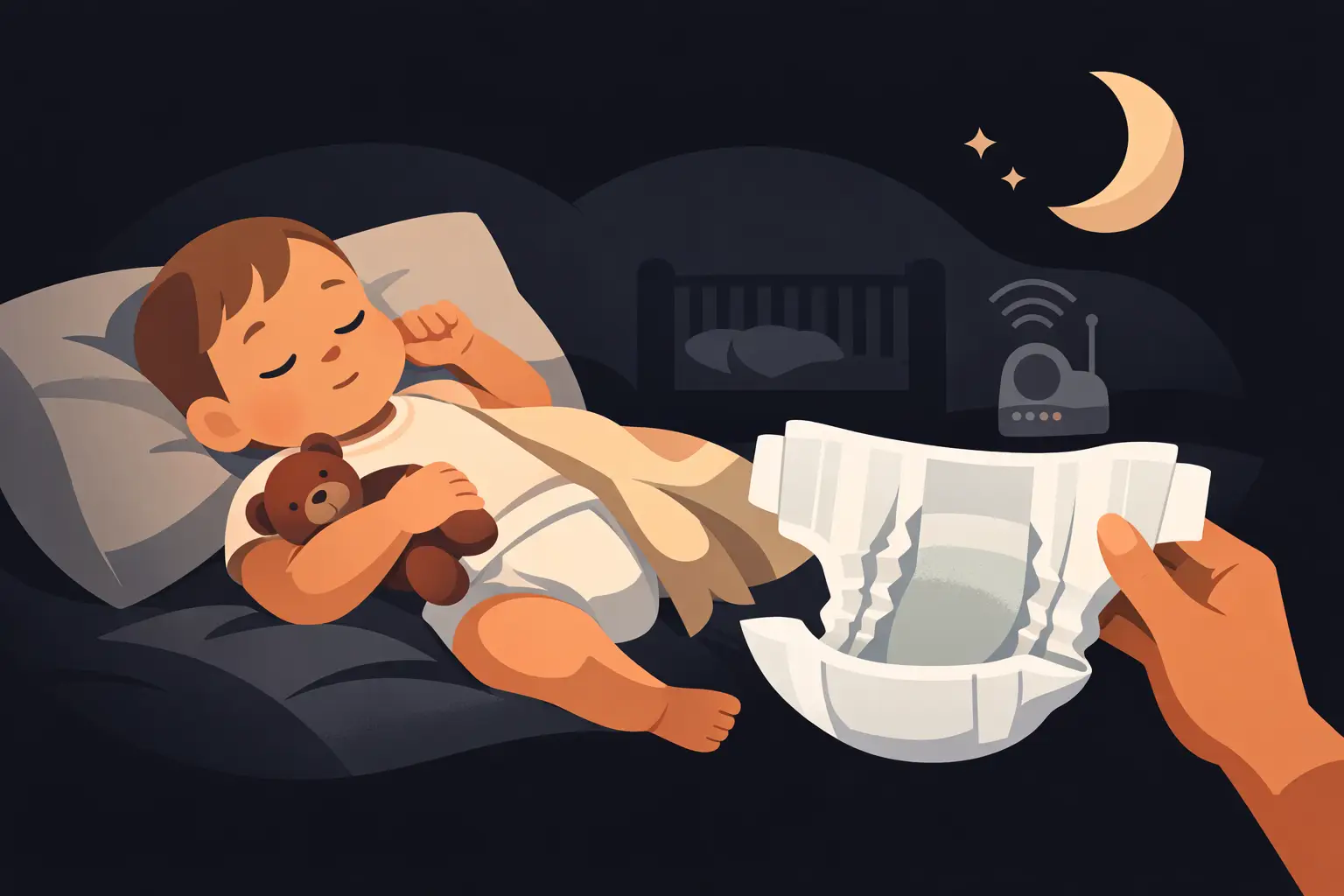
It is 2:13 a.m., your baby is finally asleep, and then you notice the diaper feels wet. That one sleepy question, should I change a wet diaper if baby is sleeping, comes up for almost every parent sooner or later. The short answer is usually no for a simple wet diaper, but there are a few situations where a change is the better call.
A lot depends on your baby’s age, how wet the diaper is, whether there is poop involved, and how sensitive their skin tends to be. Most modern diapers pull moisture away from the skin for a stretch of time, which is why many babies sleep through a wet diaper just fine. Still, “usually no” is not the same as “never.”
Quick answer: If the diaper is only wet, not leaking, and your baby’s skin is usually fine, you can let a sleeping baby keep sleeping. Change right away if there is poop, a leak, or a rash, and with newborns, change during the next feed. If your pediatrician has asked you to watch diaper output closely, follow that advice.
This guide is general information, not medical advice. Every baby is different, so ask your pediatrician or health visitor about your own baby.
Should I change a wet diaper if baby is sleeping? Usually, no
If your baby is sleeping comfortably and the diaper is only wet with urine, it is often okay to let them keep sleeping. Sleep matters for babies, and honestly, it matters for you too.
A wet diaper by itself is not automatically a problem. Overnight diapers and many regular diapers are designed to absorb a good amount of urine while keeping the surface relatively dry. If your baby is not waking up from discomfort, not leaking through pajamas, and not dealing with frequent rashes, there may be no benefit to waking them.
This is especially true for older babies who sleep in longer stretches. If they are gaining weight well, feeding normally during the day, and do not need overnight wake-ups for medical or feeding reasons, a wet diaper during sleep is part of normal nighttime care. Our guide on whether it is safe to use diapers at night goes deeper.
When should you change it right away?
There are a few exceptions where changing the diaper matters more than preserving sleep.
If the diaper has poop
If there is any poop in the diaper, change it as soon as you reasonably can, even if your baby is asleep or half asleep. Poop is much more likely than urine to irritate skin and cause diaper rash. This is the clearest rule of the bunch: wet only, usually wait; poop, change.
If the diaper is leaking
If the diaper is soaking through clothes, sheets or a sleep sack, change it. A leak means the diaper has gone past what it can handle, and cold wet clothing tends to wake babies sooner or later. Leaks also mean more skin contact with moisture. If it keeps happening, see why babies soak through diapers at night for fit and sizing fixes.
If your baby has a rash or very sensitive skin
Some babies sleep in a wet diaper with zero issues. Others get red easily. If your baby is prone to diaper rash or eczema around the diaper area, changing a wet diaper at night may prevent bigger problems. The trade-off is broken sleep, but if nighttime wetness reliably leads to sore skin the next day, prevention is worth it. The American Academy of Pediatrics has a helpful page on diaper rash causes and care.
If your newborn is waking often anyway
Very young newborns wake often to feed, and you are usually checking diapers closely in those early weeks. If your newborn is already up for a feeding, it makes sense to change a wet diaper then, especially if it helps them settle afterward. You usually do not need to wake a sleeping newborn just for a wet diaper.
How does the answer differ for newborns and older babies?
Age changes the answer more than many parents expect.
Newborns
Newborn skin is delicate, and newborns pee and poop often. In the first weeks you are also watching output to make sure feeding is going well, so diaper changes naturally happen more often overnight. Many parents find it easiest to change before or between sides or bottles, so the baby does not fully wake up after the feed.
Older babies
Once babies sleep longer stretches, waking a sleeping baby for a wet diaper often creates more disruption than benefit. If the diaper is absorbent and your baby’s skin is fine, leaving it alone is usually the better move. The goal becomes fewer unnecessary wake-ups, not perfect dryness every hour.
How do you decide in the moment?
If you are standing over the crib trying to make the call, ask yourself four things:
- Is it just pee?
- Is the diaper leaking?
- Does my baby usually get a rash from this?
- Are they already awake anyway?
If it is only pee, there is no leak, your baby’s skin is usually okay and they are sleeping soundly, let them sleep. If poop, leaks or skin issues are part of the picture, a gentle change makes more sense. Parenting at night is rarely about perfect answers. It is about the least disruptive choice that still takes care of your baby.
Or use this quick guide:
| Situation | What to do |
|---|---|
| Only wet, no leak, healthy skin, sleeping soundly | Let your baby sleep |
| Any poop | Change as soon as you reasonably can |
| Leaking through clothes or sheets | Change it |
| Rash or very sensitive skin | A night change may prevent sore skin |
| Newborn already up to feed | Change during the feed |
| Pediatrician is watching output | Follow that advice |
How can you reduce overnight diaper changes?
If this question keeps coming up in your house, a few small adjustments help.
A more absorbent nighttime diaper can make a big difference, especially for babies who pee heavily during long stretches of sleep. Some parents also size up at night for extra absorbency, as long as the fit stays snug around the legs and waist.
A thin layer of barrier cream before bed can protect skin from moisture, particularly if your baby is prone to redness. Our guide on how to prevent diaper rash overnight covers a simple bedtime routine.
It also helps to put on a fresh diaper right before the longest sleep stretch begins. A clean, dry diaper right before sleep gives you the best chance of avoiding middle-of-the-night second-guessing.
If you like tracking patterns, simple notes help here. A basic baby log, on paper or in an app, can show whether leaks or rashes happen after certain feeds, at certain times or with certain diaper brands, and our guide to tracking feeding, sleep and diapers shows how to keep it light.
How do you change a sleeping baby with less fuss?
Sometimes you do need to change the diaper, and the goal is not waking the baby fully.
- Keep the room dim and skip bright overhead lights.
- Have everything ready before you start so you are not rustling around halfway through.
- Move slowly and keep talking to a minimum.
- When you are done, lay your baby back down on their back in their own sleep space.
Some babies sleep through a change surprisingly well. Others pop awake the second the tabs open. That part is temperament, not parenting skill, and it is one more reason to avoid unnecessary changes when the diaper is only mildly wet. The AAP’s safe sleep guide is a good refresher for that last step.
What do pediatricians mean when they say “it depends”?
This is one of those baby care questions where the honest answer really is, it depends. Not because experts are dodging the question, but because babies are different.
A baby with healthy skin in a high-absorbency diaper can often sleep without a nighttime pee change. A baby with a rash, frequent leaks or very sensitive skin may need a different plan. A one-month-old who wakes every two hours is not on the same rhythm as a nine-month-old sleeping eight hours straight.
So the most useful rule is practical, not strict: protect sleep when you can, protect skin when you need to. If your baby has a severe rash, broken skin, unusual urine output or discomfort that seems out of proportion, check in with your pediatrician.
How FeedRight helps
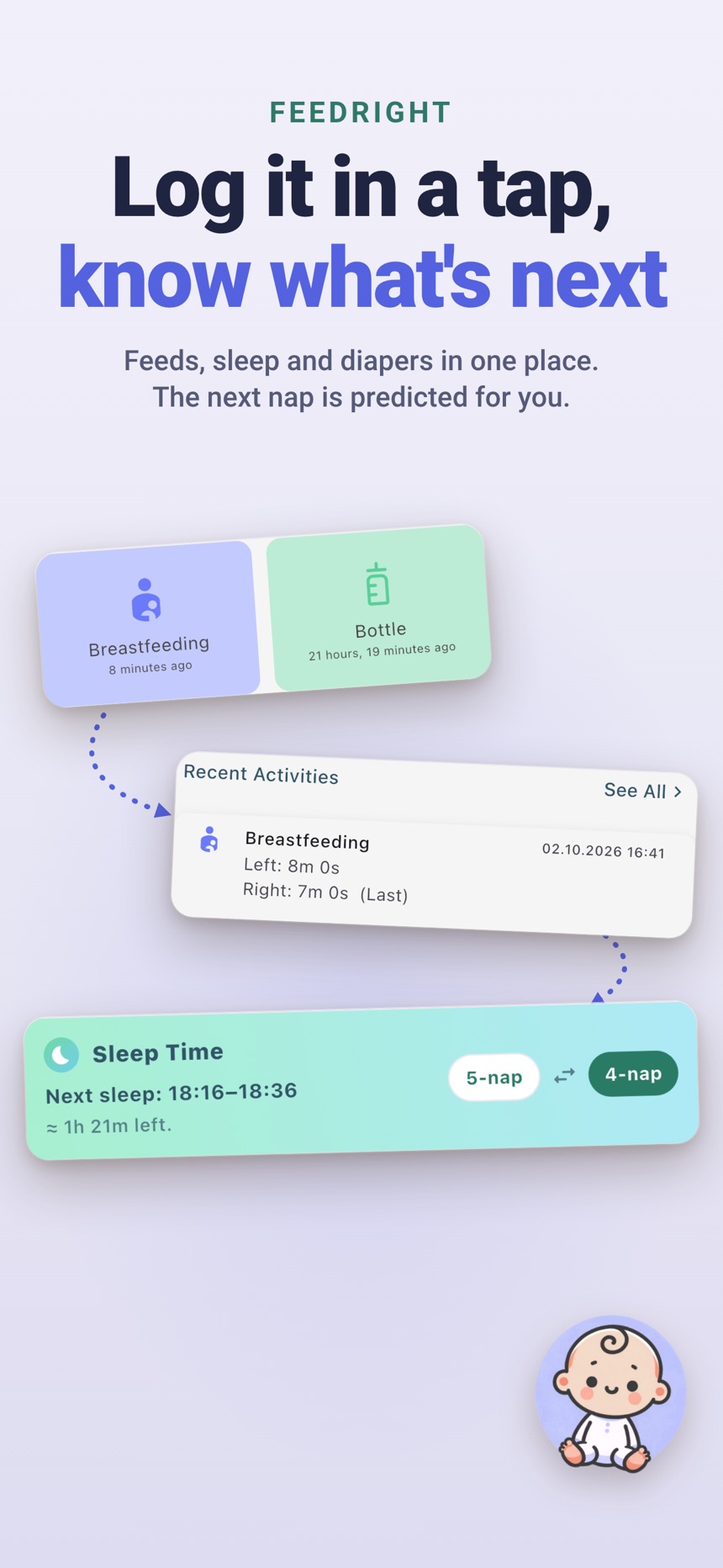
FeedRight was built for this kind of everyday pattern spotting when you are tired. FeedRight Baby Tracker logs diapers (wet, dirty or both), feeds and sleep in one tap on iPhone and Android, and can remind you to do a diaper check. Core logging is free and needs no account. It keeps a record and does not replace your pediatrician’s advice. Download FeedRight from the App Store or Google Play.
Frequently asked questions
Is it okay to let my baby sleep in a wet diaper?
Usually, yes, if the diaper is only wet, is not leaking and your baby’s skin is healthy. Change it if there is poop, a leak or a rash.
Should I change a poopy diaper if my baby is asleep?
Yes. Stool irritates skin much faster than urine, so change a poopy diaper as soon as you reasonably can, even at night.
Should I change my newborn’s diaper before or after a night feed?
Either works. Many parents change before or midway through the feed so the baby can fall back asleep right after eating.
How do I change a diaper without waking my baby?
Keep the room dim, have supplies ready, move slowly and talk as little as possible. Then lay your baby back down on their back in their own sleep space.
How long can a baby stay in a wet diaper at night?
If the diaper is only wet, fits well and is not leaking, many babies can sleep in it until the next feed or the morning change. Change it sooner if there is poop, a leak or redness, and follow your pediatrician’s advice if your baby has sensitive skin.
Do overnight diapers help a baby sleep through a wet diaper?
A more absorbent overnight diaper holds more urine during long stretches of sleep, which reduces leaks and unnecessary night changes. Make sure it still fits snugly around the legs and waist.