
That 2 a.m. question hits hard when your baby is finally asleep and you are staring at a full diaper: is it safe to use diapers for babies at night, or should you be changing every single time? For most babies, overnight diaper use is safe. The longer answer depends on your baby’s age, skin, sleep, and how well the diaper is actually doing its job.
Nighttime is all about trade-offs. You want your baby dry and comfortable, but you also do not want to wake them unnecessarily if they are sleeping well. Most parents are balancing those two things one night at a time.
Quick answer: Yes, for most healthy babies it is safe to wear one diaper through the night. A well-fitting diaper holds urine for several hours, so you usually do not need to wake a sleeping baby for a wet diaper. Change it if there is poop, a leak, or rash, and ask your pediatrician if your baby’s skin or output worries you.
This guide is general information, not medical advice. Every baby is different, so ask your pediatrician or health visitor about your own baby.
Is it safe to use diapers for babies at night?
For most healthy babies, yes. A good diaper worn overnight is designed to absorb urine for longer stretches than daytime use. If your baby is sleeping, the diaper is not leaking, and their skin looks healthy in the morning, there usually is no reason to wake them just for a wet diaper.
What changes the answer is poop, skin irritation, or a diaper that is clearly overwhelmed. If your baby has a bowel movement, especially a newborn, change them sooner rather than later. Stool is much more irritating to the skin than urine, and leaving it overnight can quickly lead to diaper rash.
So the working rule is simple: wet only is often fine for sleep, poop is not.
Why are nighttime diapers usually fine?
Modern diapers are built to pull moisture away from the skin and lock it into the absorbent core. That matters at night because babies may go several hours without a change. A properly fitting diaper can keep the skin fairly dry even when it holds a lot of urine.
That said, “fairly dry” is not the same as “risk-free.” Some babies have very sensitive skin. Others pee heavily or move enough in their sleep to cause leaks. A diaper that works beautifully for one baby may fail for another.
You do not need a perfect system. You need one that keeps your baby sleeping comfortably and waking up without soaked pajamas or irritated skin.
Does age change the answer?
More than people think. Newborns feed often, poop often and usually wake often anyway, so diaper changes happen naturally through the night because you are already up feeding. In the first weeks, your pediatrician may also want you to keep an eye on wet and dirty diapers as a sign that feeding is going well.
Older babies may sleep in longer stretches and have fewer bowel movements overnight. For them, it is common and usually practical to use one diaper for the full night if it stays within capacity.
When should you change a diaper during the night?
There is no prize for leaving a diaper on all night if it is clearly causing a problem. A nighttime change makes sense if:
- there is any poop in the diaper;
- the diaper is leaking or so full it feels heavy and saggy;
- your baby has active diaper rash or broken skin;
- leaks are waking your baby anyway;
- your newborn is already awake for a feed, and a change helps them settle;
- your pediatrician has asked you to monitor output closely.
Some babies need a fresh diaper right before or after a late feed, especially if they tend to soak through by early morning. Others do best with a fresh diaper right before bed and no further changes unless something is wrong. Our guide on whether to change a wet diaper while baby is sleeping walks through the in-the-moment decision.
What are the signs overnight diapers are not working?
A diaper can be safe and still not be the right fit for your baby. Watch the pattern, not just one random bad night.
If your baby often wakes up soaked, gets regular redness by morning, or has deep marks around the legs or waist, it may be time to adjust something. That could mean a different size, a more absorbent overnight diaper, a bedtime barrier cream, or changing closer to the moment they fall asleep. If leaks are the main problem, see why babies soak through diapers at night for fit and sizing fixes.
Repeated leaks often point to fit. A diaper that is too small may fill too fast. One that is too big may gap around the legs. Sometimes the fix is as boring as making sure the leg cuffs are pulled out properly.
Common signs and the adjustments the post suggests:
| Sign | What to try |
|---|---|
| Often wakes up soaked | A more absorbent overnight diaper or a different size |
| Regular redness by morning | Bedtime barrier cream, or a change closer to sleep |
| Deep marks at legs or waist | Check the size and fit |
| Diaper fills too fast | It may be too small |
| Gaps or leaks around the legs | It may be too big; pull the leg cuffs out |
How can you make nighttime diapers safer and more comfortable?
The best nighttime setup is usually simple. Start with a clean, dry diaper right before bed. Make sure it fits snugly without digging in. If your baby gets irritated easily, apply a thin barrier cream before sleep to help protect the skin.
Try not to layer on too many hacks at once. Doublers, booster pads and sizing tricks can help in some cases, but too much bulk can affect fit and make leaks worse. Change one variable at a time and see what actually helps.
Keep leak protection out of the crib itself. The American Academy of Pediatrics recommends that babies sleep on their back on a firm, flat surface with only a fitted sheet, so skip extra towels, blankets or padding to catch leaks. Its parent’s guide to safe sleep covers the full setup.
Overnight diapers vs regular diapers
Not every baby needs overnight diapers. Many do just fine in regular diapers, especially in the early months. Overnight diapers can help if your baby is sleeping longer stretches or soaking through standard diapers before morning.
They are usually more absorbent and made for a longer wear window. That does not mean they should hold poop longer or replace good skin checks. If your current diaper works, you do not need to upgrade just because the packaging says “overnight.” If it does not, an overnight option is a reasonable next step.
Do overnight diapers cause diaper rash?
This is the biggest concern behind the question, and it is a fair one. Prolonged moisture can irritate the skin, and some babies are more sensitive than others. But a wet diaper overnight does not automatically mean your baby will get diaper rash.
Rash risk goes up when moisture, friction and stool are all part of the picture. That is why poop matters more, and why babies with existing irritation may need more frequent nighttime changes. Our guide on how to prevent diaper rash overnight covers a simple bedtime routine, and the AAP explains what causes diaper rash and how to treat it.
Mild redness once in a while does not mean the overnight diaper is unsafe. If the redness is frequent, worsening or turning into broken skin, the routine needs to change.
When does extra caution make sense?
Babies with very sensitive skin, eczema, frequent diarrhea or current diaper rash usually need a more hands-on nighttime plan. So do newborns whose feeding and output are still being watched closely. Fever, antibiotics or unusual stools can also make the skin irritate faster.
If something feels off, such as strong-smelling urine, a persistent rash, crying with every wipe, or unusual skin changes, check with your pediatrician. Parents know when a routine issue starts to feel less routine.
How do you balance sleep and dry skin?
Sleep matters for babies, and it matters for parents too. Waking a sleeping baby for every wet diaper can create more disruption than benefit if their skin is fine and the diaper is holding up.
That does not mean ignoring discomfort. A baby sleeping peacefully in a good overnight diaper is different from a baby waking every night because they are soaked through at 4 a.m.
This is where tracking feeds, sleep and diapers can help. If leaks happen only after a late feed, or rash appears after certain nights, you can tweak the routine based on real life instead of guesswork. The newborn feeding and diaper schedule basics show what a typical day of output looks like in the early weeks.
How FeedRight helps
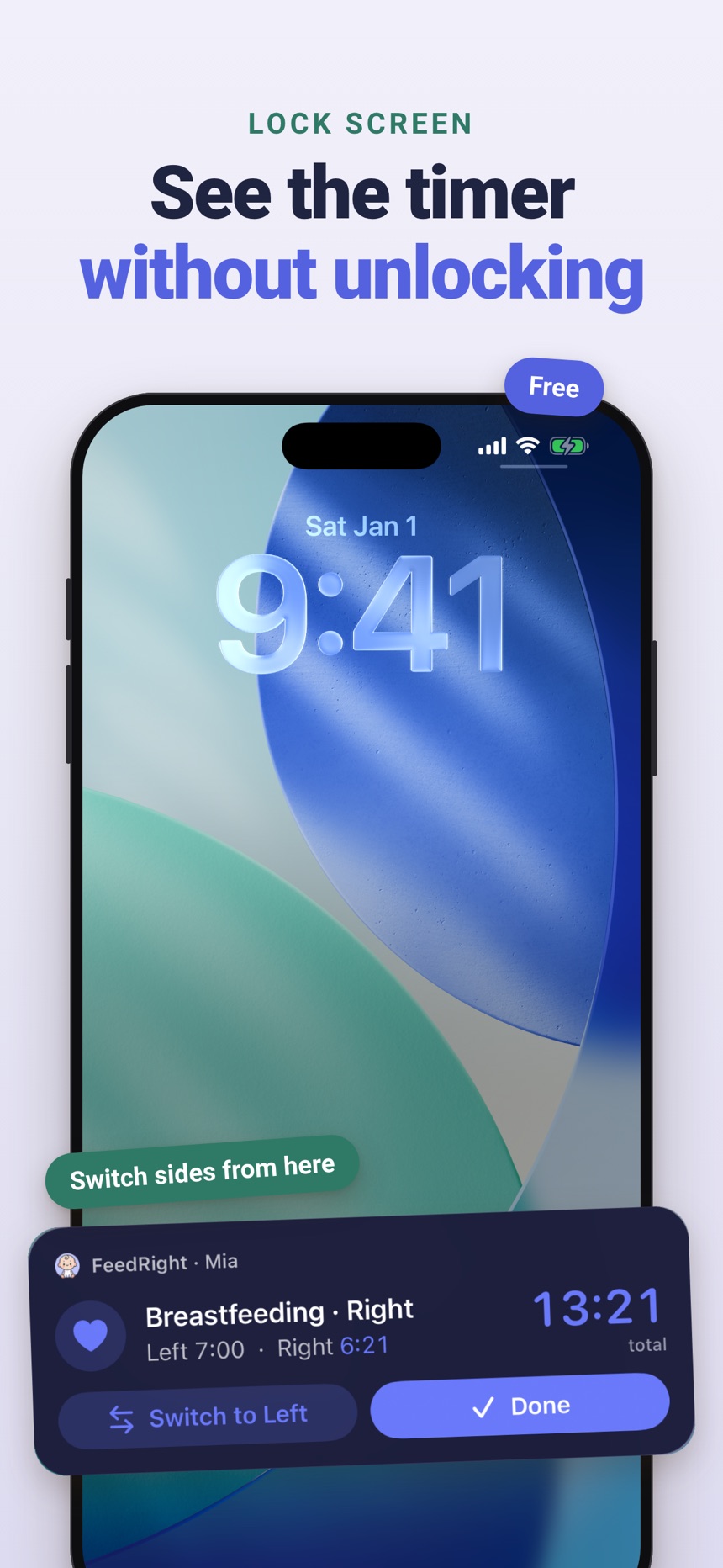
A simple log makes overnight patterns easier to see when you are running on broken sleep. FeedRight Baby Tracker logs feeds, sleep and diapers (wet, dirty or both) in one tap on iPhone and Android, with free core logging, no account needed and reminders such as a diaper check. Some parents start with a notebook instead of an app; either works if you keep it up. It is there to jog your memory, not to give medical advice. Get FeedRight from the App Store or Google Play.
Frequently asked questions
Is it okay for a baby to sleep in a wet diaper all night?
For most babies, yes, if the diaper fits well, does not leak and their skin looks healthy in the morning. Change it if there is poop, a leak or rash.
Should I wake my baby to change a diaper at night?
Usually not for a wet diaper alone. Change a poopy diaper, a leaking diaper or one on irritated skin, and follow any specific advice from your pediatrician about monitoring output.
Are overnight diapers necessary?
Not always. Regular diapers work for many babies, especially in the early months. Overnight diapers help if your baby sleeps long stretches or soaks through standard diapers before morning.
When should I call the pediatrician about a nighttime diaper problem?
Call if a rash keeps returning or gets worse, the skin is broken or blistered, urine smells unusually strong, your baby has a fever, or wet diapers drop noticeably.
How long can a baby wear a diaper at night?
A well-fitting diaper is designed to hold urine for several hours, so many babies who sleep long stretches wear one diaper through the night if it only has pee in it. Change it sooner if there is poop, a leak or irritated skin, and ask your pediatrician if your baby’s skin or output worries you.
When should you start using overnight diapers?
Many families switch to overnight diapers once their baby sleeps longer stretches and soaks through regular diapers before morning. If your current diaper holds up overnight without leaks or redness, you do not need to switch.