
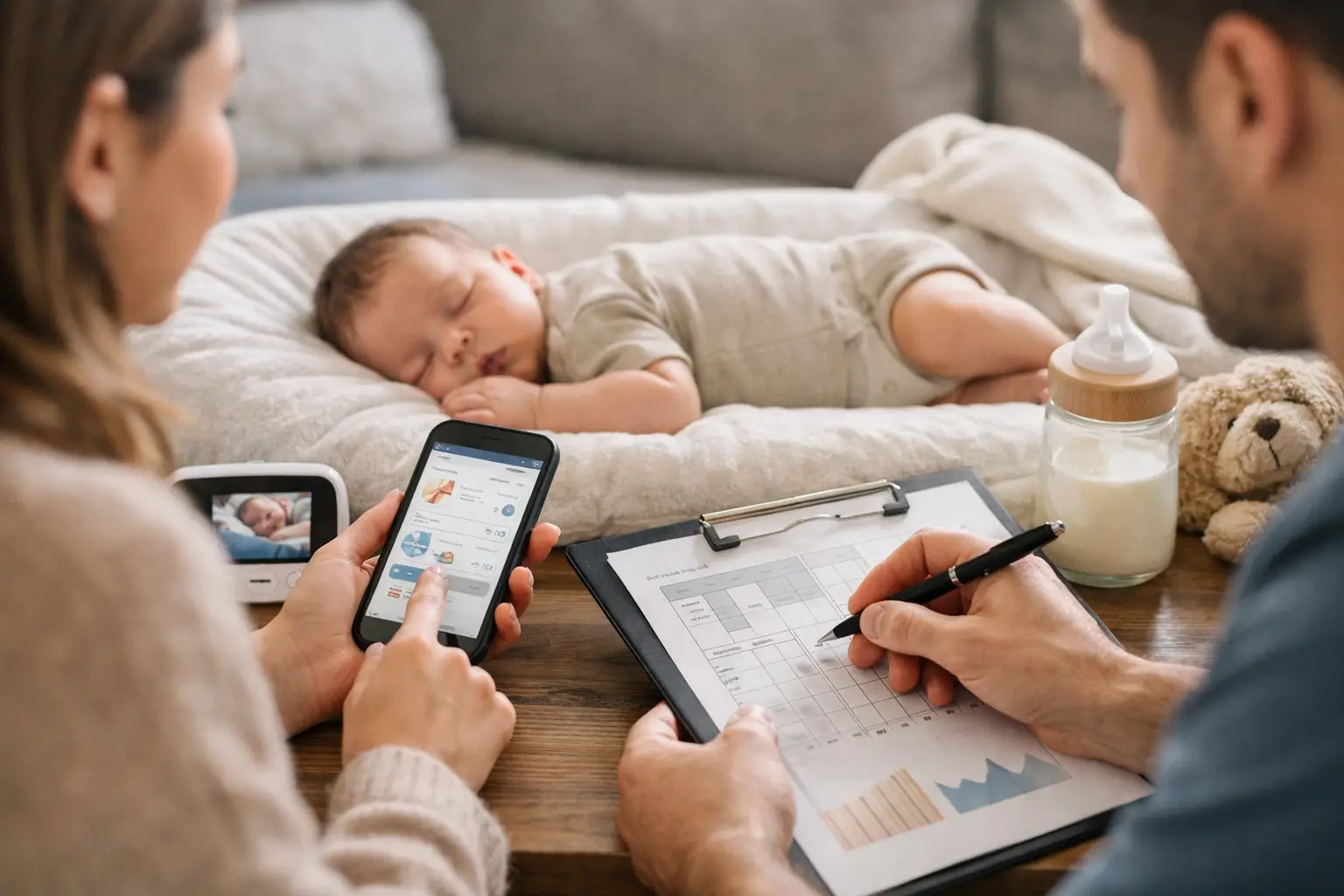
In the first weeks, one feeding blurs into the next diaper change faster than anyone expects. A new parent tracking guide is not about measuring every minute of your baby’s life. It is about keeping a few useful details close by when sleep is short, your hands are full, and someone asks, “When did they last eat?”
For many families, tracking offers a small sense of steadiness during a very unsteady season. The trick is choosing what helps and letting the rest go. Your baby does not need a project manager. You need a simple record that makes the next decision easier.
Quick answer: In the first months, track three things: feeds (time, plus side or amount if useful), diapers (wet, dirty, or both), and sleep (start and end). Keep entries short, share one log with everyone who cares for the baby, and add a note only when something stands out. Scale back as your routine settles, and ask your pediatrician what to watch closely.
This guide is general information, not medical advice. Every baby is different, so ask your pediatrician or health visitor about your own baby.
What should new parents track first?
In the first weeks, feeding, diapers, and sleep are usually the most helpful things to log. They are connected to the questions parents ask all day: Is the baby eating enough? Was that diaper wet or dirty? How long has it been since the last nap? Is this fussy stretch different from yesterday?
A basic record answers those questions without asking you to reconstruct the day from memory. For feeding, note the start time and, if useful, the amount or which side you nursed on. For diapers, a quick wet, dirty, or both is enough for most daily use. For sleep, logging when a nap starts and ends can reveal patterns over time, even when the pattern is mostly “short naps at inconvenient times.”
There is no prize for capturing more information. The best tracking system is the one you can keep using while holding a bottle, settling a crying baby, or eating lunch one-handed.
A quick reference for the first weeks:
| What to track | What to log | Why it helps |
|---|---|---|
| Breastfeeding | Start time, plus side and duration at first | Answers when the baby last ate |
| Bottle feeding | Time and amount | Useful basics for handoffs and visits |
| Pumping | Sessions and output, if you want | Shows a routine, not a judgment |
| Diapers | Wet, dirty or both | Helps you learn your baby’s normal |
| Sleep | When each nap starts and ends | Shows the rhythm already happening |
Feeding: use the level of detail that fits your situation
Some parents want a simple last-fed time. Others need to track ounces, pumping sessions, breast side, or a baby’s reaction to a new formula. Both approaches are valid.
If feeding is going smoothly and your pediatrician has no concerns, a lighter log may be all you need. If your baby is newly home, has weight-gain questions, is taking medicine, or is working through feeding challenges, more detail makes appointments more productive. You will have real information to share instead of trying to remember a difficult week on the spot.
For breastfed babies, many parents log the side and duration at first, then simplify as feeding becomes familiar. For bottle-fed babies, the time and amount are usually the useful basics. Pumping parents may also want to track pumping sessions and output, but try not to turn each session into a judgment. Output varies for many ordinary reasons.
Diapers: small notes, genuinely useful clues
Diaper tracking feels repetitive because it is repetitive. Still, wet and dirty diaper counts are useful early on, especially while you are learning your baby’s normal routines and watching hydration or digestion. If you want to know what is typical by age, our guide to how many wet diapers a day is a good next read.
You do not need a detailed report after every change. A quick tap for wet, dirty, or both is often enough. If something looks unusual or your baby seems uncomfortable, make a brief note and bring it up with your pediatrician. The goal is to notice a change, not diagnose it from an app.
Sleep: look for patterns, not perfect schedules
Newborn sleep rarely follows a neat plan. A tracker will not make a baby sleep through the night, and it should not make you feel like you are failing when naps are scattered. What it can do is show you the rough rhythm that is already happening.
After several days, you may notice your baby tends to have a longer morning nap, gets fussy after a certain awake window, or sleeps better after a fuller feed. Those observations help you plan your day one nap time at a time. They also help a partner, grandparent, or caregiver understand what has already happened before they take over.
How do you keep tracking shared, not stressful?
A good log is especially helpful when more than one person cares for the baby. One parent may handle an early feed while the other catches an hour of sleep. A grandparent may step in for an afternoon. Without a shared record, every handoff starts with a mini investigation.
The best handoff is simple: last feed, last diaper, last sleep, and anything unusual. That is usually enough context for the next person to feel confident, and it cuts down on the mental load that often lands on one parent by default. For more ideas, see how to share baby logs without the group chat.
Tracking should support teamwork, not create a new task for one exhausted person. Agree on the minimum everyone will log. If one parent loves detailed notes and the other only remembers to tap “fed,” build the system around what will actually happen.
Which tracking tool fits into your routine?
Paper notes can work, especially during the first few foggy days at home. But they are easy to lose, hard to share, and not much help when you are trying to remember yesterday’s timing. A focused mobile tracker keeps the basics in one place and is usually faster than opening a notebook.
Look for a tool with large, clear actions for feeding, sleep, and diapers. It should be quick to use with one hand and easy to understand without a tutorial. A screen crowded with charts, memberships, communities, and settings can be too much when you only need to log a bottle at 3 a.m.
When is tracking worth more attention?
Most tracking is for your own peace of mind and routine. Sometimes it becomes useful information for a pediatrician or lactation consultant. Consider keeping more consistent notes if your baby has feeding trouble, fewer wet diapers than expected, persistent vomiting, unusual sleepiness, poor weight gain, or a sudden shift in normal behavior.
A log provides helpful context, but it is not medical advice and it cannot replace a call to your child’s care team. The American Academy of Pediatrics has a clear overview of how often and how much babies eat, and your pediatrician or health visitor can tell you what is normal for your baby. If something feels off, trust that feeling and reach out rather than waiting for a tracker to confirm it.
Is it okay to stop or scale back tracking?
Tracking is most valuable when life is new and the details are hard to hold in your head. As you learn your baby and settle into a rhythm, you may not need to log every feed or nap. Many parents move from detailed records to a quick check of the last feeding, then eventually stop daily tracking altogether.
That is not quitting. It means the tool did its job.
You may also scale up and down based on the day. Track closely during a growth spurt, when a caregiver is helping, or before an appointment. Keep it loose on a quiet weekend at home. The right amount depends on what gives your family clarity, not on someone else’s routine.
A simple first-week approach
For the first seven days, keep it this simple:
- Log every feed, diaper, and sleep with as little extra detail as possible.
- Add a note only when something stands out: a new formula, a difficult feed, medicine, a long fussy stretch, or a question for the pediatrician.
- Agree with your partner or caregiver on who logs what, especially overnight.
- After a few days, glance at the record instead of analyzing every entry. Are feeds happening regularly? Are diapers being logged? Is one time of day predictably harder?
- Keep the details that helped and drop the ones that did not.
The early months ask a lot of parents. A simple tracker cannot make the nights longer or the laundry disappear, but it can remove one small layer of guesswork. Keep the information that helps, skip the information that does not, and leave room to simply be with your baby.
How FeedRight helps
FeedRight Baby Tracker was built around that practical need: fast logging for the routines parents repeat most, without turning everyday care into a complicated system. The free version needs no account and keeps your data on your phone.
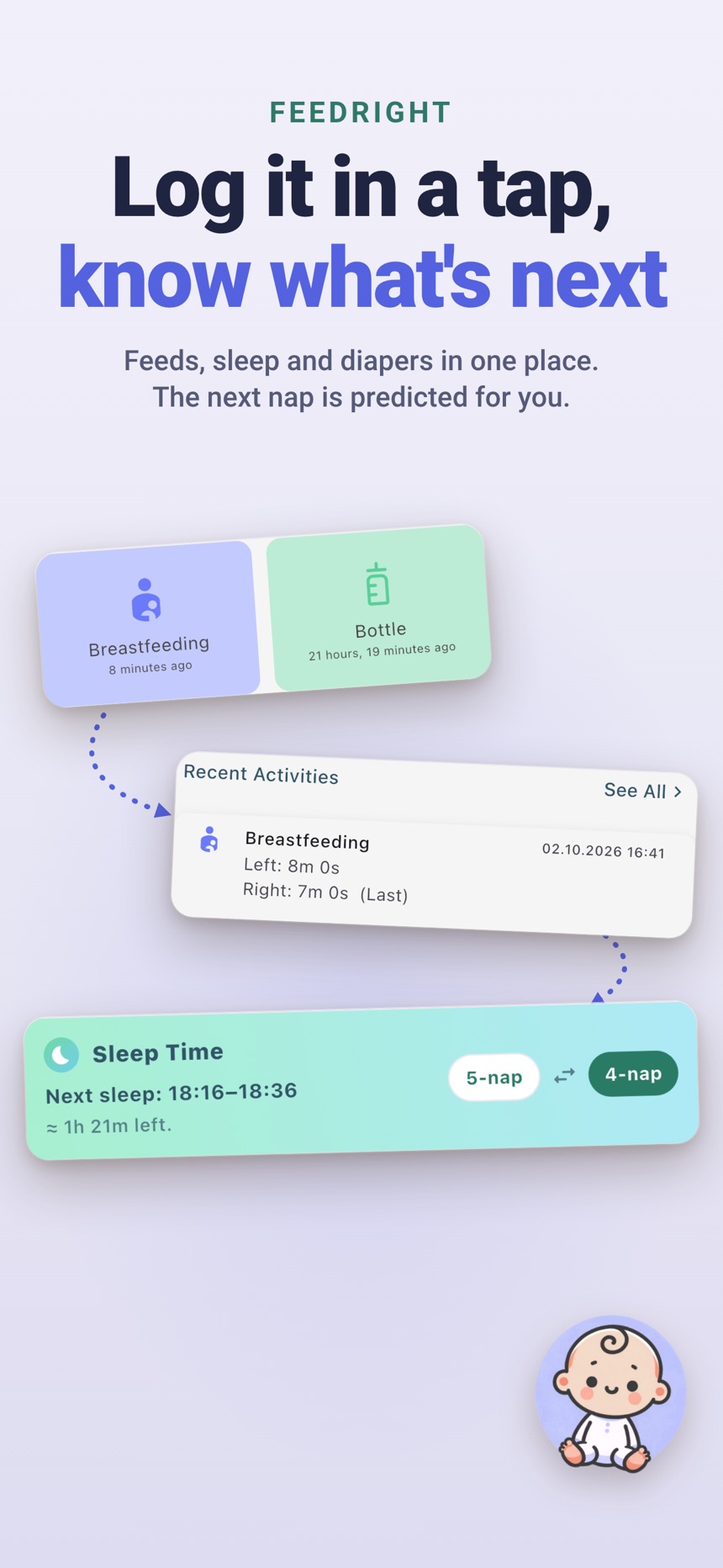
- One-tap logs for breastfeeding (with a left and right timer), bottles, pumping, sleep, and diapers.
- A daily summary and history, so the last feed, nap, and diaper are easy to find.
- A partner, grandparent or nanny can join your family by invite code or QR code; FeedRight Premium, an optional subscription, adds cloud backup and family sync.
Install FeedRight from the App Store or Google Play.
Frequently asked questions
What should I track for a newborn?
Start with feeds, diapers, and sleep. Note the time of each feed (plus side or amount if useful), whether each diaper was wet, dirty, or both, and when naps start and end.
How long should I keep tracking my baby?
There is no set end date. Many parents track closely in the first weeks, then scale back as feeding and sleep settle. Keep tracking longer if your pediatrician asks you to watch something specific.
Is a paper log or an app better for new parents?
Both can work. Paper is simple in the first foggy days, while an app is usually faster to update one-handed, easier to share, and easier to review later.
When should I show my tracking log to a pediatrician?
Bring it to checkups and any time you have a concern, such as feeding trouble, fewer wet diapers than usual, poor weight gain, or unusual sleepiness. If something feels urgent, call right away instead of waiting for a pattern.
Should both parents log the baby’s feeds and diapers?
It helps when both parents use the same log, so each person can see the last feed, diaper and sleep before taking over. Agree on the minimum everyone will log, especially overnight.
What if I forget to log a feed or a diaper?
Add an approximate time if you remember it, or skip that entry and log the next one. A few missed entries do not undo the value of the rest of the record.