

At 2:17 a.m., the question is rarely “What is the perfect feeding plan?” It is usually “When did the baby last eat?” Learning how to manage night feeds is less about creating a flawless schedule and more about making the next wake-up feel calm, safe, and doable.
For the first few weeks especially, night feeds are a normal part of caring for a baby. Their tiny stomachs need frequent refills, and their days and nights may not yet make much sense. A simple setup helps you spend less time doing mental math in the dark and more time getting everyone back to sleep.
Quick answer: To manage night feeds, prepare supplies before bed, keep the room dim and quiet, and follow a short routine: feed, burp if needed, change only if needed, settle, and log the feed in one place. Agree in advance who handles which jobs, put your baby back on their back in their own sleep space, and ask your pediatrician about feeding frequency.
This guide is general information, not medical advice. Every baby is different, so ask your pediatrician or health visitor about your own baby.
How do you manage night feeds with less friction?
The best overnight routine is the one you can follow while half awake. Keep it short: feed, burp if needed, change if needed, settle, and make a quick note. You do not need to turn every wake-up into a production.
Before bed, decide what “ready” looks like for your family. If you are breastfeeding, that might mean a filled water bottle, a burp cloth, nursing pads, and a soft light within reach. If you are bottle-feeding, it may mean clean bottles, measured formula, and safe water prepared according to your pediatrician’s and the formula’s instructions. Many parents also keep an extra sleeper and diaper nearby to avoid a full trip across the house.
A dim, warm-toned nightlight is often enough. Bright overhead lights can make both you and your baby more alert than necessary. Keep conversation quiet and interaction boring in the kindest possible way. Nighttime is for comfort and feeding, not playtime.
The whole routine fits in a few short steps.
| Step | What it looks like |
|---|---|
| Before bed | Set out supplies and agree who does which jobs |
| Light | A dim, warm-toned nightlight instead of overhead lights |
| Feed and burp | Burp only if needed; keep talk quiet and play out of it |
| Diaper | Change only if soiled, very wet, leaking or bothering your baby |
| Settle | Back on their back in their own sleep space |
| Log | Start time, breast or bottle, and the side or amount |
Keep one simple record
Sleep deprivation makes a very ordinary question feel impossible: Which side did I nurse on last? Did that bottle start at 11:30 or midnight? Did the diaper actually need changing?
A quick feeding log gives you an answer without relying on memory. Track the start time of the feed, whether it was breast or bottle, and the amount if you use bottles. For nursing, noting the side and approximate duration helps when you are trying to alternate sides or notice a pattern. Add diapers only if that information is helpful to you or your baby’s clinician has asked for it.
The goal is not perfect data. It is a reliable little breadcrumb trail for the next person who wakes up. An app makes that handoff easier, but a note on your phone or a paper pad works too. Use the method you will actually keep using at 3 a.m. Over a few weeks, those notes also show how nights are changing; see what night feed results can tell you over time.
How should you set up the room before you are exhausted?
Night feeds get harder when every supply lives somewhere else. Create a small feeding station near the place where you normally feed. A basket, caddy, or clear spot on a side table is enough. Keep the basics together:
- Burp cloths and bibs
- Diapers, wipes, and diaper cream
- A water bottle and easy snack for the feeding parent
- A phone charger, soft light, and a place to log the feed
If you bottle-feed, follow safe preparation and storage guidance rather than leaving prepared bottles out overnight. If you are unsure about storage times, warming, or whether a bottle can be reused after a feed starts, ask your pediatrician or check the instructions for the formula you use.
The same principle applies to pumping. If you pump overnight, have the parts, storage containers, and cleaning plan clear before bedtime. A more detailed setup may save time during the feed but create more cleanup later. Choose the version that protects the most sleep for your household.
How can you share night feeds when only one person feeds?
Night feeding does not have to mean one parent handles every task. Even if one person is nursing, the other can bring the baby, refill water, handle a diaper, burp and resettle the baby, or log the feed. Those small jobs matter when they happen night after night.
Some families split the night into shifts. One parent takes the earlier stretch while the other gets a protected block of sleep, then they switch. This works particularly well with expressed milk or formula, but it is not the right fit for every breastfeeding parent. If maintaining supply means you need to nurse or pump regularly, the “off-duty” parent can still take everything around the feeding itself.
Be specific before you go to bed. “Can you help more tonight?” is hard to act on when everyone is tired. “You take diapers and resettling until 1 a.m.; I will handle the next feed” is much clearer. A tiny plan prevents two exhausted adults trying to remember what they agreed to.
Why follow your baby instead of someone else’s schedule?
Newborns often feed frequently at night, including in close clusters. That can feel like something is wrong, but frequent feeding is often normal. Growth spurts, developmental changes, illness, and a day with shorter feeds can all make nights look different. The AAP explains how often and how much babies eat in general terms.
Watch the whole picture rather than judging one rough night. Is your baby feeding effectively? Are wet diapers and weight gain on track? Do they seem comfortable between feeds? Your pediatrician can help you understand what is typical for your baby’s age, growth, and feeding needs.
Do not stretch feeds or try to drop a night feed just because another baby your age is sleeping longer. For newborns, especially babies born early or with weight-gain concerns, you may need to wake them to feed until your clinician says otherwise.
Call your baby’s pediatrician if feeding becomes consistently difficult, your baby has fewer wet diapers than expected, seems unusually sleepy or hard to wake for feeds, has vomiting that concerns you, or is not gaining weight as expected. If your instincts say something is off, that is enough reason to ask.
How do you make the return to sleep the priority?
After a feed, the temptation is to keep checking the clock and calculating how much sleep is left. Try not to. The clock rarely has good news at night.
Instead, use a short reset: place baby back in their own safe sleep space on their back, take a sip of water, log the feed if you are logging, and get yourself back to bed. Follow the AAP’s safe sleep guidance and your pediatrician’s advice, including a firm, flat sleep surface without loose blankets, pillows, or other items.
Not every baby needs a diaper change at every feed. If the diaper is soiled, change it. If it is very wet, leaking, or clearly bothering your baby, change it. Otherwise, a full change can wake everyone up more than needed. Our post on whether to change a wet diaper while baby sleeps goes into more detail.
If your baby falls asleep while feeding, a gentle burp may be enough. Some babies need more upright time for comfort, while others settle faster when you keep the whole process brief. Try one small adjustment at a time so you can tell what helps.
How does the night-feed routine change over time?
The routine you use with a two-week-old will not be the routine you use a few months later. At first, your system may be all about getting through frequent wakes. Later, it may be about noticing a longer first stretch, adjusting a bottle amount with your clinician’s guidance, or making a smoother handoff between parents.
Give yourself permission to simplify whenever something stops helping. A charged phone, a few supplies within reach, and a clear next step can be plenty.
How FeedRight helps
FeedRight Baby Tracker is the night-feed log we make for iPhone, Apple Watch and Android. Its breastfeeding timer remembers which side you finished on, it works offline with no account, and dark mode keeps the screen gentle in a dim room. FeedRight Premium, an optional subscription, adds family sync so whoever wakes next sees the latest feed. It is not a medical device. Set it up before tonight from the App Store or Google Play.
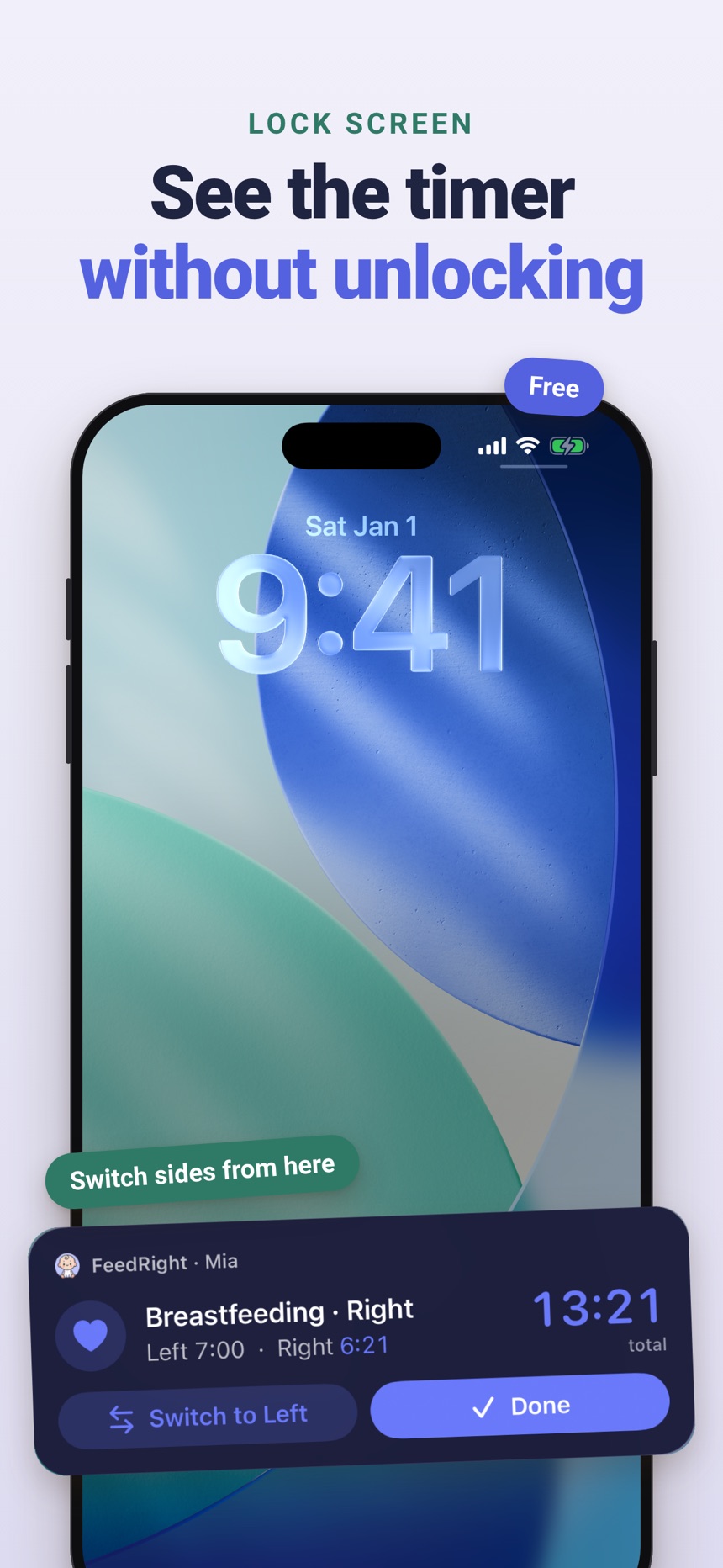
- Breastfeeding timer for left and right, with switch side and finish feed on the iPhone Lock Screen.
- Bottle and pumping logs in ml or fl oz.
- An optional nudge a few hours after the last feed.
Tonight, make the setup a little easier for the version of you who will wake up in the dark. That parent deserves a system with fewer decisions, one night feed at a time.
Frequently asked questions
How often do newborns feed at night?
Many newborns feed every two to three hours around the clock, sometimes in close clusters. Your pediatrician can tell you what is right for your baby’s age and growth.
Should I change my baby’s diaper at every night feed?
Not always. Change it if it is soiled, very wet, leaking or bothering your baby; otherwise skipping the change can help everyone get back to sleep sooner.
How can my partner help with night feeds if I am breastfeeding?
Your partner can bring the baby, handle diapers, burp and resettle, refill your water and log the feed, or take a shift with expressed milk if that fits your feeding plan.
Should I keep a log of night feeds?
A quick log of the time, side or amount helps the next person who wakes up and makes questions from your pediatrician easier to answer. Keep it short enough to do half asleep.
When do babies stop needing night feeds?
It varies widely: some babies sleep longer stretches without a feed between about 3 and 6 months, while others still wake to feed later in the first year. Do not drop night feeds without checking with your pediatrician, especially with young babies or if weight gain is being watched.
How do I keep my baby sleepy during a night feed?
Keep the room dim with a warm nightlight, talk quietly and skip play. Change the diaper only if it is soiled, very wet or leaking, then put your baby back on their back in their own sleep space.