
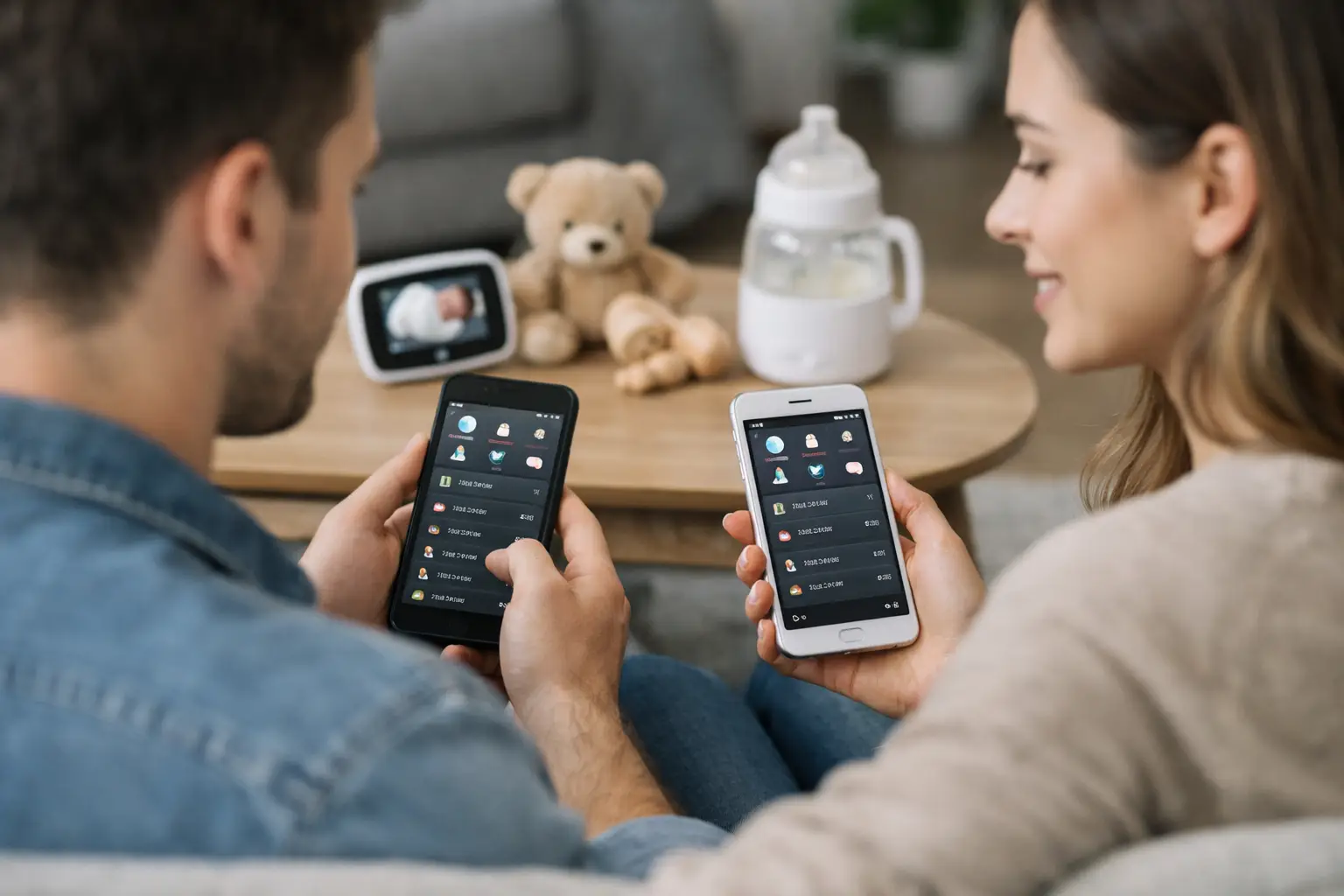
Did the baby eat already? It sounds like a simple question. But when one parent has been up for an hour and the other is trying to get a few more minutes of sleep, the answer can feel oddly hard to find. A shared baby tracker for couples gives both parents the same simple record, without relying on half-awake memory, sticky notes, or a text thread that disappears under photos and grocery reminders.
The goal is not to turn your baby into a spreadsheet. It is to make the next decision easier. When was the last bottle? How long was that nap? Has there been a diaper change since lunch? Those small details matter, especially in the first months when days blur together.
Quick answer: A shared baby tracker for couples is one record of feeds, sleep and diapers that both parents can see and add to from their own phones. It works best when logging takes seconds, the last event is obvious at a glance, and you agree in advance what to log and who logs it.
This guide is general information, not medical advice. Every baby is different, so ask your pediatrician or health visitor about your own baby.
Why do couples need one shared record?
A new baby changes the rhythm of a household fast. One parent may handle an early-morning feed, while the other takes over after work. Grandparents might help for an afternoon. Even when both parents are home, you are not always in the same room when something happens.
Without a shared record, each handoff starts with a mini briefing. Sometimes that is fine. Sometimes the baby is crying, dinner is burning, and neither person can remember whether the last nap began at 1:00 or 2:00. A tracker replaces the need to reconstruct the day from memory.
It also takes pressure off the parent who has been doing more of the logging, feeding, or settling. Baby care should not require one person to become the household’s information desk. When both people can check and add updates, the work is easier to share in a real, practical way.
A shared tracker is especially helpful for bottle-feeding families, pumping parents, partners who work different shifts, and couples managing more than one caregiver. Still, it is useful for any family that wants fewer repeated questions and calmer handoffs. If you are weighing the options, our post on whether parents can share feeding logs covers the basics.
What should couples track, and what can they skip?
Track the information you will actually use. For many families, that means feeds, sleep, diapers, and a few notes about medicine or an unusual day.
Feeds answer the immediate question of when and how much the baby last ate. For nursing parents, a simple record of start time, duration, or side helps spot a routine without making every session feel clinical. For bottles, logging the amount is useful when parents trade shifts or check in with a pediatrician. The AAP’s overview of how often and how much babies eat is a good general reference.
Sleep records can be just as valuable. Babies do not follow neat schedules, particularly in the beginning, but seeing nap timing helps you understand why late afternoon suddenly feels impossible. A tracker cannot guarantee better sleep, but it can show patterns that are hard to see while you are living them.
Diaper logging is most useful during the newborn stage, when wet and dirty diapers are one of the signs parents and pediatricians use to check that feeding is going well. Later, you may decide you do not need it anymore. That is a good sign. The app should fit your life, not create another chore.
You do not need to track every yawn, every ounce, or every minute to be a thoughtful parent. If detailed records are making you anxious, scale back. The right amount of tracking is the amount that helps your family feel more informed, not more monitored.
Which features make sharing actually useful?
Not every baby app is built for two people. Some are great personal logs but become frustrating when parents need to compare notes. For a shared system to work, it needs to be quick enough that either parent will use it during a busy moment.
- Both parents see the same current information on their own phones, without sending screenshots back and forth.
- Logging takes seconds, whether you are holding a bottle, rocking a fussy baby, or walking through the grocery store.
- Every entry has a time stamp and the last event is obvious at a glance, so there is less guesswork at handoff.
- The app is simple enough to use consistently, rather than packed with settings you will never touch.
That last point matters. A feature-heavy parenting platform may sound helpful, but more options mean more setup, more notifications, and more reasons to stop using it after a week. Most couples do better with a focused tool that answers the questions they ask every day.
How do you make a shared baby tracker part of your routine?
The easiest system is one you agree on before the next tired moment arrives. A five-minute conversation is enough:
- Decide what you will log: for example feeds, sleep and diapers, and only dirty diapers after the newborn stage.
- Agree what each entry means, such as logging a feed when it starts rather than when it ends.
- Log what you do: the parent changing the diaper logs the diaper, the parent offering the bottle logs the bottle.
- Check the latest entries together at every handoff, before work, a break or bed.
That quick glance can replace a long recap. “She ate at 6:30 and has been asleep since 7:10” is enough to help the next person take over with confidence. For more ideas, see our guide on how to share baby logs without the group chat.
Give each other grace when an entry gets missed. The point is not perfect data. If someone forgets to log a bottle, add it later if you remember, or simply start fresh with the next event. And if one partner naturally logs more often, avoid turning that into an invisible job. Small habits keep the record balanced.
The whole agreement fits in one small table.
| Agree on | Example |
|---|---|
| What to log | Feeds, sleep and diapers |
| What an entry means | Log a feed when it starts, not when it ends |
| Who logs | Whoever does the care logs it |
| When to check | At every handoff, before work, a break or bed |
| Missed entries | Add it later if you remember, or start fresh |
When does tracking become more than a convenience?
A baby tracker can be useful when you speak with your pediatrician. Clear notes about feeding frequency, diaper output, sleep changes, or medicine can make an appointment easier, especially when you are trying to remember details from several stressful days.
It can also help you notice changes sooner. Maybe feeds have become shorter, naps are suddenly much longer, or diaper patterns look different than usual. A tracker does not diagnose anything, and it never replaces medical advice. But it gives you a clearer picture to share if you have a concern.
For many couples, though, the biggest benefit is less dramatic. It is the relief of not having to ask, “Wait, did you already do that?” ten times a day.
How FeedRight helps
There are plenty of ways to track a baby: a notebook on the counter, a shared phone note, a whiteboard, or an app such as FeedRight Baby Tracker, which we make for iPhone, Apple Watch and Android. Solo logging is free and needs no account. Sharing between two phones is part of FeedRight Premium, an optional subscription: one plan covers the family, your partner and other caregivers join free with an invite code or QR code, and phones stay in sync across iPhone and Android. Each parent can download it from the App Store or Google Play.
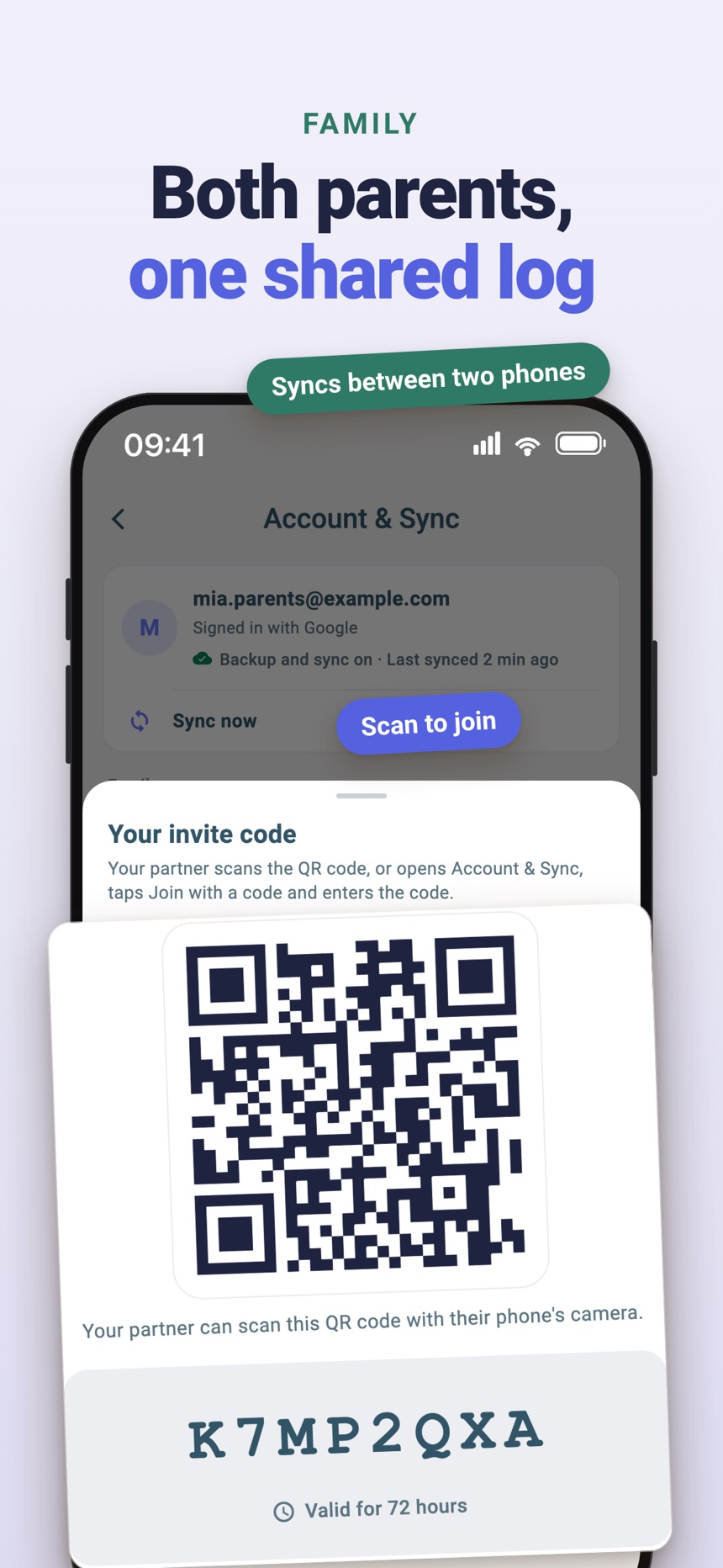
- Either parent can check the last feed and side before taking over.
- Feeds, sleep, diapers and pumping are each one tap away.
- Your partner gets every Premium feature too, without a second subscription.
If your current approach creates confusion, simplify rather than adding more systems. Pick one place for the basics. Check it at handoffs. Let it be imperfect. The newborn days need small tools that help two tired people feel like they are on the same team.
Frequently asked questions
What is the best way for parents to share baby logs?
Use one shared record that both parents can open on their own phones, and agree what to log. A shared app is usually easier than a group chat or a notebook that only lives in one room.
Do both parents need to log every feed?
No. A simple rule works better: whoever does the feed, diaper or nap logs it. What matters is that both of you check the same record at handoffs.
Can a baby tracker replace talking at handoffs?
Not fully. The log covers the facts, like the last feed and nap, so the conversation can focus on what the log cannot show, such as mood or anything that seemed off.
Can two parents use FeedRight together?
Yes, with FeedRight Premium. One plan covers the family, your partner and other caregivers join free with an invite code or QR code, and both phones stay in sync across iPhone and Android.
Can you share a baby tracking app with a partner?
Yes, many baby tracking apps let a partner join the same log, so both phones show the same feeds, sleep and diapers. Check whether sharing is part of the free version or a paid plan before you both start logging.
What should couples agree on before using a shared baby tracker?
Agree on what you will log, for example feeds, sleep and diapers, and what each entry means, such as logging a feed when it starts rather than when it ends. A five-minute conversation before the next tired night is usually enough.