
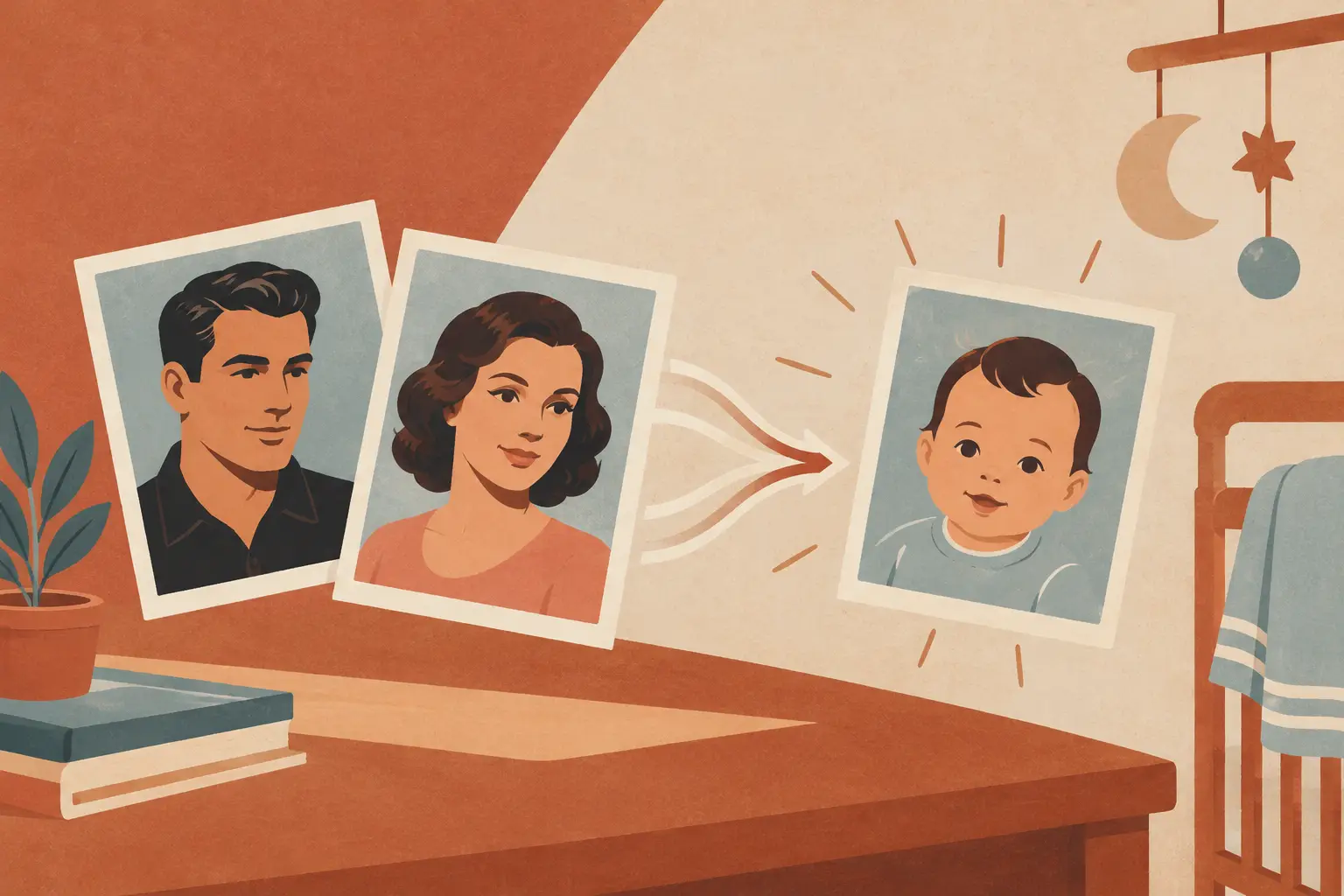
Future baby AI does not predict what your child will look like; it creates a playful image based on visual patterns. If you are wondering, “how does future baby AI work?” before sharing two photos, the short answer is that it analyzes the faces it can see and generates a new, imagined face that borrows from both.
That result can feel surprisingly personal, which is why it helps to understand what the app is actually doing. It is a creative image exercise, not a genetic forecast, medical tool, or promise about a real future child.
What Is Future Baby AI?
Future baby AI is an image-generation tool that uses photos of two people as visual references to create an imagined child portrait. It looks for features such as face shape, eyes, hair, skin tone, and expression, then creates a new image from those signals.
Unlike a traditional photo editor, which changes pixels in an existing picture, this approach lets you generate a brand-new face inspired by both photos. The image is made for curiosity, a laugh with your partner, or a sweet what-if moment – not for certainty.
How Does Future Baby AI Work Behind the Scenes?
Most future baby generators follow a similar sequence. You choose two clear photos, the system identifies the faces, and an AI model uses them as guidance while producing a new portrait. The final image is not a half-and-half blend where one person’s left side meets the other person’s right side. It is a newly generated image that the model judges as visually plausible from the inputs.
First, the system needs to find the important areas of each image. Faces are not just a collection of pixels to an AI model. The model can recognize broad visual structure: where features sit, the apparent shape of a face, hair color, lighting, pose, and other details that make a portrait read as a person.
Next comes the generative step. Image models are trained to understand common patterns in photographs and faces. With the two uploaded photos as references, the model creates a fresh child-like portrait that reflects some of the visible qualities it detected. Depending on the tool, it may also follow a style prompt or a preset that influences the expression, age range, background, or finish of the image.
This is why the experience can be fun without being literal. The AI is not reading DNA, calculating inherited traits, or accessing a family tree. It is making an image from what is visible in two photographs and from the patterns it learned during training.
Why the Same Photos Can Produce Different Results
A common assumption is that two identical uploads should always create one identical future baby image. Generative AI does not always behave that way. Many systems include controlled randomness so the model has more than one reasonable path to a finished portrait.
That variation is part of the point. One result may lean toward a hairstyle, eye shape, or expression that seems more familiar from one parent’s photo. Another may emphasize a different combination of visible traits. Neither image is more accurate, because accuracy is not what the tool is producing.
The source photos matter, too. A bright, front-facing photo gives the model more useful visual information than a dim selfie, a group shot, or an image with sunglasses. If one face is turned away, heavily filtered, partly covered, or much smaller than the other, the output may reflect the clearer image more strongly.
Lighting can also change the apparent color and contours of a face. Hair color in shade may look different from hair color in direct sun. A camera angle can make a jawline look sharper or softer. AI works with the image it receives, not with a complete picture of the person beyond that frame.
Choosing Photos That Give the AI a Fair Start
You do not need studio portraits. A normal, well-lit photo with one visible face is often enough. The goal is simply to give the generator a clean reference instead of making it guess around distractions.
Choose photos where each person is facing the camera or only slightly turned, with their face in focus. Natural light and a plain background can help, but the biggest difference usually comes from avoiding obstructions such as masks, sunglasses, hands across the face, or busy group scenes.
Try to use photos with a similar level of clarity. If one upload is a crisp recent portrait and the other is a grainy image taken from far away, the model has uneven material to work from. That does not make the result useless, but it can make it feel less balanced.
Filters deserve a little caution as well. A playful filter can be part of the fun, but it may alter skin texture, eye color, proportions, or lighting before the AI begins. If you want the result to reflect the original photos as closely as a creative tool can, start with unfiltered images.
What Future Baby AI Can and Cannot Tell You
Future baby AI can create a shareable imagined portrait. It can turn an abstract question – “What might a child from these two photos look like?” – into something visual in a few moments. For couples, friends, or family members, that can be a lighthearted conversation starter.
It cannot tell you which traits a future child will inherit. Real genetics are far more complicated than visible resemblance in a photo, and children do not arrive as a predictable visual average of their parents. Features can reflect relatives across generations, and appearance changes throughout childhood.
It also cannot make a meaningful statement about health, personality, temperament, or ability. A generated smile is just part of a generated picture. Treating it as anything more adds weight to something that is meant to be playful.
There is another trade-off worth remembering: polished AI images can look more convincing than the evidence behind them. The better the portrait looks, the easier it is to forget that it is still an interpretation made by software. Keeping that boundary clear makes the experience more enjoyable, not less.
A Quick Note on Consent and Privacy
Photos are personal, especially when they involve a partner, friend, or family member. Ask before uploading someone else’s photo, even if the idea feels harmless. A quick check-in keeps a fun experiment from becoming an uncomfortable surprise.
It is also sensible to choose an app carefully. Read its privacy information before uploading, understand whether an account is required, and avoid using photos you would not feel comfortable sharing with that service. Privacy choices should be clear enough to make before you tap generate.
For children’s photos, the same thoughtfulness applies with extra care. A future baby generator does not need a real child’s image to make an imagined one from two adult photos. Keeping the input simple can also keep the moment focused on what it is: a creative experiment.
Frequently Asked Questions
Is a future baby AI image a real prediction?
No. A future baby AI image is a generated portrait based on visible patterns in two photos. It does not analyze DNA or reliably predict inherited features.
Why does the generated child look more like one person?
The model may find clearer or stronger visual signals in one photo, such as lighting, angle, hair, or facial visibility. Generative variation can also make different results emphasize different features.
Do better photos make the result more accurate?
Clear, front-facing photos can give the AI a better reference and often create a more balanced image. They do not turn the result into a real-world prediction.
A Tool Worth Trying
If you’re looking for a playful way to turn two portraits into an imagined child image, Future Baby AI Generator is a simple, focused option for iPhone and iPad. Pick two clear photos, keep expectations light, and enjoy the small what-if moment it creates.
Related reading
- How to Choose Photos for AI Image Generators
- What AI Image Generators Can and Cannot Predict
- A Simple Privacy Checklist Before Uploading Photos
- Why Clear Inputs Make Better AI Images
The nicest way to use future baby AI is to let it stay curious. Keep the photos thoughtful, the expectations realistic, and the result in the same category as any good shared joke: memorable because it sparked a conversation.