
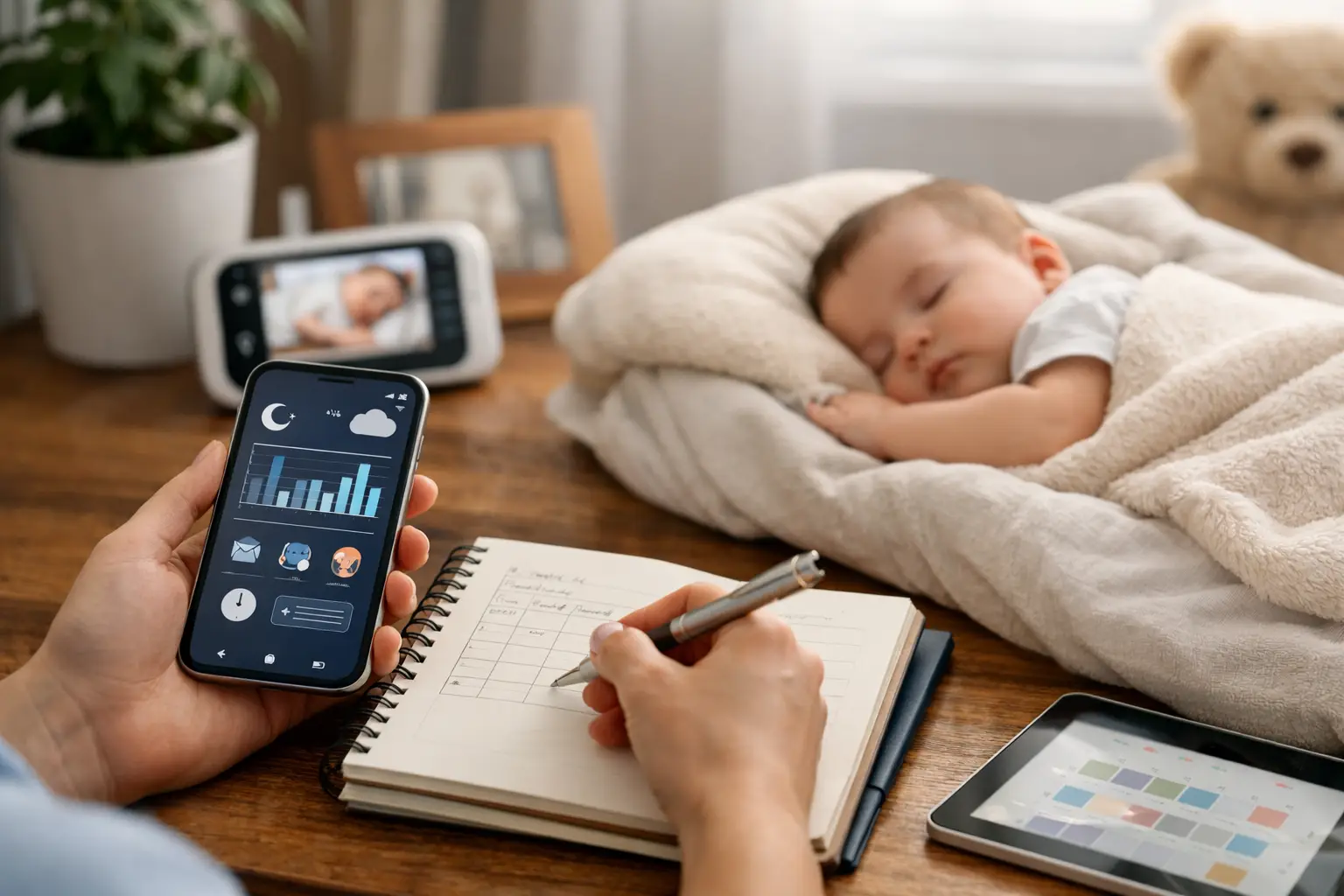
A nap that starts at 10:12 instead of 10:00 may not feel like a big deal. But after a few days of short naps, early wake-ups, and a baby who suddenly seems overtired by lunch, those small details can tell a useful story. Learning how to record baby naps is less about creating perfect data and more about giving yourself a clearer view of your baby’s day.
The best tracking method is the one you can keep up with while holding a baby, reheating coffee, or trying to remember whether the last nap ended at 1:40 or 2:10. Keep it simple from the start. You can always add detail later if you need it.
Quick answer: To record baby naps, log the start and end time of each nap in one place both caregivers use, such as an app or a notebook. Add where and how your baby fell asleep only if it helps, note anything unusual, and review three to five days together to spot patterns instead of judging a single nap.
This guide is general information, not medical advice. Every baby is different, so ask your pediatrician or health visitor about your own baby.
What should you record for each baby nap?
For most families, start time and end time are enough. Those two details show how long your baby slept and how much awake time happened between naps. Over several days, that can show whether naps tend to fall apart after a long wake window, a late outing, or an unusually early morning.
| Detail | Why it helps | Needed? |
|---|---|---|
| Start and end time | Shows nap length and awake time | Yes |
| Where the nap happened | Crib, contact, car or stroller naps can differ | Optional |
| How your baby fell asleep | Shows what helps them settle right now | Optional |
| Mood on waking | Hints whether the nap was enough | Optional |
| Unusual events | Explains a rough day (teething, a cold, visitors) | Only when it happens |
A crib nap after a short wind-down may look different from a contact nap, car nap, or stroller nap. Neither is automatically better. The point is simply to notice what is working for your baby right now. A useful nap entry might look like this:
“10:12 a.m. to 11:05 a.m., crib, fell asleep after feeding, woke happy.”
That is plenty. You do not need to record every wiggle, every attempt to settle, or the exact minute your baby first rubbed their eyes.
How do you record baby naps in a way you will actually use?
Choose one place for your notes. A phone app or a paper notebook can both work, and so can a shared note. What matters is that both caregivers know where the information lives. If one person tracks naps in a notebook and another keeps them in their head, the pattern is harder to see.
For many parents, a simple baby sleep tracker app is easier because you tap when sleep starts and stop when it ends. That removes the need to remember times later, especially during the blur of newborn days. If you are comparing options, see our roundup of sleep log tools for simpler routines.
If you prefer a notebook, leave it where you usually feed or settle your baby. If you use your phone, put the tracker on your home screen. The fewer steps it takes, the more likely you are to record the nap before the day moves on.
Try to log the start of the nap as it happens. End times are usually easy to catch because a waking baby makes an announcement. Start times are the ones parents tend to estimate later, and estimates can make a 25-minute nap look like a 45-minute one. When you miss a time, write an approximate one or skip that entry. Tracking should support your memory, not make you feel behind.
How do you read nap patterns instead of chasing a perfect schedule?
Tracking your baby’s sleep schedule becomes helpful when you review a few days together. One short nap is normal. One weird afternoon is normal, too. Babies are people, not clocks, and sleep changes often during growth spurts, developmental leaps, illness, and routine changes.
After three to five days, look for a few simple patterns. Is your baby usually ready for the first nap at a similar point each morning? Do late-day catnaps make bedtime harder or help them reach bedtime calmly? Are naps longer in the crib than in the car, or is the opposite true right now? Our baby nap patterns guide explains what is typical at each age.
It also helps to compare sleep with the rest of the day. A baby who has a hard time settling may be hungry, overstimulated, uncomfortable, or simply not tired yet. Nap logs cannot diagnose the reason, but they give you a better starting point than guessing from one difficult moment.
Avoid treating the log like a rulebook. If your baby slept for 38 minutes yesterday and 62 minutes today, that does not mean anything is wrong. Use the information to guide your next choice, such as offering a calmer wind-down or protecting an earlier nap.
Track the wake time too, if it helps
Wake time is the stretch between one sleep ending and the next one starting. Some parents find it more useful than nap length because it shows whether their baby is getting overtired before a nap.
You do not have to calculate every wake window by hand. If you record naps consistently, the spacing is visible. For a newborn, feeds and sleep may overlap in a way that makes any schedule feel pointless. For an older baby, the rhythm may become easier to recognize.
The goal is not to hit a prescribed window. It is to learn your baby’s signals alongside the clock. A yawn, staring off, fussiness, slower play, or rubbing eyes may be more useful than a number when plans change.
Which notes help with real decisions?
The best nap records answer practical questions. Should you try for the next nap a bit sooner? Is bedtime becoming too late after a long late-afternoon sleep? Does your baby sleep better after a quiet ten minutes than after a busy errand? You can leave out details that do not change your decisions.
If you share care with a partner, grandparent, nanny, or daycare, nap records also make handoffs gentler. Instead of asking, “When did she sleep?” and getting a vague answer, everyone can see the last nap and make a better call about the next feed, outing, or bedtime.
Be especially kind to yourself on days when the schedule falls apart. A doctor appointment, a sibling pickup, or a nap on someone’s chest does not erase progress. Your record should make those days easier to understand, not harder to live through.
When should you adjust your nap tracking?
You may want more detail for a short time if sleep suddenly changes. If your baby is waking frequently overnight, resisting naps for several days, or taking much shorter naps than usual, record sleep, feeds, and major disruptions together for a week. That gives you useful information to discuss with your pediatrician or a qualified sleep professional.
On the other hand, scale back when tracking starts to create anxiety. Once you know your baby’s general rhythm, a quick start-and-stop record may be all you need. Some families stop logging entirely after a routine settles; others keep going because it makes shared caregiving easier. Both choices are fine.
Call your pediatrician promptly if sleep changes come with signs of illness, poor feeding, trouble breathing, unusual lethargy, or anything that worries you. A nap log is helpful context, but it is not a substitute for medical advice. For general sleep ideas, the NHS page on helping your baby to sleep is a calm reference.
How FeedRight helps
FeedRight Baby Tracker is our quick logging app for sleep, feeds and diapers on iPhone, Apple Watch and Android. The logs are free, need no account and work offline. FeedRight Premium, an optional subscription, adds family sync so both caregivers see the same naps. Download the app from the App Store or Google Play.
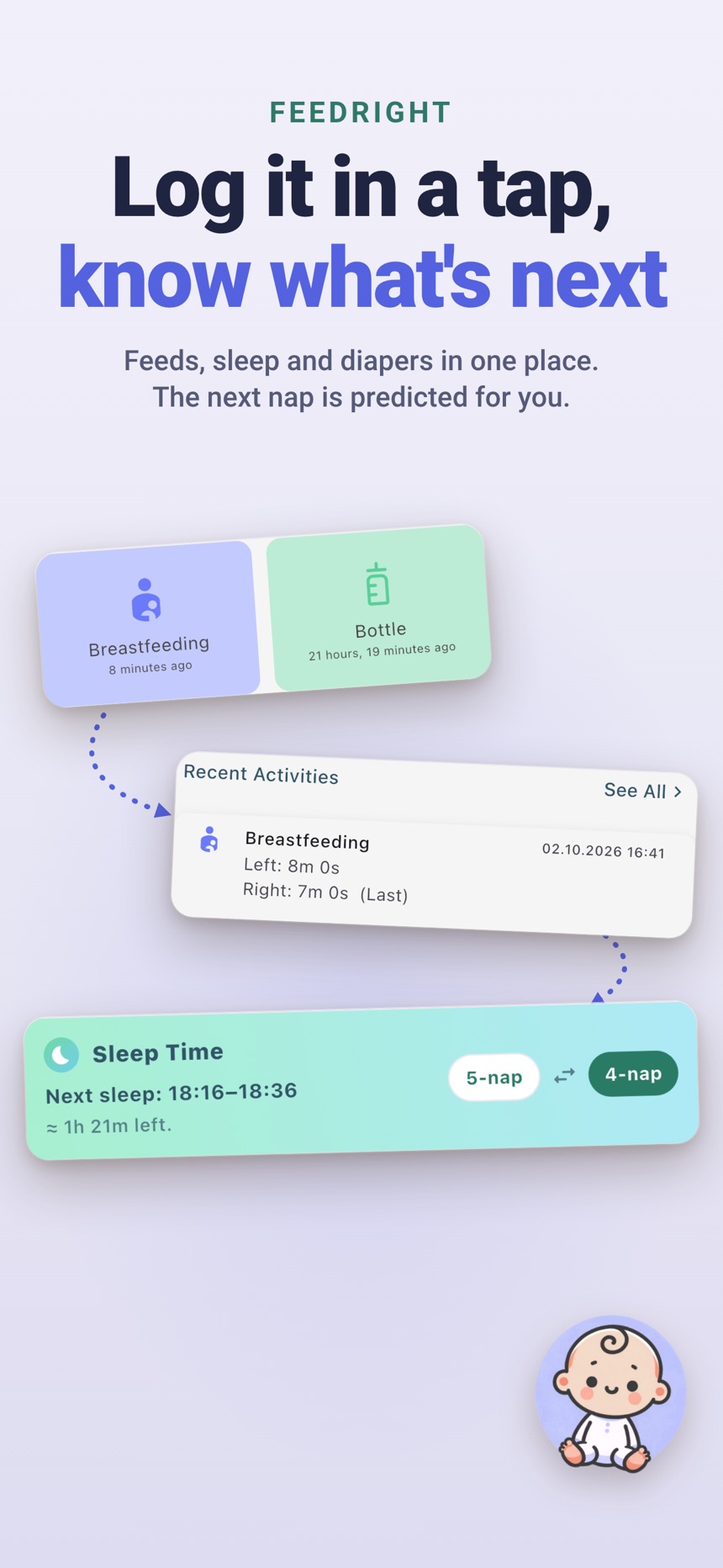
- A live sleep timer you can end from the iPhone Lock Screen or Dynamic Island.
- From 3 months, a Sleep Time card estimates when the next nap is due.
- A daily summary and history to review a few days at a glance.
A good nap record should leave you feeling a little more grounded, not more controlled by the clock. Capture the basics, notice what repeats, and let the rest of the day be human, one nap time at a time.
Frequently asked questions
What is the easiest way to track baby naps?
Log only the start and end time of each nap in one place both caregivers use. An app with a sleep timer makes this a two-tap job; a notebook by the crib works too.
How many days of nap logs do I need to see a pattern?
Three to five days is usually enough to notice when the first nap tends to happen and how naps affect bedtime. One day on its own can be misleading.
Should I track wake windows or nap length?
Both can help. Nap length shows how long your baby slept, while the time between naps shows whether they may be getting overtired. If you log start and end times, you get both.
When can I stop recording naps?
Whenever the log stops helping. Many parents scale back once they know their baby’s rhythm and only restart during illness or a routine change.
Should I log contact naps and car naps too?
Yes. Log every sleep, including contact, car and stroller naps, with a short note on where it happened if that helps. Those naps still count toward your baby’s daily sleep and affect when the next nap comes.
Are short baby naps normal?
Yes. Short naps, including ones under 30 minutes, are common in babies while their sleep cycles mature. Look at a few days of logs together, and talk to your pediatrician if sleep changes come with feeding trouble or anything else that worries you.