
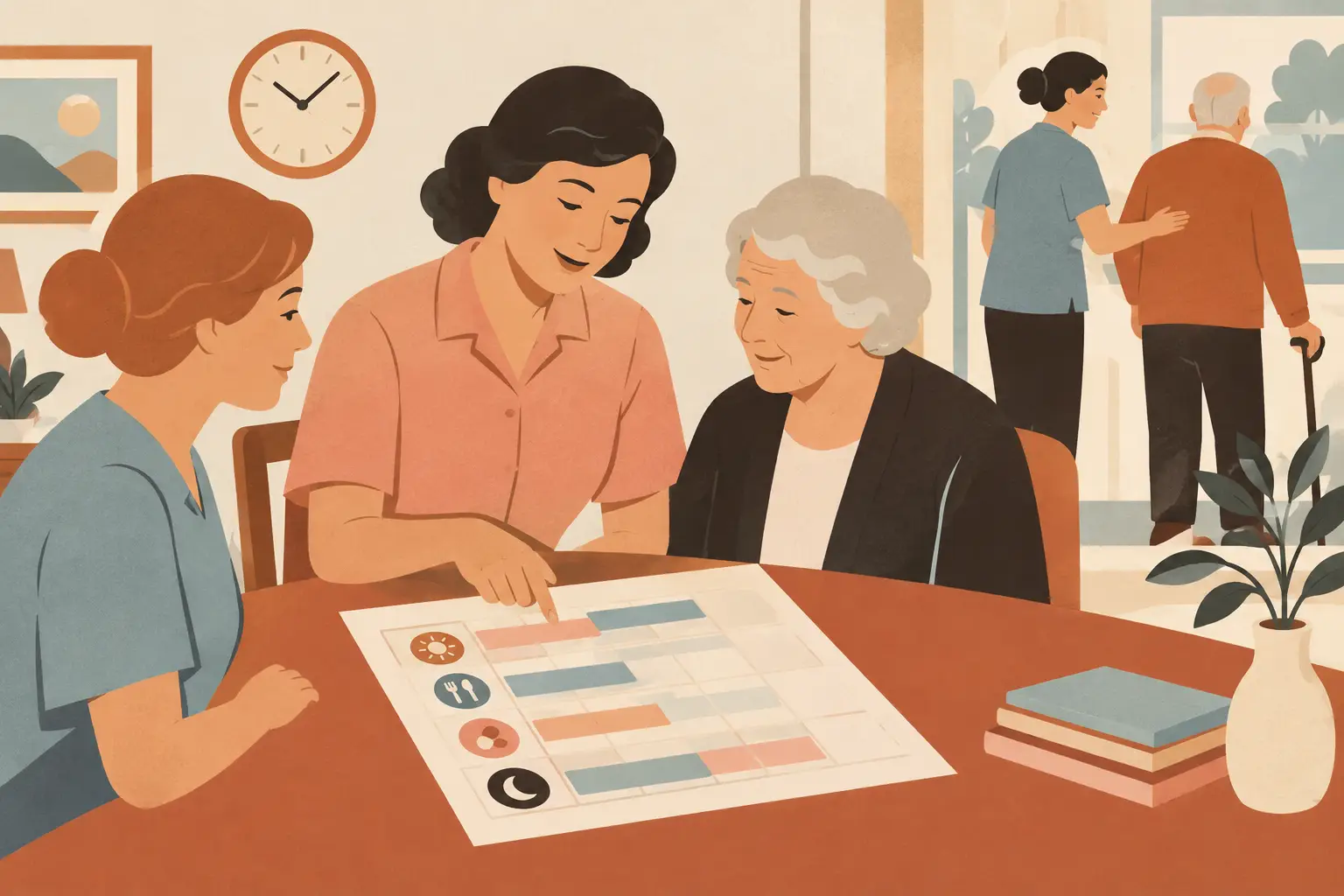
Caregiver schedules don’t make family life rigid; they make the next handoff less dependent on memory. When one parent, grandparent, sitter, or daycare pickup person is trying to piece together what happened earlier, small details become stressful fast. Caregiver schedule templates give everyone one clear, lightweight place to see the plan.
Quick answer: A good caregiver schedule template shows who is on duty, what happens next, and what changed today. Start from a normal day, mark what is fixed and what is flexible, and add only the details that stop repeat texts, such as supplies, contacts, and pickup times. Most families do best with a weekly plan plus a short daily handoff note.
This guide is general information, not medical advice. Every baby is different, so ask your pediatrician or health visitor about your own baby.
What should a caregiver schedule template include?
What is a caregiver schedule template?
A caregiver schedule template is a reusable plan that shows who is caring for someone, when they are on duty, and what needs attention during that time. It can be a printed sheet or notebook, a shared note, a calendar view, or a simple app-based routine log.
Unlike a verbal recap at the door, a shared schedule lets you capture the plan before the busy part of the day begins. That matters most when caregiving is shared across different people, homes, or work schedules.
A useful template answers three basic questions without making anyone hunt for context: Who is responsible now? What is expected next? What changed today? Short and consistent usually works better than a long journal entry.
For a child, a daily schedule may include arrival and pickup times, usual meal or snack windows, nap routines, play plans, and a short notes area. For an older relative or another adult receiving care, it may focus on appointments, transportation, household tasks, preferred routines, and contact details. The format changes, but the goal stays the same: fewer assumptions at the handoff.
Start with a repeatable baseline
A template should describe a normal day first. That gives caregivers a starting point without pretending every day will follow the clock perfectly. Use broad time blocks when exact times create more pressure than clarity, such as “morning routine,” “after lunch,” or “before pickup.”
For families with babies and toddlers, a baseline can make transitions feel calmer. A caregiver may want to know the usual order of the day, the favorite settling routine, where supplies are kept, and who to contact if plans change. Keep medical, feeding, or sleep concerns separate from the schedule itself and bring those questions to your pediatrician.
It also helps to label what is fixed and what is flexible. Pickup from daycare may be fixed. A park visit may depend on weather, energy, and timing. That small distinction tells the next caregiver which parts of the plan need to happen and which parts are simply helpful ideas.
Add the information that prevents repeat texts
The most useful details are usually practical, not elaborate. Think about the questions that tend to appear in text messages halfway through the day: Where is the extra change of clothes? Did anyone already pick up groceries? Is today the day for a class, an appointment, or a pickup?
Here is a simple checklist you can copy into any template:
- Who is on duty, and until when
- Fixed times (pickup, appointments, classes) and flexible blocks
- Where supplies are kept, plus anything running low
- Contacts for changes or questions
- One line for “what changed today”
The point is not to monitor someone. It is to make the next step visible. Avoid turning the template into a record of every decision. If a note is unlikely to change what the next caregiver does, it may not need to be there.
Which template shape fits your week?
There is no single right layout. A family with two regular caregivers has different needs from a household coordinating school, work shifts, and occasional babysitting. Choose the smallest format that handles your real handoffs.
| Template | Works best when | Trade-off |
|---|---|---|
| Daily | Routines change often and each caregiver needs a fresh view | Someone has to reset it every day |
| Weekly | You need to see coverage, work, appointments, and transport together | Gets crowded if every small routine goes in |
| Handoff note | Care changes between people several times a day | Not a full calendar, so pair it with a weekly view |
For many households, the simplest setup is a weekly plan plus a short daily handoff note. The weekly view protects the big commitments. The daily note handles the real-life changes no calendar can predict. If the handoffs involve a baby, our guide on how to share baby logs without the group chat covers the care record side.
How do you make a shared schedule easy to follow?
A schedule only helps if caregivers actually open it. Put the current version somewhere everyone can reach from their phone, and decide who updates it. A shared system with no owner goes out of date quickly.
Use plain language that another person can understand without knowing your household shorthand. “Pack blue lunch bag for daycare” is clearer than “Do the usual bag.” Keep names, locations, and task labels consistent from one week to the next. This matters even more for helpers who step in less often, which we cover in a baby log made simple for grandparents.
Agree on how changes are communicated. A schedule shows the plan, but urgent changes may still need a direct call or text. Treat the template as the home base, not a substitute for speaking up when something changes at the last minute.
Privacy matters too. Share only the information a caregiver needs to do their role well. If the schedule is visible to a wider group, keep private family details, account information, and sensitive records out of it. A simple plan is easier to protect and easier to use.
When should you simplify your template?
If your schedule needs constant edits, you may not need a more detailed template. You may need fewer fields. Every extra section asks someone to make another decision, enter another update, or search for another answer.
Try removing anything that has gone untouched for a couple of weeks. Keep the parts that prevent missed pickups, duplicate errands, confusion around routines, or forgotten supplies. That is the real test of a caregiver schedule template: does it make the next handoff feel lighter?
A simple review at the end of the week helps. Ask whether anyone was surprised by the plan, whether key updates were missed, and whether the schedule took too long to maintain. Then change one small thing. Couples who split nights and days can borrow ideas from a shared baby tracker for couples.
How FeedRight helps
If your handoffs involve a baby, FeedRight Baby Tracker can sit next to your schedule as the care record. It logs feeds, sleep, and diapers in one tap, so whoever takes the next shift can check the latest entries instead of asking. It is available on the App Store and Google Play.
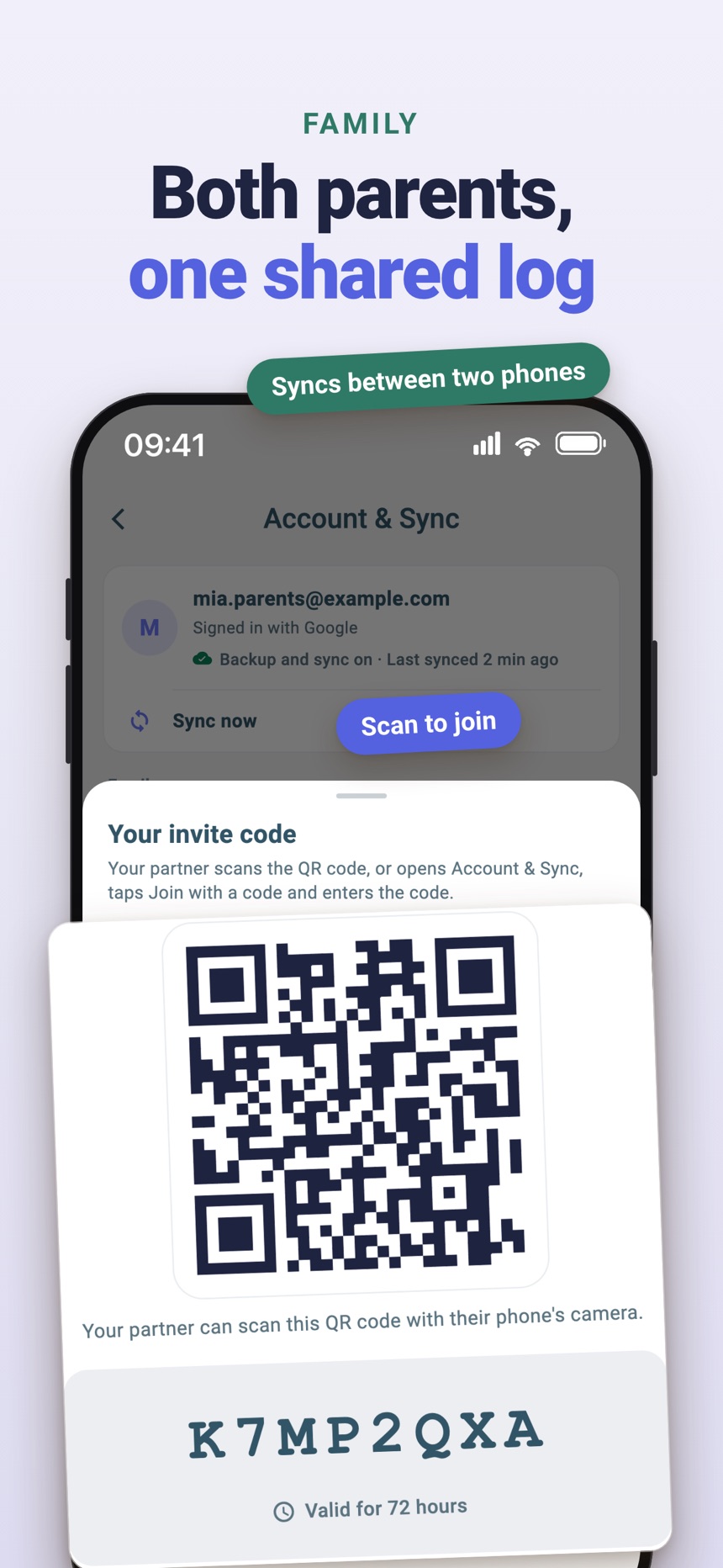
- Grandparents, a nanny or a partner can join the family log with an invite code or QR code.
- With FeedRight Premium, one plan covers the family and phones stay in sync across iPhone and Android.
- Reminders can nudge whoever is on duty, for example a diaper check or medicine at set times.
Frequently asked questions
Should caregiver schedule templates include every activity?
No. Include the activities, responsibilities, and notes that affect the next caregiver’s decisions. A schedule becomes less useful when it needs a detailed update for every ordinary moment.
Is a daily or weekly caregiver schedule better?
It depends on how care is shared. Daily templates help when plans shift often, while weekly templates make recurring coverage and commitments easier to see. Many families use both: a weekly overview and a short daily handoff note.
How do you get everyone to use one schedule?
Make it easier than asking for updates through several messages. Use familiar language, keep the format short, decide who maintains the main plan, and save direct messages for urgent changes.
What should a caregiver handoff note say?
A handoff note should say what just happened, what is due next, and anything unusual. One or two lines are usually enough, for example the time of the last meal or nap and any change to pickup plans.
What is a caregiver schedule template?
A caregiver schedule template is a reusable plan that shows who is caring for someone, when they are on duty, and what needs attention during that time. It can be a printed sheet, a shared note, a calendar or a simple app-based routine log.
How often should you update a caregiver schedule?
Update the weekly plan when commitments change, and use a short daily handoff note for same-day changes. A quick review at the end of each week shows whether anything was missed or took too long to maintain.