

A routine log doesn’t turn you into a stricter parent; it gives you a clearer handoff when the day gets messy. When someone asks when the last bottle, nap, or diaper change happened, the real problem is rarely a lack of care. It is that tired people are being asked to remember a fast-moving day while also living it.
Quick answer: Parents do not need a routine log every day, and nobody needs to record every tiny moment. A simple log of feeds, sleep, diapers, and short notes is worth it during busy stretches, when caregivers share care, or when you keep asking the same practical questions. If your days feel manageable without it, skipping it is fine.
This guide is general information, not medical advice. Every baby is different, so ask your pediatrician or health visitor about your own baby.
What is a routine log?
A routine log is a short record of everyday care events, such as feeding, sleep, diaper changes, and notes about the day. It is a memory aid, not a scorecard for parenting.
Unlike trying to reconstruct the day from memory, a routine log lets you check what happened and move on with more confidence. That difference matters at 3 a.m., during daycare pickup, or when one parent is walking in the door as the other heads out.
Why do routine logs help parents?
Most parents do not start tracking because they love data. They start because the mental load is getting too heavy. You may be holding a fussy baby while wondering whether it has been an hour or three since the last feeding, or trying to remember whether your partner already changed a diaper.
A log gives those small details somewhere else to live. Instead of carrying the whole timeline in your head, you make a quick entry and return your attention to your child. The value is not perfect recordkeeping. It is one less thing to decide when you are already tired.
This helps most in the early months, when days blur together and routines are still changing. Our new parent tracking guide for the first months walks through what to note in that stage. It can also help later, during schedule shifts, travel, illness, a return to work, or any period when your usual rhythm is off. If you have questions about your child’s health, feeding, or sleep, ask your pediatrician or health visitor. The AAP’s guide to bringing baby home is a good general reference.
When is a routine log worth the effort?
A log earns its place when it answers questions you regularly have. If you and another caregiver often text each other “Did they nap?” or “When did they eat?”, the answer is probably yes. The same goes for parents who feel they are mentally replaying the day just to keep basic details straight.
| Signs a log will help | Signs you can skip it |
|---|---|
| Care is shared with a partner, grandparent, nanny, or daycare | One primary caregiver who knows what happened without checking |
| You often text “when did they eat?” | Days feel manageable and predictable |
| A new routine, travel, illness, or return to work | Logging makes you anxious or competitive |
| You want to describe patterns to your pediatrician | The log takes longer than the care itself |
Shared care is one of the clearest use cases. A partner, grandparent, nanny, or daycare provider may all be doing their best, but verbal updates can be incomplete when a handoff is rushed. A shared record creates a calmer starting point, and a simple plan like these caregiver schedule templates can sit right next to it.
Logs also make patterns easier to notice. Maybe mornings consistently feel more rushed, or a certain part of the day is where handoffs break down. The goal is not to treat a child like a spreadsheet. It is to see enough of the day to make practical adjustments.
When can you skip a routine log?
Some families do better with less tracking. If you are the primary caregiver, your days feel manageable, and you generally know what happened without checking, a routine log may add friction rather than relief. There is no prize for collecting more details.
You can also use a log temporarily. Many parents track closely for a few days when a new routine begins, then stop once life feels predictable again. Others only use it on days with a caregiver switch. A useful tool should adapt to your life, not create another obligation.
The warning sign is when logging starts to make you anxious. If you worry about missing an entry, compare days too closely, or spend more time documenting than being present, simplify. Track fewer categories, use rough notes, or take a break.
How small should a routine log be?
The best routine log is the one you can keep up with one hand and half your attention. Choose only the information that solves a real problem for you. For many families, the basics are enough: feeding, sleep, diaper changes, and a short note when something unusual affects the day.
Avoid adding fields because they look useful in theory. Detailed observations, several timers, color-coded labels, and long summaries help some people, but they are not required for clarity. If an entry takes longer than the event itself, the setup is probably too complicated.
Record what happened, roughly when it happened, and any brief context you will want later. “Short car nap” may be more useful than a perfectly measured timeline. If you want a step-by-step approach to the routine itself, see how to create baby routines that actually help.
How can a log make handoffs kinder?
Routine logs are often described as organization tools, but their biggest benefit may be emotional. A clear record prevents the small misunderstandings that grow when everyone is exhausted. It replaces “I thought you knew” with a quick glance at what already happened.
That does not mean every caregiver needs to log every event perfectly. Agree on what matters most and let the rest go. One family may care most about naps, while another mainly needs feeding and diaper details during a workday handoff.
Talk about the log as shared support, not accountability. Nobody should feel audited for forgetting to tap a button. The best shared systems are forgiving: easy to update, easy to read, and easy to restart after a chaotic day.
Which kind of routine log should you use?
Good tools become part of the routine without taking over. You should be able to make a quick note, find the last relevant detail, and get back to your day. If it takes several screens or too much concentration, it asks more than it gives back.
This is why paper notes, a shared phone note, and a focused tracker can all work. The right choice depends on who needs access, how often you are apart, and whether you want entries to stay organized over time. If you lean toward an app, our guide on how to pick the best baby tracker app covers what to look for.
Start with the smallest version that could help. Try it for a few days during a busy period, then ask: did this save us time or reduce confusion? If yes, keep it. If not, change the categories or let it go without guilt.
How FeedRight helps
FeedRight Baby Tracker is our take on a routine log that stays out of the way. Feeds, sleep and diapers take one tap each, so a quick entry never turns into a chore. It is free to start, needs no account, and works offline. Get started from the App Store or Google Play.
- Daily summary and history so you can check the day at a glance.
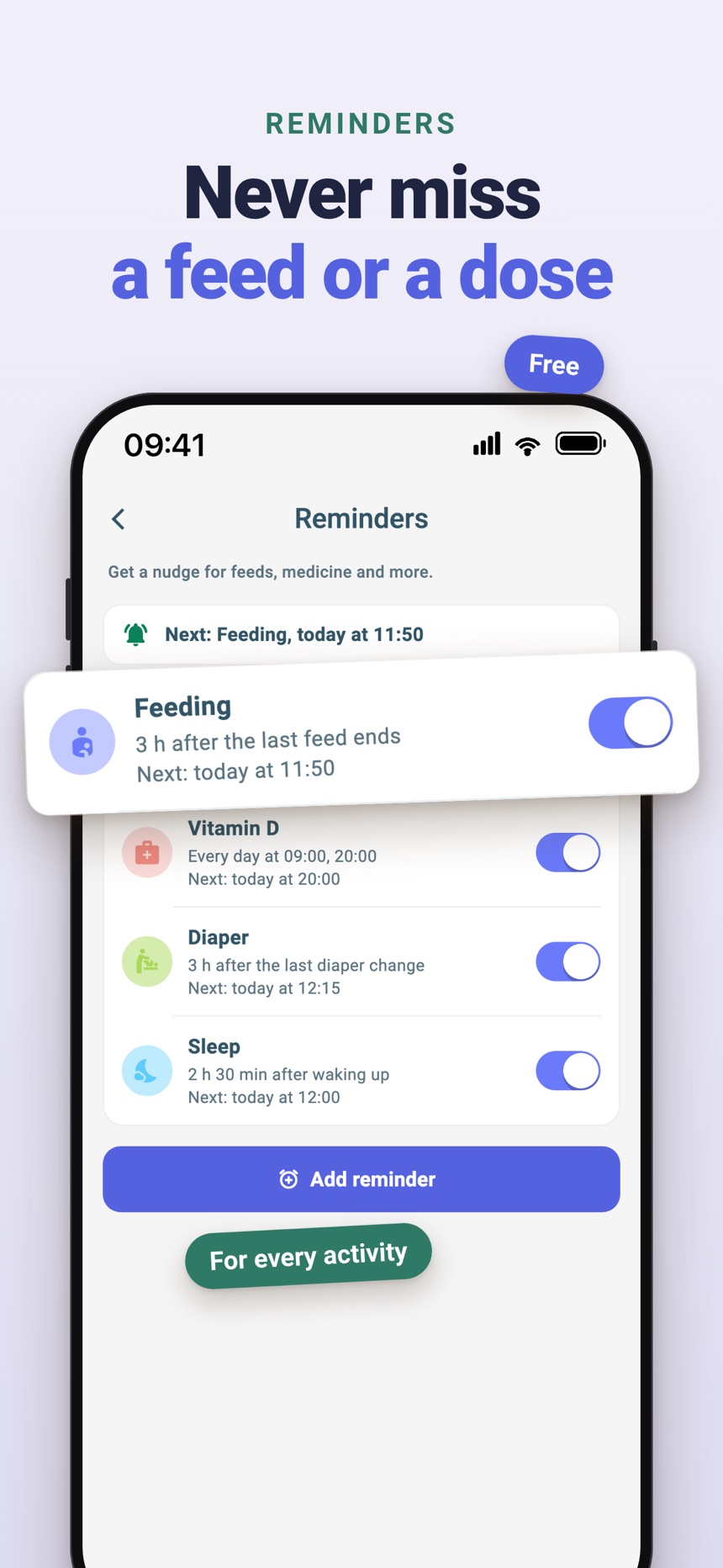
- Reminders, such as a nudge a few hours after the last feed.
- With FeedRight Premium, a partner, grandparent or nanny can join your family by invite code, and every phone stays in sync.
Frequently asked questions
Do parents need routine logs every day?
No. Some parents use them daily, while others only log during the early months, caregiver transitions, travel, or unusually busy weeks. A routine log is most useful when it reduces mental load rather than adding another task.
What should parents include in a routine log?
Include only the details you regularly need to remember or communicate. Feeding, sleep, diaper changes, and short context notes are common starting points, but your list can be smaller if that is all your household needs.
Can a routine log help parents share responsibilities?
Yes. A shared record makes handoffs clearer by showing what happened recently, so caregivers do not have to rely on memory or repeat the same updates. It works best when everyone agrees the log is a support tool, not a measure of performance.
Is a paper routine log as good as an app?
It can be. Paper works well when caregivers share one home and want something visible and simple, while an app helps when people are apart or want entries organized over time. The best choice is the one your household will keep using.
When can parents stop keeping a routine log?
Parents can stop once days feel manageable and the log no longer answers questions they actually have. Many restart for a few days during travel, illness, a return to work or a change of caregiver.
What are the signs that a routine log is adding stress?
Worrying about missed entries, comparing days too closely or spending more time documenting than being present are signs that a routine log is adding stress. Track fewer categories, use rougher notes or take a break.