
The 2 a.m. feed can make every parent ask the same question: when do babies sleep longer? The honest answer is that longer stretches usually arrive gradually, not all at once. A baby may give you one encouraging five-hour night, then wake every two hours the next. That is frustrating, but it is also very normal.
Most babies begin to sleep longer as their bodies can go longer between feeds and their day-night rhythms mature. But age is only one piece of the picture. Feeding, growth spurts, temperament, illness, and developmental changes can all shape a given night.
Quick answer: Many babies start sleeping longer stretches at night somewhere between about 6 weeks and 6 months. Newborns often wake every two to three hours to feed; some babies manage a four- to six-hour stretch by two or three months, and longer stretches become more common after that. Every baby is different, so ask your pediatrician before cutting night feeds.
This guide is general information, not medical advice. Every baby is different, so ask your pediatrician or health visitor about your own baby.
When do babies sleep longer at night?
Newborn sleep is built around feeding, not a bedtime schedule. In the first few weeks, many babies wake every two to three hours around the clock. Some may offer a slightly longer stretch, especially at night, but newborns usually still need frequent feeds to support growth.
By about 6 to 12 weeks, many babies start showing clearer differences between day and night. Some may sleep a four- to six-hour stretch overnight. Others continue waking more often, especially if they are breastfed, going through a growth spurt, or simply need more time. A long stretch at this stage is a bonus, not a milestone every baby needs to hit.
Between 3 and 6 months, many healthy babies are physically able to sleep longer at night. You may see a six- to eight-hour stretch, though waking for feeds can still be normal. Sleep can also feel less predictable for a while: babies are more aware of their surroundings, their sleep cycles change, and new skills such as rolling can interrupt rest.
Around 6 to 12 months, some babies sleep 10 to 12 hours with no feeds, while others still wake once or more. Both can fall within the normal range. If your baby was born early, use their adjusted age when thinking about sleep and developmental expectations.
The key distinction is between a baby who wakes and needs a quick feed or reassurance, and a baby who seems uncomfortable, is difficult to settle, or is not feeding or growing well. Your pediatrician can help you sort out what is typical for your child.
What does a realistic sleep timeline look like by age?
| Age (approx.) | What many babies do | What helps |
|---|---|---|
| Newborn to 8 weeks | Wake every 2 to 3 hours to feed | Feeding, safe sleep, rest in shifts |
| 2 to 4 months | One longer night stretch may appear | Bright days, quiet nights |
| 4 to 6 months | Longer stretches, but less predictable | A short, repeatable bedtime routine |
| 6 to 12 months | Some sleep 10 to 12 hours, others still wake | Steady basics through rough patches |
Newborn to 8 weeks: frequent waking is expected
Newborns sleep many hours in a day, often around 14 to 17, but those hours come in short pieces. Their tiny stomachs need frequent refills, and they do not yet have a reliable internal clock. Focus on feeding, safe sleep, and getting rest in shifts if you can. This is survival mode, not the time to chase a strict schedule.
2 to 4 months: longer stretches may begin
A more recognizable bedtime often starts to emerge here. Your baby may have one longer nighttime block followed by feeds or wake-ups. Daytime naps can still be uneven. Some days will feel organized; others will not. That is part of the process.
4 to 6 months: routines can start helping
Many families find that a simple, repeatable evening routine becomes useful around this age. A feed, fresh diaper, pajamas, a short song, and bed can become a familiar signal. Routine does not guarantee an uninterrupted night, but it can make bedtime calmer and easier to repeat.
6 to 12 months: progress is rarely a straight line
This period can include big improvements, followed by rough patches from teething, travel, illness, separation anxiety, or a new milestone. A baby who slept well last month may suddenly wake more often. It does not mean you have done anything wrong or permanently lost good sleep.
What helps babies sleep longer?
There is no one trick that works for every family, but a few steady habits can support sleep over time.
Make daytime feel bright and active, and nighttime quiet and boring. Open curtains in the morning, talk and play during wake windows, and keep overnight feeds calm with low lights and little stimulation. The NHS page on helping your baby to sleep has more gentle ideas.
Offer full feeds when your baby is awake and hungry. Some babies naturally take in more during the day as they grow, which can support longer nighttime gaps. Feeding needs vary, so do not stretch feeds or reduce night feeds without guidance from your pediatrician, especially with young babies or babies who have weight-gain concerns. Our guide on how to manage night feeds covers the practical side of those wake-ups.
Watch for sleepy cues rather than waiting until your baby is overtired. Rubbing eyes, staring off, yawning, fussing, or losing interest in play can all mean sleep should happen soon. An overtired baby can be harder, not easier, to settle. Daytime naps play a part too; see our baby nap patterns guide.
Keep the routine small enough to do on a hard day. A simple routine you can repeat while tired is more useful: feed, diaper, sleep sack, cuddle, bed.
Tracking can also reveal patterns that are difficult to remember at 3 a.m. A simple log helps you notice how feeds, naps, and bedtime connect over several days. The goal is not to obsess over every minute. It is to spot what is actually happening, so you can make one small adjustment at a time.
Why does safe sleep still come first?
Longer sleep is welcome, but safe sleep matters more than a longer stretch. For every sleep, place your baby on their back on a firm, flat sleep surface designed for infants. Keep the sleep space free of pillows, loose blankets, toys, and other soft items. Room-sharing without bed-sharing is recommended for young babies. The AAP’s parent’s guide to safe sleep has the full checklist.
If your baby falls asleep in a car seat, stroller, swing, or other sitting device, move them to a safe sleep surface when you can. And if your baby starts rolling, stop swaddling and switch to an appropriate sleep sack. Ask your pediatrician if you have questions about your baby’s sleep setup, feeding schedule, or readiness to go longer overnight.
Why do babies wake again after sleeping better?
It is easy to call every rough week a sleep regression, but that label can make normal changes feel like a problem to fix. Babies wake for many ordinary reasons: practicing a new skill, needing more food during a growth spurt, cutting a tooth, fighting a cold, or reacting to a disrupted routine.
Their sleep cycles are also shorter than adult sleep cycles, and brief waking between cycles is normal. Some babies settle back down independently, while others call for help. Over time, many learn to link those cycles more smoothly, but the pace is individual.
If your baby is suddenly waking more often, look at the whole picture: Are they sick? Has bedtime moved later? Are naps changing? Is a new skill underway? You may not find a single cause, and that is okay. Keep the basics steady and give the phase some time.
When should you talk with your pediatrician?
Sleep questions are always worth bringing up at checkups. Reach out sooner if your baby is feeding poorly, has fewer wet diapers, is not gaining weight as expected, has breathing concerns during sleep, seems to be in pain, or is unusually hard to wake.
For a young newborn, ask your pediatrician before allowing longer stretches without feeds. The answer depends on your baby’s age, weight, feeding history, and health.
You also deserve support if sleep deprivation is affecting your mood, safety, or ability to function. Ask a partner, family member, or trusted friend to take a shift where possible. A safe, rested parent matters too.
How FeedRight helps
FeedRight Baby Tracker, our app for iPhone, Apple Watch and Android, logs sleep, feeds and diapers in one tap, so you can see over several days whether night stretches are getting longer. Those logs cost nothing and need no account. FeedRight is not a medical device and does not tell you when to drop a feed; that conversation belongs with your pediatrician. FeedRight is available on the App Store or Google Play.
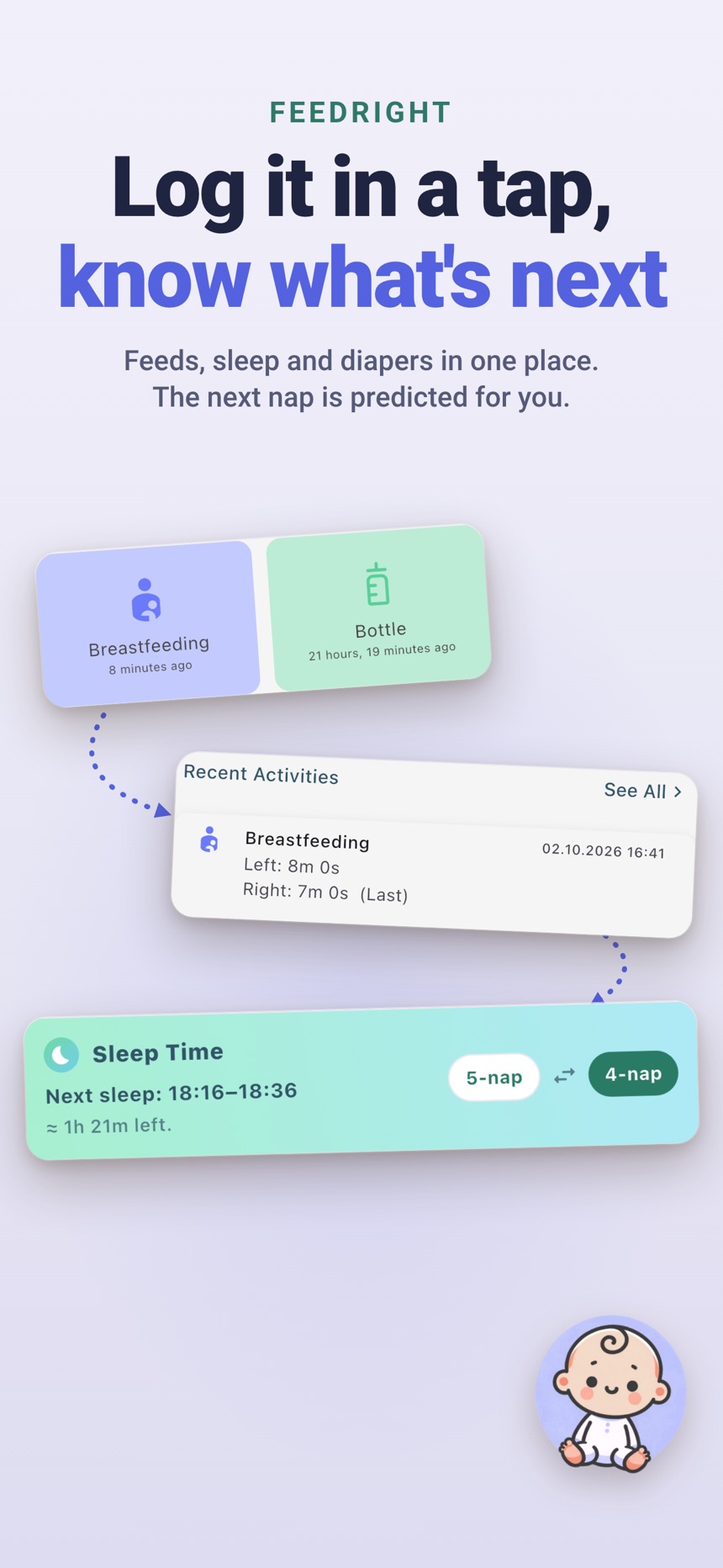
- Live sleep timer you can end from the iPhone Lock Screen.
- Daily summary and 3-day statistics free; 7 and 28 day statistics and a daily sleep score in Premium.
Longer nights tend to arrive one stretch at a time. Keep the routine simple, follow your baby’s feeding and safety needs, and let a few days of notes matter more than one difficult night. You are not behind. You are learning your baby.
Frequently asked questions
When do babies start sleeping through the night?
It varies widely. Some babies sleep a six- to eight-hour stretch between about 3 and 6 months, and some sleep 10 to 12 hours between 6 and 12 months, while others still wake once or more. Both can be normal.
Is it normal for a 4-month-old to wake up more at night?
Yes, it is common. Around this age, sleep cycles change and babies become more aware of their surroundings, so a baby who was sleeping longer may wake more for a while.
Should I wake my newborn to feed at night?
Many newborns need to be woken for feeds until they are gaining weight well. Ask your pediatrician when it is okay to let your baby sleep longer stretches.
When do babies sleep 4 hours at a time?
Some babies manage a four- to six-hour stretch at night by about 2 or 3 months, while others keep waking every two to three hours for longer. Ask your pediatrician before letting a young newborn go longer without feeds.
When do wake windows get longer?
Wake windows lengthen gradually through the first year, from roughly 45 to 90 minutes in the newborn weeks to about 3 to 4 hours by 9 to 12 months. Treat these as loose ranges and watch your baby’s sleepy cues.
Do bigger babies sleep through the night sooner?
Not necessarily. Size alone does not decide when a baby sleeps longer; feeding, growth, temperament and day-night rhythms all play a part. Your pediatrician can tell you when it is fine for your baby to go longer between night feeds.