

The 5:30 p.m. fussiness, the nap that happened 40 minutes too early, the question of whether that last feeding was at 1:00 or 2:00: this is the real reason parents look up how to create baby routines. You are not trying to run a tiny military operation. You want a little more predictability, fewer decisions when you are tired, and a clearer read on what your baby might need.
A good baby routine does not mean every day follows the clock perfectly. Babies grow fast, their needs change, and some days simply go sideways. The goal is a repeatable rhythm you can return to, one feeding, nap, and bedtime at a time.
Quick answer: To create a baby routine, track feeds, sleep and diapers for three to five days, then build a simple sequence around a few daily anchors such as waking, feeding, a short wind-down before naps and a repeatable bedtime. Follow hunger and sleepy cues rather than the clock, change one thing at a time, and ask your pediatrician about feeding guidance.
This guide is general information, not medical advice. Every baby is different, so ask your pediatrician or health visitor about your own baby.
Why start with patterns instead of a perfect schedule?
Before you build a routine, spend a few days noticing what already happens. Watch for when your baby naturally gets hungry, starts rubbing their eyes, has a bowel movement, or settles most easily. Those patterns are more useful than a generic schedule someone posted online.
For a newborn, the day may revolve mostly around feeding, diaper changes, and short stretches of sleep. Older babies often begin to show more consistent wake windows and clearer nap times. The right starting point depends on age, temperament, feeding needs, and your family’s day.
Try to record the basics for three to five days: when your baby eats, sleeps, wakes, and has diaper changes. You do not need a complicated spreadsheet. A simple way to track feeding, sleep and diapers makes it easier to spot that your baby usually gets sleepy after a certain amount of awake time or tends to feed more often in the evening.
Patterns give you a starting point. They are not rules your baby has to obey.
How do you create baby routines around anchors?
The easiest routines are built around a few events that happen every day. Think of these as anchors, not strict appointments. An anchor tells your baby what usually comes next and helps you avoid rebuilding the whole day from scratch.
- Pick one part of the day that feels most chaotic, such as bedtime.
- Keep a consistent morning start, even with a little wiggle room.
- Offer feeds after waking or at the intervals your pediatrician recommends.
- Add a short wind-down before naps and bedtime.
- Repeat the same bedtime sequence, such as diaper, pajamas, feed, book, and bed.
You do not need all of these on day one. Trying to change feeding, naps, and bedtime at the same time can make everyone miserable. Start small and add the next anchor once the first one feels familiar.
For example, if bedtime is unpredictable, start there. Dim the lights, change the diaper, put on pajamas, offer the last feed, and use the same quiet phrase or short book each night. The order matters more than the exact minute. Over time, those familiar steps become cues that sleep is coming. Our guide on how to build bedtime routines that stick goes deeper, and this real baby routine example shows how a flexible day can look.
How do feeding and sleep work together in a routine?
Many baby routines fall apart when adults treat feeding and sleep as separate projects. They affect each other all day. A baby who has not eaten enough may wake early from a nap. A baby who stays awake too long may be too overtired to feed calmly.
For young babies, follow hunger cues first. Rooting, bringing hands to the mouth, lip smacking, and fussing can all mean it is time to eat. Do not stretch feeds just to preserve a schedule, especially if your pediatrician has given feeding guidance for weight gain or medical needs. The AAP explains how often and how much babies eat in general terms.
As your baby gets older, you may notice a more regular feed-play-sleep rhythm. That can be helpful, but it is not a requirement. Some babies feed right before sleep and do just fine. Others settle better after a little awake time. Pay attention to what helps your baby eat well and sleep safely, rather than forcing a method that creates more tears.
Wake windows can also be a useful guide. These are the stretches of time a baby can comfortably stay awake between sleeps, and they vary widely, even between babies of the same age. If naps are difficult, look for sleepy cues before the meltdown stage: staring off, slower movements, red eyebrows, yawning, or losing interest in play. Start the wind-down then.
How do you keep the routine small enough for hard days?
The best routine is not the most detailed one. It is the one you can still follow after a rough night, during a growth spurt, or when you are holding a fussy baby with one hand.
A practical daytime routine might be as simple as: wake, feed, diaper, a little play or fresh air, then sleep. Repeat. The times will move around, especially early on, but the sequence provides familiarity.
For bedtime, aim for a routine that takes 15 to 30 minutes, not an hour of elaborate steps. A bath can be lovely, but it does not have to happen every night. If baths make your baby alert and playful, save them for earlier in the day. Routines should serve your family, not become another task list.
A simple routine also gives partners, grandparents, and caregivers a shared baseline. They do not need to do every step exactly as you would. They just need to know the general flow: when baby last ate, what sleepy cues look like, and what usually helps them settle.
A small routine can be this simple.
| Part of the day | Simple sequence |
|---|---|
| Daytime | Wake, feed, diaper, a little play or fresh air, then sleep |
| Before naps | A short wind-down when sleepy cues appear |
| Bedtime | Dim lights, diaper, pajamas, last feed, then the same quiet phrase or short book |
| Bedtime length | About 15 to 30 minutes, not an hour |
| Hard days | Keep the order and let the times move |
Why do baby routines keep changing?
A baby routine is a living thing. Growth spurts, developmental leaps, illness, travel, teething, childcare changes, and nap transitions can all disrupt it. That does not mean you failed or that your baby has forgotten how to sleep.
When the routine stops working, look for the smallest possible adjustment. Maybe your baby needs a shorter wake window. Maybe a late afternoon nap is pushing bedtime later. Maybe they are suddenly hungry more often. Change one thing for a few days before changing anything else, so you can tell what actually helped.
There are also times to loosen your grip. A family visit, a doctor appointment, or an unexpectedly great stroller nap is not a problem to fix. One off day will not undo a helpful pattern.
How can tracking reduce the mental load?
When you are sleep-deprived, memory is not a reliable system. Logging feeds, naps, and diapers in a routine app makes the next decision easier. Instead of wondering why your baby is fussy, you can check whether they last ate two hours ago, skipped a solid nap, or have been awake longer than usual.
Tracking is most useful when it answers a question. You might track sleep for a week to understand early waking, or feedings to see whether evenings are consistently busy. If tracking starts making every five-minute difference feel like a crisis, step back. Your baby is more than a set of timestamps.
When should you get extra support?
Routine advice has limits. Speak with your pediatrician if you have concerns about feeding, weight gain, dehydration, unusual sleepiness, persistent vomiting, breathing issues, or your baby’s overall well-being. For sleep, follow safe sleep guidance from your child’s medical team and the AAP’s parent’s guide to safe sleep, particularly for newborns and young infants.
It can also help to talk with a qualified feeding or sleep professional when a routine issue is affecting your family’s health. Needing support does not mean you are doing anything wrong. Some babies have reflux, feeding challenges, sensitive sleep, or needs that go beyond a standard routine.
How FeedRight helps
FeedRight Baby Tracker, our app for iPhone, Apple Watch and Android, logs feeds, sleep and diapers in one tap so the patterns behind your routine are easy to see. No account is needed, and the logs are free. FeedRight is not a medical device; use it to notice trends and bring questions to your pediatrician. To try it, head to the App Store or Google Play.
- A daily summary and history show when your baby usually eats and sleeps.
- From 3 months of age, a Sleep Time card estimates when the next nap is due.
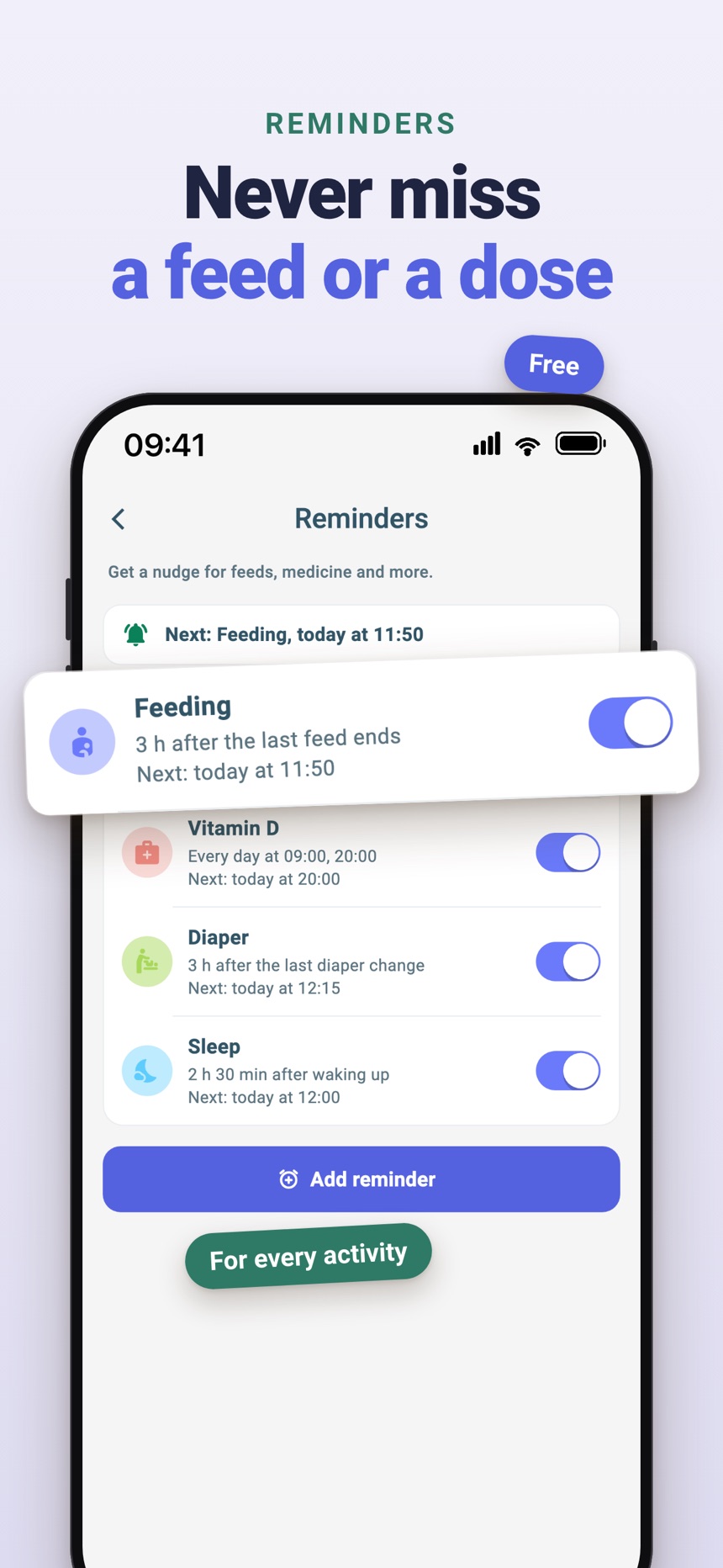
- Optional reminders, such as a nudge a few hours after the last feed.
The routine you build may never look like the neat chart on someone else’s fridge. That is okay. If your baby is fed, cared for, and gradually learning what comes next, you are building something useful: a calmer rhythm that gives both of you a little more room to breathe.
Frequently asked questions
When should I start a routine with my baby?
You can start gently in the newborn weeks by noticing patterns and keeping a calm bedtime sequence. Many families find routines become more predictable after the first couple of months.
What is a simple daily routine for a baby?
A common rhythm is wake, feed, diaper, a little play, then sleep, repeated through the day, with a short bedtime sequence at night. The times move; the order stays familiar.
Should I use feed-play-sleep or feed to sleep?
Either can work. Some babies settle better after a little awake time, others feed right before sleep and do fine. Choose what helps your baby eat well and sleep safely.
How long should a baby bedtime routine take?
About 15 to 30 minutes is enough for most families. A short, repeatable routine is easier to keep on hard days than a long one.
What are sleepy cues in a baby?
Common sleepy cues in a baby include staring off, slower movements, red eyebrows, yawning, rubbing eyes and losing interest in play. Starting the wind-down when you see them is often easier than waiting until your baby is overtired.
What should I do when my baby’s routine stops working?
Look for the smallest change that might help, such as a shorter wake window or an earlier bedtime, and try it for a few days before changing anything else. Growth spurts, illness, teething and travel often disrupt a baby routine for a while, and that is normal.