
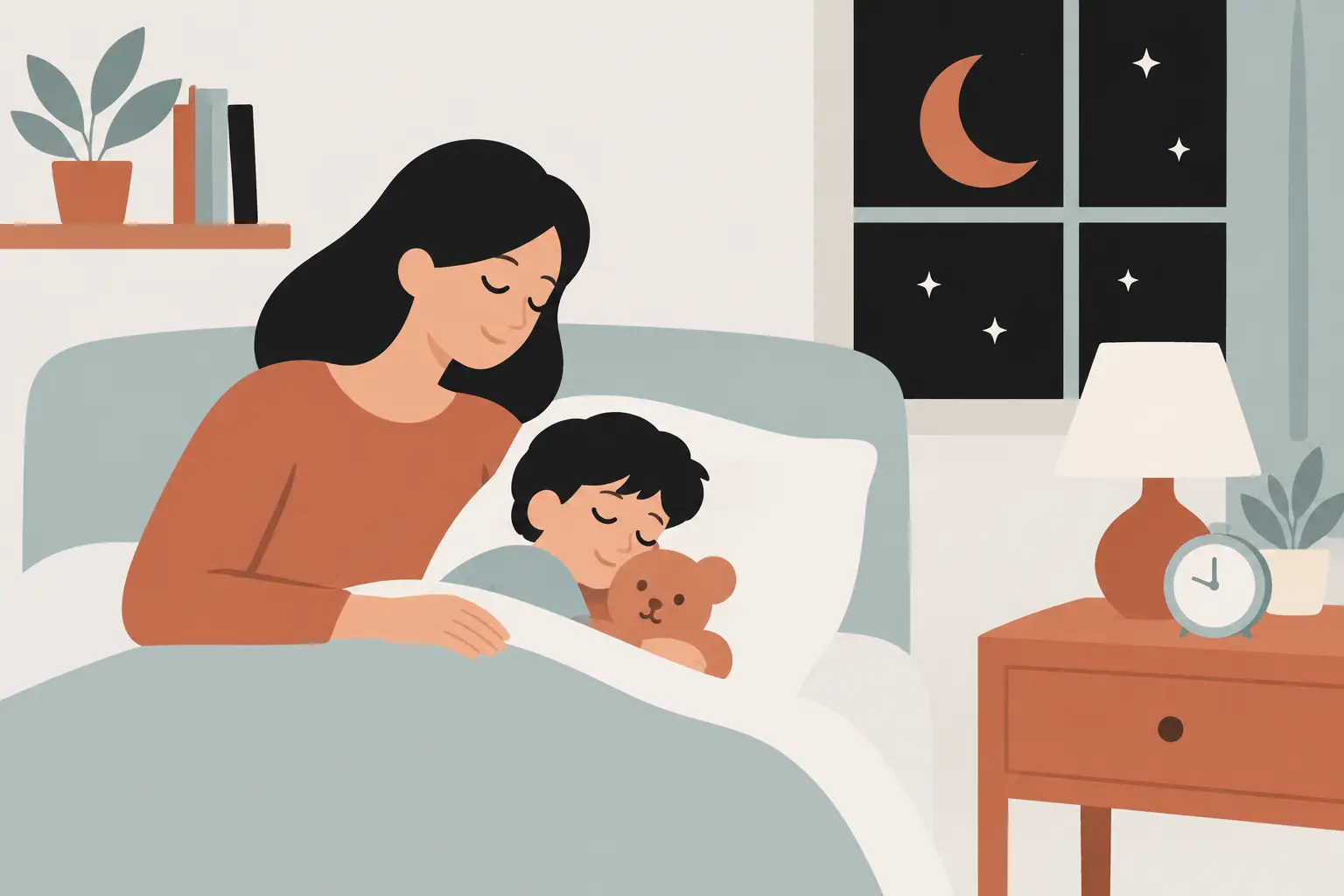
The hard part of bedtime is rarely knowing that everyone needs sleep. It is getting through the handoff from dinner, dishes, messages, bath time, pajamas, and one more request without the whole evening feeling rushed. If you are trying to figure out how to build bedtime routines that work beyond a single good night, the goal is not a perfect schedule. It is a familiar sequence your family can repeat when life is ordinary, busy, or a little messy.
Quick answer: To build a bedtime routine that sticks, choose a clear starting cue and a short series of calming steps, then repeat them in roughly the same order every night. Keep one step visibly finite, such as one story, and plan a shorter backup version for busy nights. Consistency matters more than complexity, so adjust one thing at a time.
This guide is general information, not medical advice. Every baby is different, so ask your pediatrician or health visitor about your own baby.
What is a bedtime routine?
A bedtime routine is a repeatable set of activities that signals the day is winding down and helps move a household toward sleep. It is not a rigid script or a test of good parenting; it is a dependable transition.
For a baby or toddler, that transition may include a diaper change, pajamas, a quiet story, and a cuddle. For an adult, it may mean dimming screens, preparing for tomorrow, washing up, and reading a few pages. The details change by age and household, but the job stays the same: fewer decisions at the end of the day.
What bedtime problem are you actually solving?
A routine should solve a real problem, not add another project to your life. Maybe bedtime stretches because your child keeps asking for a different activity. Maybe two caregivers handle it differently, so each night begins with negotiation. Maybe you are the one who reaches the end of the day too wired to settle down.
Name the sticking point in a plain sentence. “We lose time choosing what happens next” is more useful than “bedtime is chaotic.” “Our toddler gets upset when one parent leaves” gives you something specific to plan around. A routine can only be simple when it is built for the problem in front of you.
Avoid trying to fix every part of the evening at once. If dinner, cleanup, and bedtime all feel difficult, begin with the final 20 or 30 minutes. A small win near bedtime can make the rest of the evening feel more manageable.
How do you build a bedtime routine that fits real life?
- Pick a clear starting cue, such as after the kitchen is cleaned or when a favorite show ends.
- Choose three or four calming steps, for example pajamas, teeth, one story, lights out.
- Keep the order the same, even when the timing moves.
- Make one step visibly finite: one story, or a short playlist that ends when it ends.
- Write down a shorter backup version for busy nights.
- Change only one thing at a time, and give it a few nights.
A cue matters because it removes the nightly question of when to begin. A family might move from pajamas to teeth brushing to one story to lights out. Another may need a bath before pajamas, while a bath on busy nights is not realistic. The routine should reflect what you can sustain, not what looks polished from the outside.
Unlike deciding each activity at the last minute, a consistent bedtime sequence lets you move through the evening with fewer negotiations and reminders. Children often respond well to knowing what comes next, and adults benefit from fewer choices when their energy is low.
A simple visual chart can help toddlers see the order without a long explanation. The point is not to be strict for its own sake. It is to create gentle boundaries that do not need a new debate every night. For an example of how bedtime fits into a whole day, see our real baby routine example.
Side by side, the usual and busy-night versions keep the same order.
| Part of the routine | Usual night | Busy night |
|---|---|---|
| Starting cue | The same cue, such as after the kitchen is cleaned | The same cue |
| Care steps | Pajamas and teeth, plus a bath if it is realistic | Essential care and pajamas |
| Connection | One story | A brief connection |
| Ending | Lights out | Bed |
| Order | Same every night | Same, just shorter |
Keep the routine calm, not packed
Bedtime is not the time to fit in every enriching activity you meant to do earlier. Extra books, games, chores, or conversations make the routine harder to finish, even when each activity is good on its own. Save the fuller version of family time for moments when nobody is trying to transition to sleep.
Calm looks different from home to home. Some families enjoy a lively song before settling down. Others need lower lights and softer voices early on. Notice whether an activity helps your household shift gears or gives everyone more momentum.
A useful test is whether the routine gets easier after several nights. If it keeps expanding, creates bargaining, or requires a caregiver to improvise, simplify it. Removing one step is not giving up. It is making room for consistency.
Decide what happens on busy nights
The routine that survives is usually the one with a shorter backup version: essential care, pajamas, a brief connection, then bed. You do not need a separate elaborate plan. You just need permission to keep the order while making it shorter.
This is especially helpful with babies and toddlers, when the day can change quickly. Track patterns if that helps you notice what tends to happen before a difficult night, but do not expect every night to follow a neat pattern. For questions about an infant’s sleep, feeding, development, or safety, ask your pediatrician or health visitor, and follow safe sleep basics such as those in the AAP’s parent’s guide to safe sleep.
Caregiver consistency helps, but both adults do not need to perform every step identically. Agree on the basic order, the limits around extras, and the words you use when it is time to move on. A child does not need a perfectly matched performance. They need the routine to feel recognizable.
How do you make a routine easier to repeat than to skip?
The best bedtime routines rely less on willpower and more on setup. Put pajamas where they are easy to grab. Choose books before the final rush. Charge devices outside the bedroom if screens tend to keep you scrolling. Small environmental choices protect the routine when everyone is tired.
Change one variable at a time. If you move the start of bedtime, keep the activities familiar for a few nights. If you add a new step, avoid rearranging the whole sequence around it. That makes it easier to tell whether the adjustment is helping or just creating a new learning curve.
Expect some resistance when a routine is new or when a child is testing a boundary. That does not automatically mean the plan is wrong. Stay warm, keep your language short, and return to the next familiar step. Repetition is what makes the pattern feel dependable.
When does a bedtime routine need a reset?
A routine may need attention when it has become so long that nobody can finish it calmly, or when the steps no longer match your family’s current season. A toddler may outgrow one part of the evening. A new work schedule may shift who handles bedtime. Travel, illness, and big changes can temporarily disrupt even a well-established rhythm.
Reset by returning to the smallest workable version. Keep a familiar anchor, such as the same last book or goodnight phrase, and rebuild from there. You only need a next step that feels predictable again. If you are wondering how sleep itself changes over the first year, our baby sleep schedule guide for the first year and the NHS guide to helping your baby sleep are good next reads.
Be careful about judging a routine by one difficult evening. Look at the overall trend across several nights. The goal is not zero protests, zero wake-ups, or a flawless household. It is a calmer, clearer ending to the day that your family can live with. For realistic expectations about longer stretches, see when babies sleep longer.
How FeedRight helps
If you want to log baby sleep without turning bedtime into a bigger project, FeedRight Baby Tracker keeps sleep next to feeds and diapers in one tap. A lightweight record helps caregivers compare notes and notice patterns across several nights. It is on the App Store and Google Play.
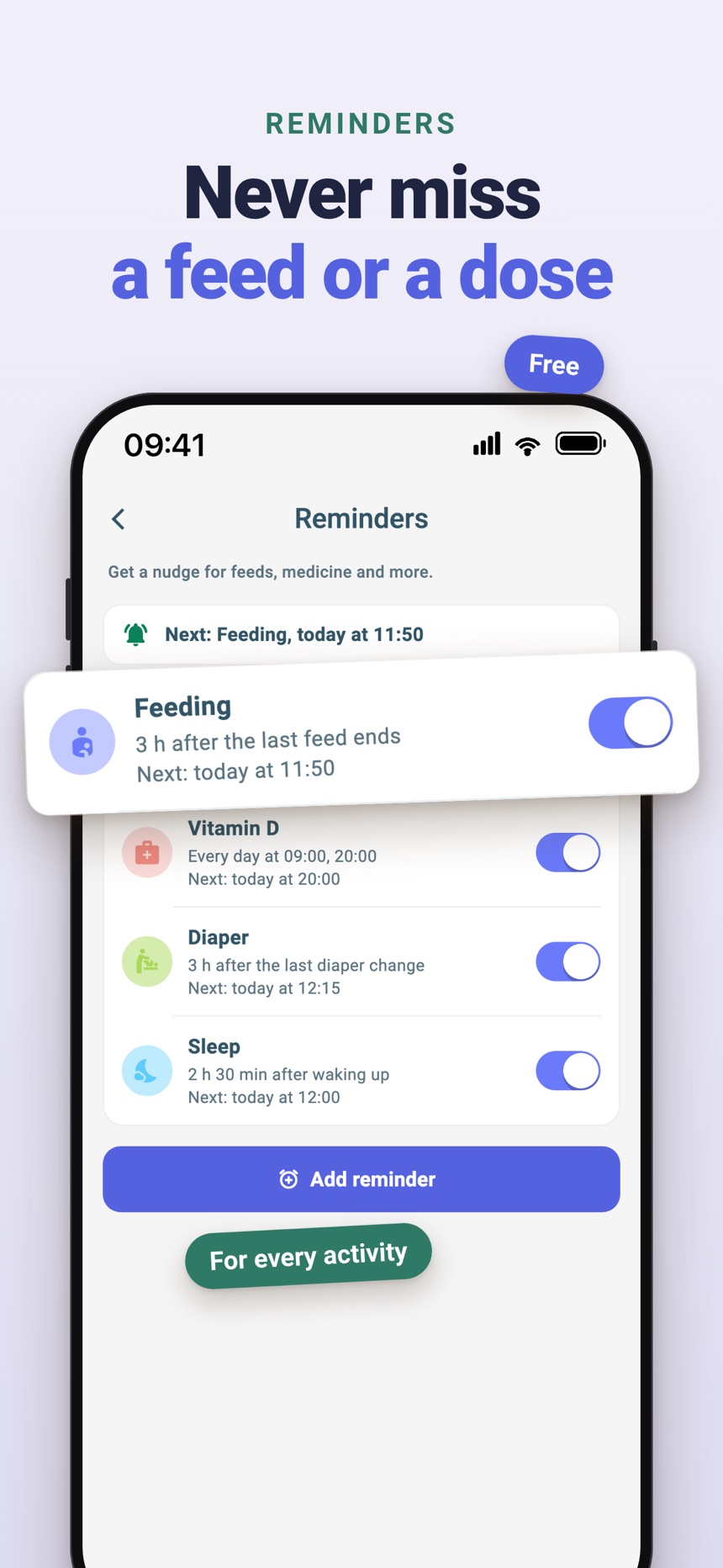
- Start and end sleep from the iPhone Lock Screen or Dynamic Island.
- A next-nap estimate on the Sleep Time card from 3 months of age.
- FeedRight Premium adds a daily sleep score and 7 and 28 day statistics.
Frequently asked questions
How long should a bedtime routine be?
It depends on your household, but shorter is often easier to repeat. Allow enough time for a calm transition without adding so many steps that bedtime becomes another major event.
Should both parents follow the exact same routine?
No. Caregivers can have different styles while keeping the same basic order and boundaries. Familiarity matters more than identical wording or identical storytelling voices.
What if we miss part of the routine?
Use the shorter backup version and continue with the next step. One busy night does not erase a routine; returning to the pattern the following night is what builds it.
When should you start a bedtime routine with a baby?
Many families start a simple, calm sequence in the early months, such as a diaper change, pajamas, and a quiet cuddle. Keep it short and flexible, and ask your pediatrician or health visitor about sleep for your baby’s age.
How do I establish a consistent bedtime routine?
Start the routine with the same cue each night, keep three or four calming steps in the same order, and repeat them even when the timing moves. Plan a shorter backup version for busy nights so the order survives hard days.
What are good steps for a baby bedtime routine?
A simple baby bedtime routine might be a diaper change, pajamas, a feed, a short book or song, then bed in a dim, quiet room. Pick steps you can repeat on a hard day, and place your baby on their back in their own sleep space.