

The hardest part of a new baby routine is not remembering that a feeding or nap happened. It is trying to make sense of a day that keeps changing while you are tired, holding a baby, and wondering whether everyone else has somehow figured it out. A real baby routine example can make the day feel less like a blur, without pretending babies run on a perfect timetable.
Quick answer: A useful baby routine is a loose record of what tends to happen, not a schedule you must force. Build it on a few anchors: waking, feeding, a diaper change, some awake time, sleep, and a familiar bedtime sequence. Note the order and rough timing for a few days, then look for patterns instead of chasing exact times.
This guide is general information, not medical advice. Every baby is different, so ask your pediatrician or health visitor about your own baby.
What is a baby routine?
A baby routine is the repeatable flow of care across a day, based on your baby’s current needs and your household’s rhythm. It can include approximate times, but it should leave room for growth spurts, short naps, visitors, errands, and days that simply go sideways.
A routine helps when it lowers the number of decisions you make from memory. It is not a scorecard for whether your baby is doing things “right.” If you have questions about feeding, sleep, development, or sudden changes in behavior, ask your pediatrician or health visitor.
Why does a flexible routine work better than a perfect schedule?
Many parents start by searching for exact times: wake at 7:00, nap at 9:00, bedtime at 7:30. Those templates can be a useful reference when you need a starting point. They can also create stress when your baby does not follow them, which is common.
Unlike copying a fixed schedule from another family, tracking your own baby’s daily rhythm lets you notice patterns that fit your home. You may see that mornings tend to be calm, that late afternoons are less predictable, or that a certain part of the bedtime flow helps everyone settle.
The goal is not to collect data for its own sake. It is to answer small, practical questions quickly: When was the last diaper change? Has today been nap-heavy or nap-light? Is this fussy stretch unusual, or has it happened around this time for the past few days?
What does a real baby routine look like across one day?
Here is a realistic example of a routine for a baby at home. The times are intentionally approximate. Treat them as a picture of how a day can flow, not guidance on what your baby should eat, how long they should sleep, or when a medical concern needs attention.
| Time of day | What happened in this example |
|---|---|
| Around 6:45 a.m. | Wake, diaper change, feed, quiet awake time |
| Around 8:15 a.m. | First nap |
| Around 9:30 to 10:00 a.m. | Wake, diaper, feed, play or a walk, then a late-morning nap |
| Around noon and afternoon | Wake, care cycle, early-afternoon nap, errands and possible car nap |
| Late afternoon and evening | Short nap or longer awake stretch, then the bedtime sequence |
Morning: start with what actually happened
At around 6:45 a.m., the baby wakes and has a diaper change. A feeding follows soon after, then a little quiet awake time while a parent gets dressed, makes coffee, or sits on the floor nearby. By roughly 8:15, the baby seems tired and goes down for a first nap.
Notice what is missing: no pressure to make the morning identical every day. If the wake-up came earlier, the whole sequence may move up. If the baby slept later, the family simply begins later. The useful part is recording the order and rough timing, not defending a plan that no longer fits the day.
Late morning: repeat the care cycle
Around 9:30 or 10:00 a.m., the baby wakes. There is another diaper change, a feeding, and a short stretch of play, a walk, or time looking out the window while an adult gets a few things done. Somewhere around late morning, the baby takes another nap.
This is where pattern tracking starts to earn its keep. After a few days, you may notice that the second nap comes more easily after a walk, or that it varies widely. Either observation is useful because it comes from your baby, not a generic chart. If logging naps feels like a chore, try the tips in how to record baby naps.
Afternoon: plan for movement, not precision
The afternoon might include a wake-up around noon, another care cycle, and a nap sometime in the early afternoon. Then comes the stretch many households find hardest: plans collide with errands, dinner, work messages, sibling pickup, and a baby whose mood may shift quickly.
Instead of expecting the routine to hold perfectly, use two or three anchors. A diaper change after waking, a feeding when it is time, and a wind-down before sleep may be enough structure. If a car nap happens or a visit runs long, log it and carry on.
A flexible routine also makes handoffs easier. When a partner, grandparent, or caregiver steps in, a quick view of the last feeding, diaper, and nap reduces the need for a long verbal recap.
Evening: keep the sequence familiar
By late afternoon or early evening, the day may include another short nap or a longer awake stretch. The bedtime sequence could be as simple as a diaper change, a calm feeding, dimmer lights, and a familiar quiet activity. What matters is that the sequence feels manageable for your family. Our guide on how to build bedtime routines that stick goes deeper on this part of the day.
Some babies respond well to a very consistent evening order. Others have evenings that change often for a while. Both call for observation over judgment. Whatever the sequence, follow safe sleep basics for where your baby sleeps; the AAP’s parent’s guide to safe sleep is a clear reference.
How do you track a routine without turning parenting into admin?
Keep the log small enough that you will use it during a real day. For most families, the essentials are feeds, naps or sleep periods, and diaper changes. Add a short note when something stands out, such as travel, visitors, a hard settling period, or an unusually early wake-up.
There is a trade-off. Detailed tracking can reveal more context, but it takes more attention. Start with the information you need to remember. If you keep abandoning the log, the system is asking too much of you.
Look at patterns across several days instead of treating one rough afternoon as a problem to solve. Babies change quickly, and a routine that felt steady last week may look different next week. That does not mean you did anything wrong. It means the routine is reflecting real life. For a broader method, see how to create baby routines that actually help.
When does a baby routine need a reset?
A reset is useful when the record no longer helps you anticipate the day. Maybe naps have shifted, a return to work changed morning logistics, or a trip threw off familiar cues. Start again with a few days of simple observation rather than trying to preserve an old schedule.
Keep routine questions separate from health questions. A log can show you what has changed, which is useful context for your pediatrician or health visitor. It cannot replace professional advice about your child’s health, feeding, sleep, or development. The NHS guide to helping your baby sleep offers general background on how sleep changes.
How FeedRight helps
FeedRight Baby Tracker records feeds, sleep, and diaper changes in one tap, so the day’s anchors are easy to look back on. Use it as a memory aid, not a demand for perfection. You will find it on the App Store and Google Play.
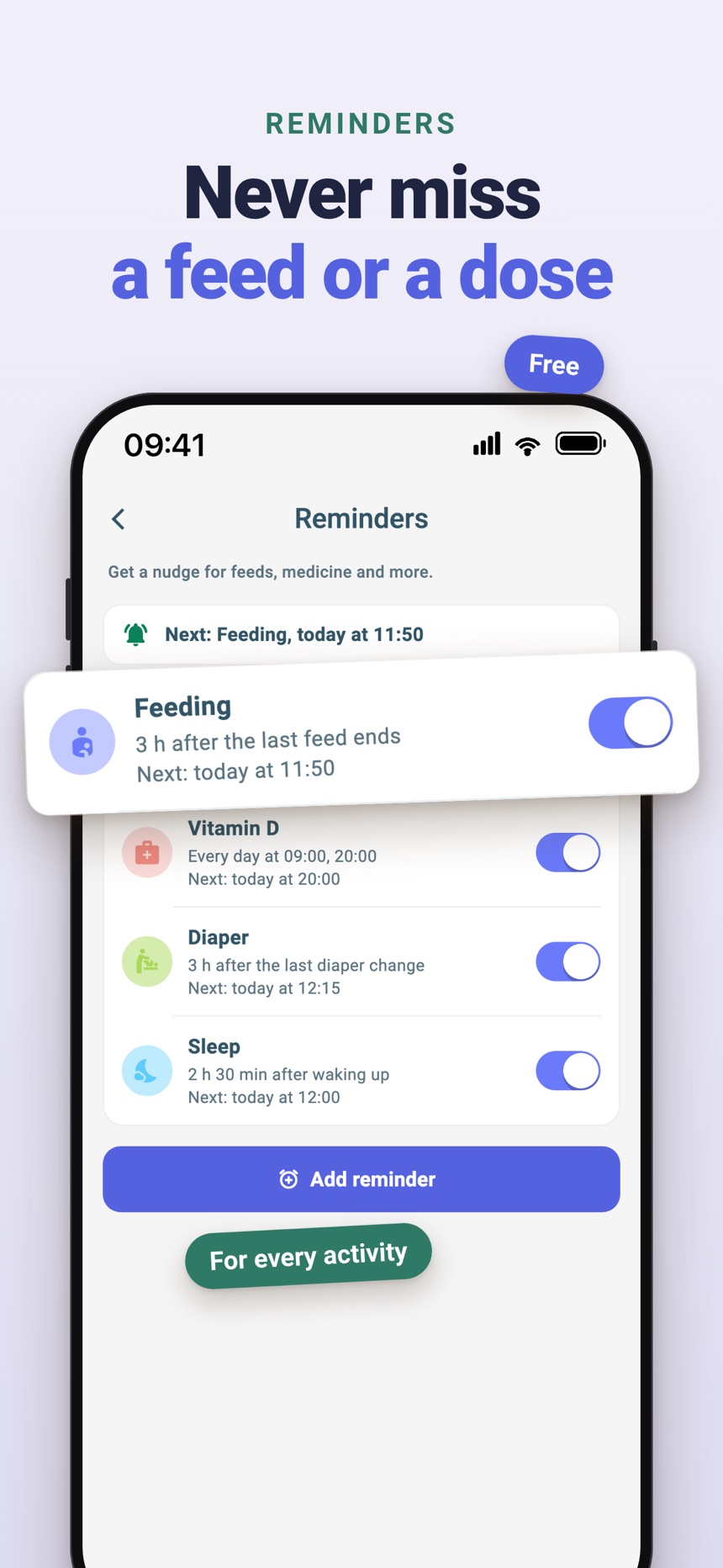
- Daily summary and history to see the shape of each day.
- A next-nap estimate on the Sleep Time card, shown from 3 months of age.
- Reminders, such as a nudge a few hours after the last feed or a diaper check.
Frequently asked questions
Should a baby routine use exact times?
Not necessarily. Approximate times help you see the shape of the day, but the order of events and your baby’s cues are often more useful than a strict clock-based plan.
How long should I track a baby routine?
Track for as long as it reduces mental load. A few days may reveal a helpful pattern, while some families prefer ongoing notes for easier handoffs and a clearer view of changes.
What if every day looks different?
That is still useful information. Look for smaller anchors, such as what usually happens after a wake-up or before bedtime, rather than expecting the whole day to repeat.
What are the basic parts of a baby’s daily routine?
Most baby routines repeat a simple cycle: wake, feed, diaper change, some awake time, and sleep, with a calmer sequence before bedtime. The timing shifts as your baby grows, so ask your pediatrician if you are unsure what fits your baby’s age.
How do I keep a baby routine on busy days?
Keep two or three anchors, such as a diaper change after waking, a feed when it is time and a wind-down before sleep, and let the rest move. If a car nap happens or a visit runs long, log it and pick up the sequence again.
When should I reset my baby’s routine?
Reset your baby’s routine when it no longer helps you anticipate the day, for example after naps shift, a return to work or a trip. Start with a few days of simple observation instead of forcing the old schedule.